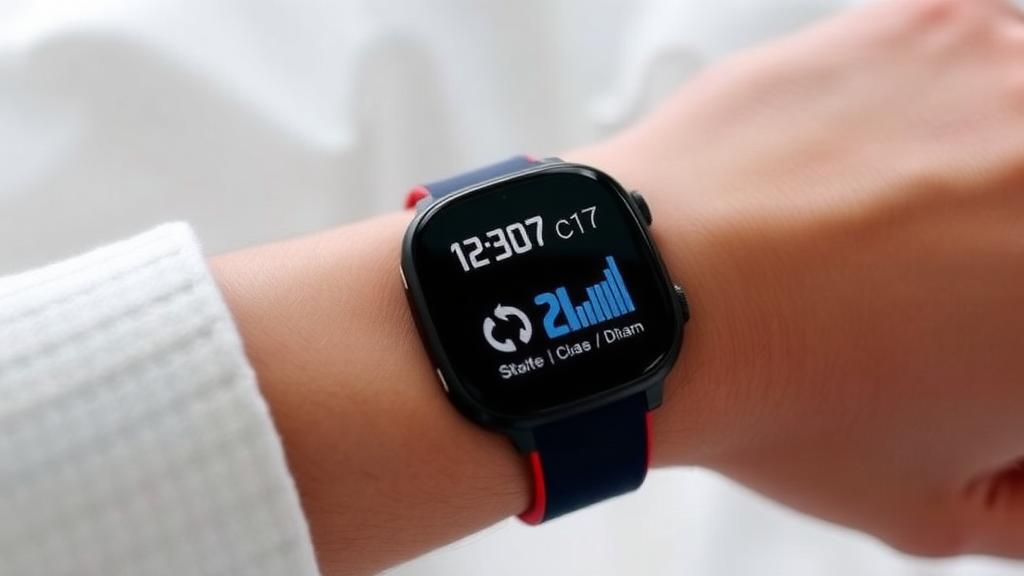
Recent research in the Journal of Clinical Sleep Medicine has sparked debate regarding the accuracy of wrist-worn sleep trackers and their implications for understanding sleep duration. A study led by Baron and colleagues suggested that individuals who report sleeping less than seven hours might actually be getting more sleep than they perceive. However, a letter to the editor from researchers Ahad Wali Khan and Aisha Riaz raises significant concerns about the study's methodological approaches and statistical analyses.
Read More
The main issue identified by Khan and Riaz is a statistical paradox related to the assessment of insomnia severity. The original study posited that hyperarousal—a state of heightened brain and body activity—could lead individuals to misinterpret their sleep as wakefulness. They suggested this framework was crucial for understanding the discrepancy between subjective sleep reports and objective measurements. Yet, the letter argues that the statistics presented by Baron et al. contradict this interpretation. Specifically, while the Insomnia Severity Index initially appeared to predict sleep underestimation, its significance disappeared in a more comprehensive analysis, indicating that the perceived relationship may have been influenced by other factors like overall stress and sleep difficulties.
A further critique focuses on the reliability of actigraphy itself. Actigraphy, which uses accelerometers to measure movement, infers sleep based on a person's stillness. Baron and colleagues acknowledged the limitations of this technology, noting that actigraphy often overestimates sleep duration compared to polysomnography, the gold standard in sleep research. Khan and Riaz emphasized that using actigraphic data as a fixed benchmark for subjective sleep reports is problematic, especially since both the device's overestimation and the sleeper's misperception could contribute to reported discrepancies.
In a stressed population, like the one studied, the phenomenon of 'silent wakefulness'—where individuals remain motionless but mentally alert—may lead actigraphy to incorrectly classify wakefulness as sleep. This raises concerns about the accuracy of findings, as significant periods of wakefulness could inflate sleep duration estimates.
Khan and Riaz also questioned how accurately actigraphy algorithms differentiate between sleep and quiet wakefulness. If an algorithm merges these states, the reliability of the data used to assess sleep misperception is fundamentally compromised.
Additionally, the letter highlights the broader implications of relying on consumer wearable devices, which share similar limitations to research-grade actigraphy. These devices often overestimate sleep time, particularly among users with disturbed sleep patterns, thus complicating interpretations of sleep data in studies.
The authors suggest that future research on sleep misperception in hyperaroused populations could benefit from polysomnographic evaluations to ensure accurate actigraphic estimates. They advocate for the presentation of fully adjusted statistical results as the basis for findings and urge researchers to consider the potential for device overestimation.
Ultimately, this critique calls for greater caution in interpreting sleep data from wearable devices, emphasizing that the term 'objective' should not imply infallibility. The letter offers a timely reminder of the complexities in sleep medicine and the need for methodological rigor. It serves as a foundational reflection on the importance of verifying measurement accuracy in studies related to sleep perception.