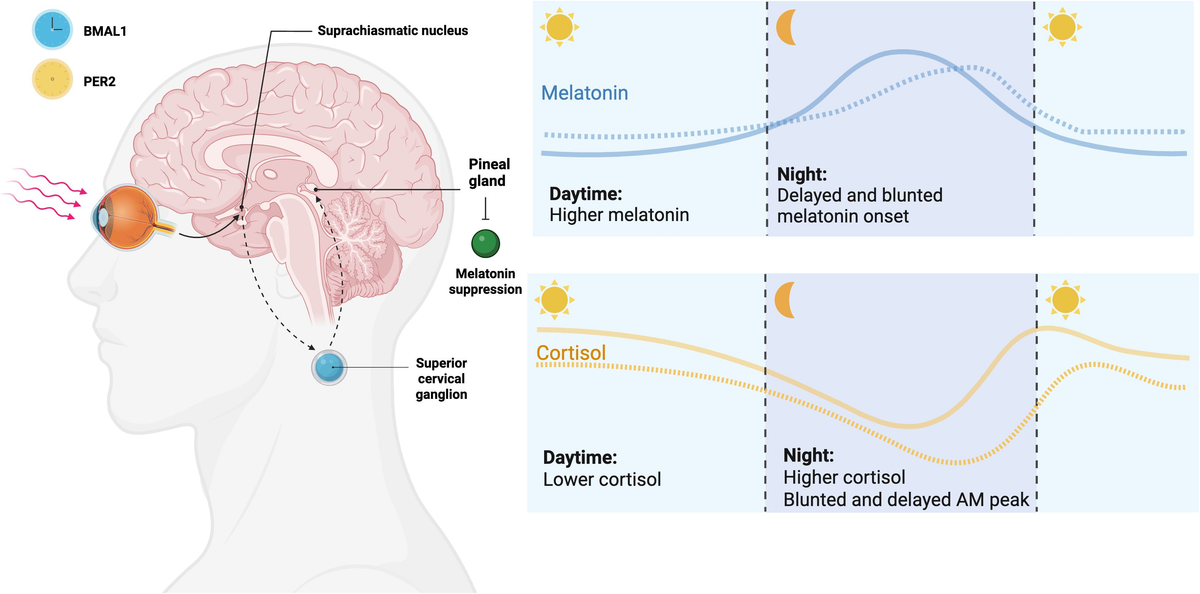
A recent perspective article published in Frontiers in Psychiatry discusses the significant relationship between Attention-Deficit/Hyperactivity Disorder (ADHD) and circadian rhythm dysfunction, which appears to affect a notable subgroup of individuals with ADHD. The article highlights that sleep disturbances are prevalent, affecting up to 80% of adults and 82% of children diagnosed with ADHD. Delayed sleep-wake timing is observed in about 73-78% of individuals with ADHD, with biological markers indicating delays in melatonin onset by approximately 45 minutes in children and 90 minutes in adults.
Read More
The study also emphasizes that these circadian disruptions correlate with irregular cortisol rhythms and altered peripheral clock gene expressions. Intervention studies show that chronotherapy methods, such as melatonin and bright light therapy, can effectively advance circadian phases in ADHD populations, improving symptoms. Emerging data suggest these phase advancements may predict improved ADHD symptoms.
The authors propose a clinical pathway that includes routine screening for circadian issues and behavioral interventions, such as fixed wake times and morning light exposure, to help manage ADHD symptoms. They also emphasize the importance of further well-designed trials to establish effective treatment protocols.
The findings underscore a growing recognition of the complex, bidirectional interactions between circadian rhythm disruption and ADHD, suggesting that incorporating circadian assessments into ADHD treatment could be beneficial. Further research is essential to explore these connections and establish effective interventions.