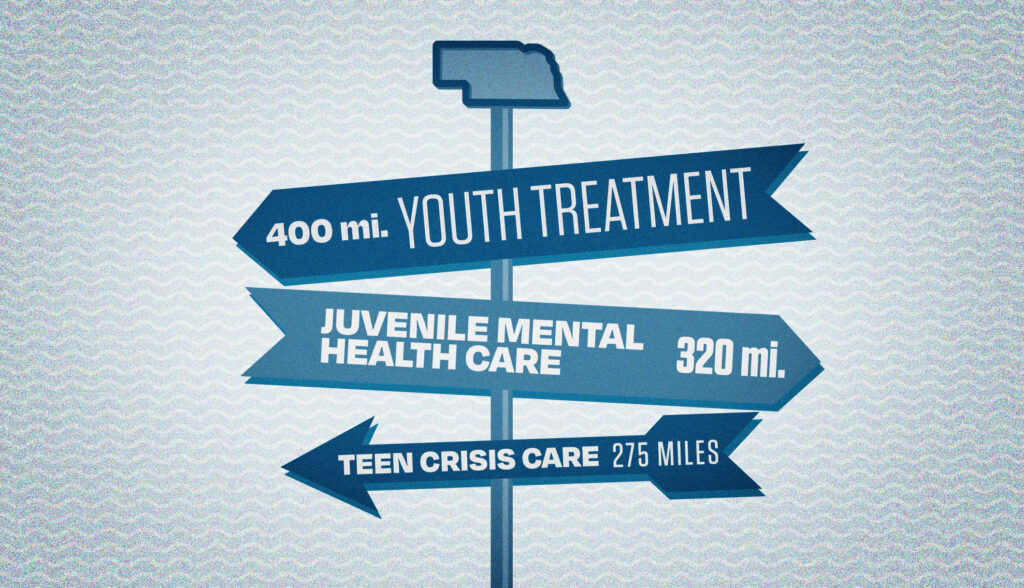
Nebraska's child welfare and juvenile justice systems have increasingly sent youth out of state for serious mental health care due to a lack of resources within the state. Michelle, a pseudonym to protect her identity, received the news that her son would need treatment in Wyoming after he faced significant challenges following the death of his father in 2021. His struggles included gang involvement, auto theft, and multiple arrests, leading to a judge's order for treatment away from home. "That hurt me," Michelle remarked, reflecting on the inability to protect her child while he was so far away.
Read More
According to a report from the state's Foster Care Review Office, over half of children in Nebraska’s child welfare and juvenile justice systems are sent to facilities out of state for care that local services cannot provide. Last year, these children received treatment in various states, including Massachusetts, Alabama, and Virginia. Experts have noted that such separations can complicate treatment and hinder children’s reintegration into their families, further intensified by the long, costly travel families must undertake to visit their children. Michelle, a single mother of five, was unable to visit her son during his five months in Wyoming due to financial constraints.
Nebraska officials have acknowledged the issue of out-of-state placements and are working to expand local treatment options. Gene Cotter, the state's probation administrator, emphasized the urgent need to address the growing demand for mental health services coupled with dwindling resources. The state has made some progress in creating new facilities, but there is significant concern about the current state of care.
Currently, 137 youths receive treatment at facilities both in and beyond Nebraska, representing about 2% of all children under state guardianship. These youths face severe issues, including aggression and suicidal tendencies, requiring intensive psychiatric support. Available local facilities, such as Boys Town, Immanuel Medical Center, and others, provide services but often do not have enough capacity to meet the demand. Private providers have long waitlists, forcing system-involved children to compete for available spots against those with less severe issues.
The shortage of less restrictive treatment options has been compounded by the loss of therapeutic foster care and residential treatment centers in recent decades. Rumbaugh reported that more than half of the children in the state have a diagnosed mental health condition, with even higher rates among those involved in the juvenile justice system. The COVID-19 pandemic exacerbated the situation, with rising numbers of children seeking psychiatric care.
Recent scrutiny has also emerged following the closure of a treatment facility in Utah that hosted Nebraska children, leading to a reevaluation of oversight and licensure for such facilities. Monika Gross, executive director of the Foster Care Review Office, noted the need for heightened awareness regarding these issues.
While Nebraska is not alone in facing shortages in mental health care, especially in rural areas, Kristan Russell from the University of Nebraska at Omaha noted that out-of-state placements can sometimes be necessary. However, they present significant challenges to maintaining family connections and continuity of care, which can hinder treatment progress.
To address these issues, Nebraska has initiated new facilities, including the RADIUS residential program for justice-involved youths. Legislative hearings are scheduled to discuss funding and oversight for mental health services in light of a projected $1 billion revenue shortfall.
Michelle's son, now 16, continues his treatment at a rehabilitation center in Kearney. Although he is doing better compared to his time in Wyoming, the years spent in treatment and detention centers have taken a toll, with the family missing crucial milestones together. Michelle expressed her concerns for his future, stating, "One thing I don’t want him to do is be in prison at 18."