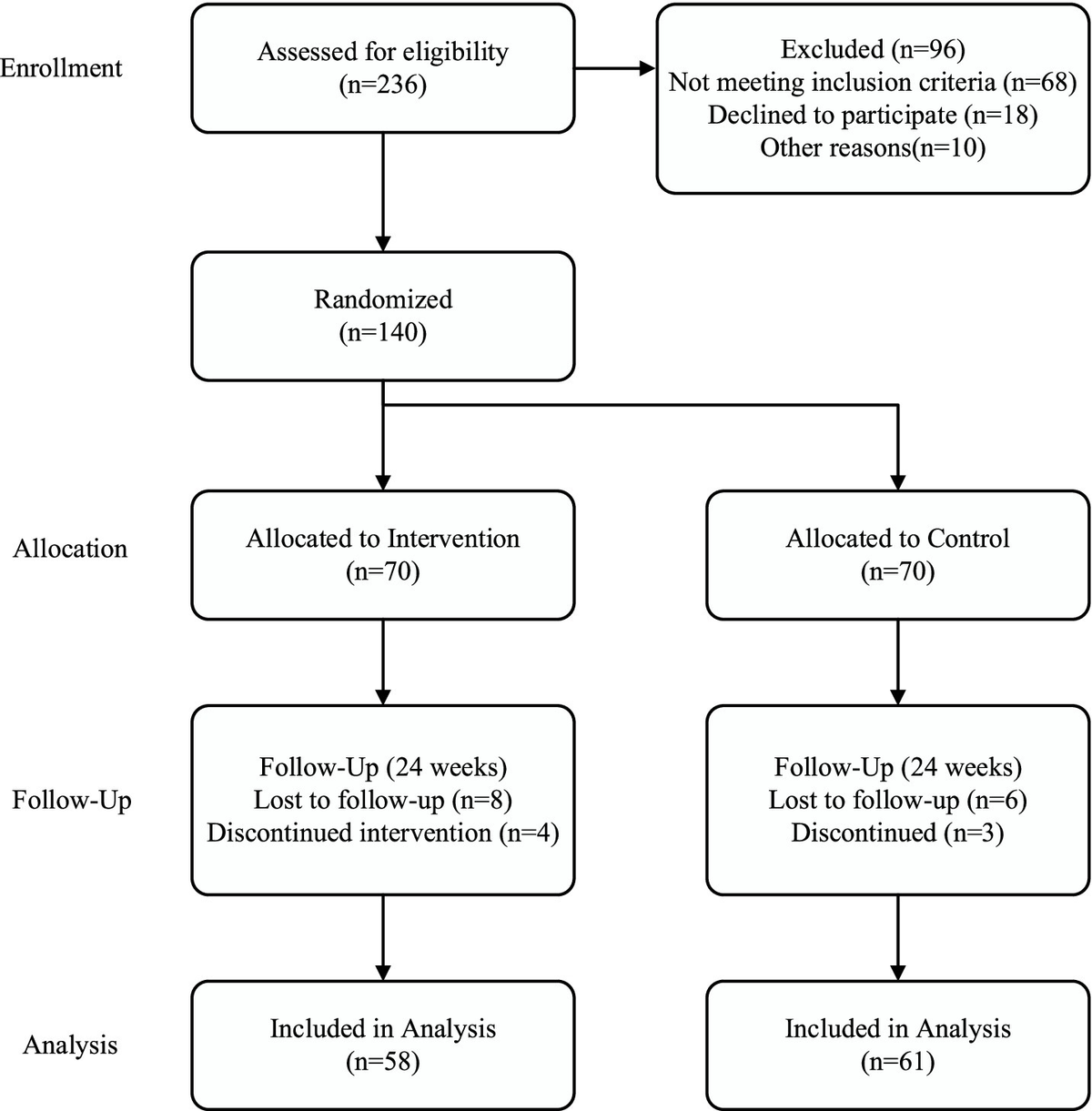
A recent 24-week randomized controlled trial investigated the impact of functional dietary fiber supplementation and home-based exercise on gut microbiota diversity and systemic inflammation among urban sedentary adults. The study involved 140 participants, who were assigned to either a combined intervention group or a control group maintaining their usual lifestyle.
Read More
Participants in the intervention group received a fiber supplement providing 15-20 grams per day of resistant starch, inulin, and beta-glucan, alongside engaging in moderate-intensity home exercises five times a week. Results indicated significant improvements in gut microbiota diversity for the intervention group, with the Shannon index increasing from 3.82 to 4.31 (p < 0.001). In contrast, minimal changes were noted in the control group. Furthermore, levels of high-sensitivity C-reactive protein (hs-CRP) decreased by 42.1%, interleukin-6 (IL-6) dropped by 35.4%, and tumor necrosis factor alpha (TNF-α) saw a reduction of 28.6%. The increase in interleukin-10 (IL-10) by 31.8% was also significant.
The findings suggest that combining functional dietary fiber supplementation with home-based exercise effectively enhances gut microbiota diversity and lowers low-grade inflammation in sedentary adults, which may contribute to reducing cardiometabolic risks. The successful implementation of the intervention highlights its potential for providing practical lifestyle modifications tailored for urban settings.
This research, which emphasizes the intricate relationship between diet, exercise, and gut health, offers insights into holistic approaches for mitigating the adverse effects of sedentary behavior.