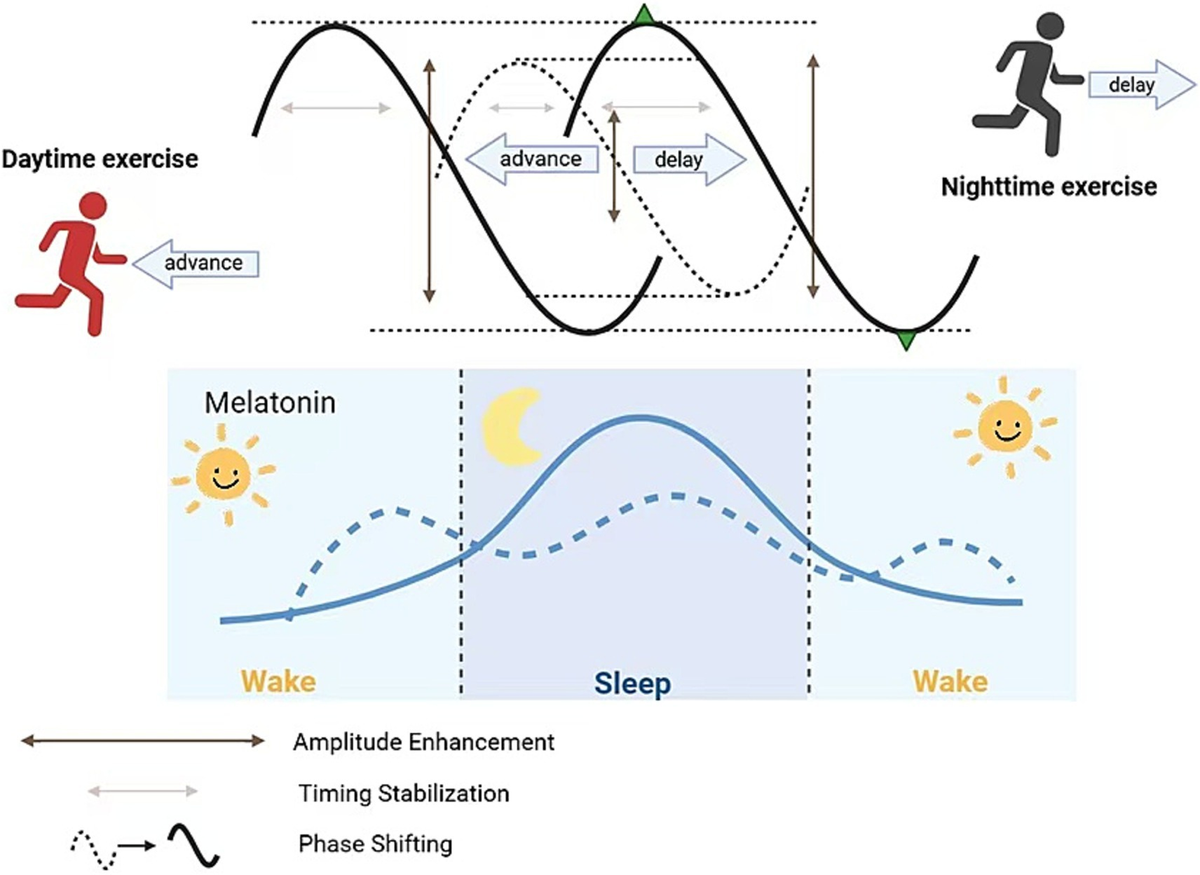
Alzheimer’s disease (AD) is linked to significant circadian disruption, marked by the degeneration of the suprachiasmatic nucleus (SCN), the presence of β-amyloid (Aβ) and tau pathologies, and irregular melatonin secretion. These factors contribute to disturbed sleep–wake cycles and cognitive decline. Recent studies suggest that exercise can improve these issues by enhancing Aβ and tau clearance through mechanisms such as activating autophagy and the glymphatic system. Additionally, exercise appears to bolster neuroprotective pathways and stabilize core clock gene rhythms, which can restore normal melatonin patterns and enhance SCN function. These findings propose that exercise could be an effective non-pharmacological approach to address circadian disruptions in individuals with AD.
Read More
Currently, an estimated 47 million people globally are affected by dementia, projected to reach around 90 million by 2030, with Alzheimer’s disease accounting for approximately 75% of these cases. Disturbances in circadian rhythms are prevalent in 25-60% of AD patients, with over 80% of those aged 65 and older experiencing notable disruptions. Degeneration of SCN neurons along with abnormal melatonin rhythms and the combined effects of Aβ plaques and tau tangles lead to fragmented sleep–wake cycles, adversely affecting cognitive function.
Circadian rhythms, which represent the roughly 24-hour cycles of physiological processes, rely heavily on the SCN, which coordinates these rhythms via feedback mechanisms involving core clock genes such as CLOCK and BMAL1. Disruptions in circadian function in AD patients can lead to a cascade effect, where impaired clearance of Aβ and tau further disrupts melatonin signaling, creating a self-perpetuating cycle of cognitive decline and disturbed sleep.
Exercise has emerged as a potential intervention that can influence this cycle. For instance, studies indicate that aerobic exercise may facilitate the clearance of Aβ through several interrelated mechanisms, including the activation of autophagy and enhancement of lysosomal function. Regular exercise has also been shown to shift microglial activation towards a more neuroprotective state, promoting Aβ clearance while reducing neuroinflammation. Moreover, exercise can enhance glymphatic clearance—crucial for reducing Aβ accumulation—by restoring the polarization of aquaporin-4 (AQP4), an important protein for cerebrospinal fluid flow in the brain.
Additionally, the impact of exercise extends to stabilizing circadian rhythms by modifying the expression of clock genes. Long-term training has been shown to improve the amplitude and phase stability of these genes, which not only enhances physiological rhythms but also contributes to better sleep quality. These changes can counteract some of the neurophysiological deficits associated with AD, helping to re-establish normal sleep patterns and improve overall cognitive function.
Future research is necessary to better understand how exercise regimens can be tailored to individual patients with AD, addressing factors such as the timing, intensity, and type of exercise necessary to achieve circadian rhythm improvements. Existing human studies indicate potential benefits, but many have small sample sizes and varied methodologies; therefore, larger, well-controlled clinical trials are required to confirm these findings and ensure that exercise-based interventions can reliably translate into cognitive benefits for AD patients. Researchers emphasize the importance of personalized exercise programs, particularly those focused on accommodating the unique needs of older adults.