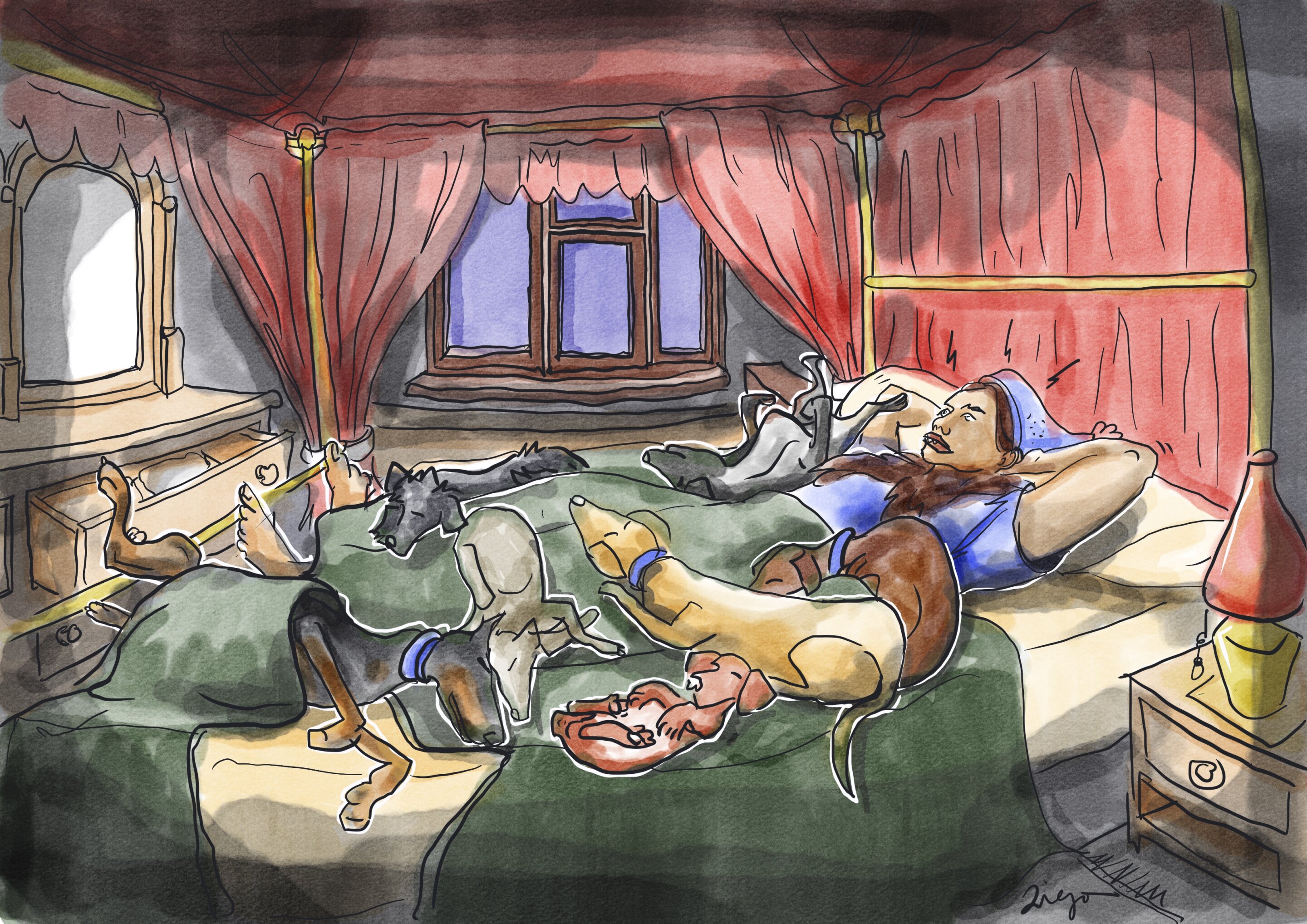
A study published on October 7, 2026, in the journal PLOS One indicates that sleeping with dogs does not significantly disrupt human sleep as previously thought. Researchers Ming Fei Li and Lavania Nagendran from the University of Toronto, along with colleagues, studied the nighttime interactions of 25 humans and 38 dogs.
Read More
The researchers aimed to shed light on the effects of shared sleeping arrangements on sleep quality. Over four weeks, activity monitors were used to track the sleep patterns of both dogs and their owners. The findings revealed no significant difference in sleep duration or quality attributed to having a dog in the bed, despite some owners perceiving disturbances.
Interestingly, nighttime activity levels between humans and dogs showed a strong correlation. However, it was more common for humans to begin moving before their dogs, suggesting that owners may disturb their dogs' sleep rather than the other way around. The study concludes that both parties may influence each other's sleep, but the extent varies.
These results are consistent with previous research but are based on a small sample and lack a control group without dogs. The authors emphasize the need for further studies that include a more diverse set of dogs regarding age and breed. They noted, "Our findings suggest that nighttime activity in humans and dogs is closely coupled and there may be discrepancies between objective and subjective sleep measures."
The study is titled "Who is disrupting whom? Examining the nighttime activity patterns of humans and their dogs" and can be referenced with DOI: 10.1371/journal.pone.0358453.