Osteoporosis, a widespread bone disorder characterized by lower bone mass and increased fragility, affects many, especially the elderly and postmenopausal individuals. The circadian clock is essential for maintaining physiological homeostasis and regulating various biological processes, including bone metabolism. Recent research highlights a strong correlation between circadian disruptions and the onset and progression of osteoporosis, paving the way for innovative intervention strategies. This review delves into the circadian clock's influence on osteoporosis management and evaluates the effectiveness of interventions such as light exposure, dietary changes, exercise, and chronotherapy.
Read More
The circadian clock, located in the suprachiasmatic nucleus of the hypothalamus, synchronizes the body's internal processes with environmental cycles. It governs physical functions, including sleep-wake cycles and metabolic homeostasis, through molecular interactions among core transcriptional regulators. Observations indicate that osteoporosis stems from an imbalance between bone resorption by osteoclasts and bone formation by osteoblasts. Noteworthy circadian patterns exist in bone metabolism, evidenced by specific timing in bone resorption and formation markers.
Genetic modifications in circadian clock components can significantly impact bone health. For instance, studies show that the ablation of certain genes like Bmal1 disrupts bone metabolism, leading to increased bone loss. Additionally, epidemiological studies indicate higher osteoporosis and fracture risks in shift workers, emphasizing lifestyle's impact on bone health.
Current osteoporosis treatments involve lifestyle changes, medication, and personalized therapies, but the clinical application of circadian principles is still evolving. This review discusses therapeutic avenues, highlighting light-based therapies, timed nutrition, exercise, and the administration timing of pharmacological agents to enhance treatment outcomes.
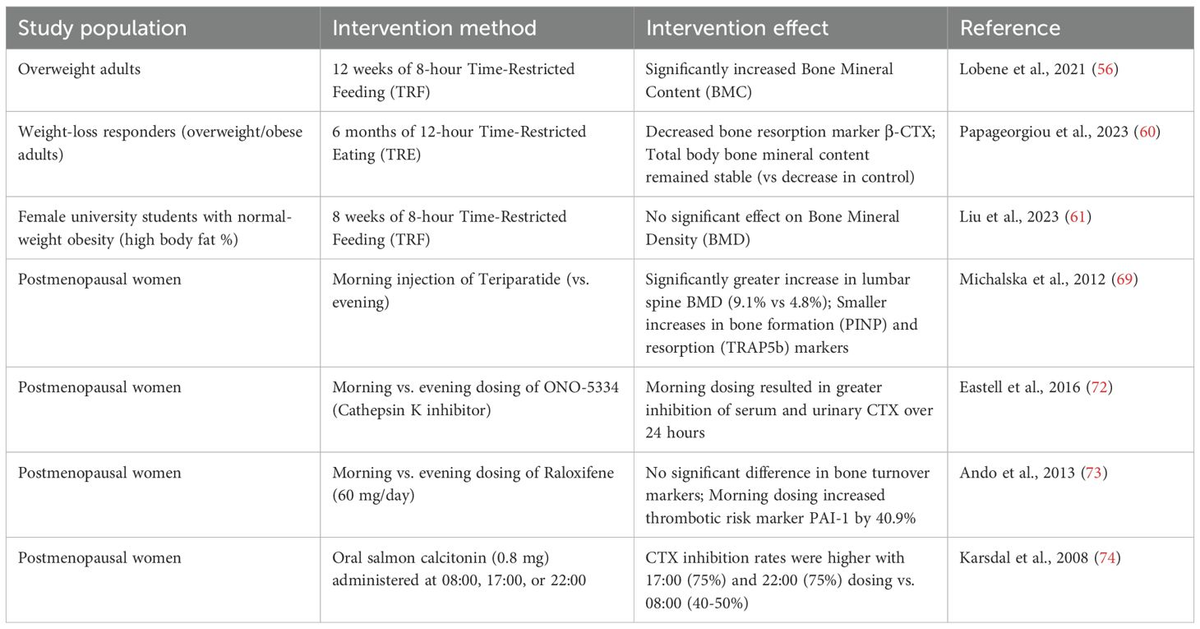
Light exposure acts as the primary cue for circadian rhythms and is crucial for bone health through mechanisms like vitamin D synthesis and melatonin regulation. Experimental studies have shown that ultraviolet light can significantly increase vitamin D levels and improve bone health in various populations. Concurrently, dietary timing impacts bone metabolism; for instance, Time-Restricted Feeding has been linked to positive changes in bone density in specific demographics.
Exercise is another critical factor that can be optimized by timing to align with circadian rhythms. High-impact exercises during the early active phase may yield substantial bone health benefits compared to low-impact activities. Chronotherapy, the practice of optimizing drug administration timing, has shown promise in osteoporosis treatment, especially for agents like teriparatide and ONO-5334. Morning administration of teriparatide, for example, led to greater bone density increases than evening doses, reflecting the need for integrating circadian considerations in pharmacotherapy.
Overall, understanding circadian rhythms in the context of osteoporosis provides new strategies for prevention and treatment. Insights from this review advocate for further research into personalized circadian-based interventions, particularly for populations such as postmenopausal women and shift workers, to improve bone health outcomes.