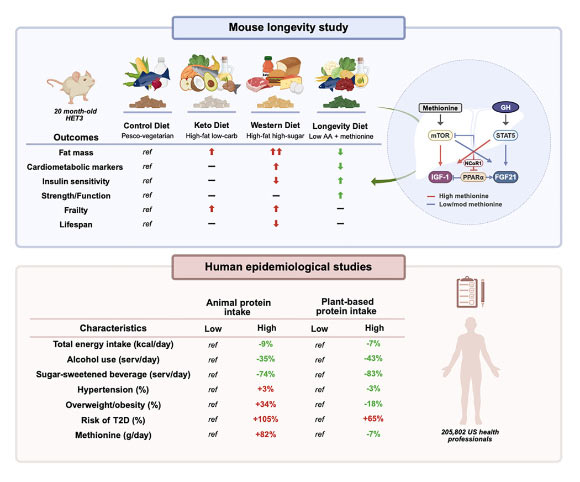
A new study published in Cell Metabolism demonstrates that a modified Mediterranean diet, supplemented with a specific amount of the amino acid methionine, significantly reduces frailty and fat in mice. This research complements epidemiological analysis involving over 200,000 individuals, which suggests similar health benefits.
Read More
The study indicates that predominantly plant-based diets, low in amino acids, have powerful effects on healthspan when methionine intake is moderate. Valter Longo, a researcher at the University of Southern California, noted that optimal health outcomes may arise from a ‘longevity diet’ that is largely vegan or vegetarian, with the addition of fish.
Despite having high life expectancies, Mediterranean regions often show relatively high levels of frailty. To investigate the impact of amino acids on frailty, Longo and colleagues developed a low-protein, methionine-supplemented longevity diet (LDMM).
In the experiment, 20-month-old mice were assigned to one of four dietary groups: a standard diet, a Western diet rich in fats and sugars, a low-carbohydrate ketogenic diet, or the LDMM. Results showed that mice on the LDMM exhibited a longer healthspan, reduced fat mass, and increased resilience compared to those on alternative diets.
Maura Fanti, also from USC, expressed surprise at how a single amino acid like methionine could lead to significant metabolic changes. The study found that LDMM mice, who consumed more calories than other groups, were able to lose fat while maintaining lean body mass, given that methionine levels were low but adequate.
Human data revealed that those with high animal protein intake—hence higher methionine levels—faced greater risks of obesity and diabetes, even with lower overall calorie consumption. Longo emphasized the need to explore these mechanisms further, noting the complexity of how amino acids influence health.
The findings demonstrate that too little methionine contributes to frailty, while excessive amounts negate the diet's benefits, aligning with traditional diets from long-lived populations like those in Italy and Okinawa. The researchers plan to advance their work with a clinical trial of the LDMM in humans.