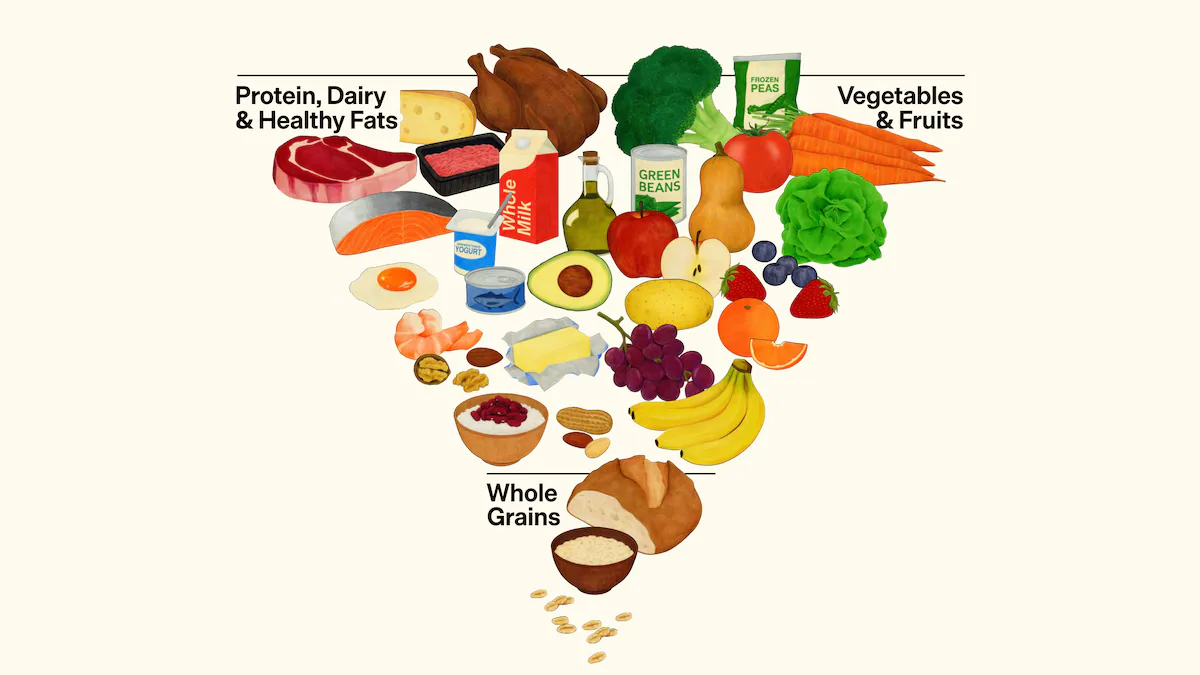
The Trump administration has introduced a revised food pyramid emphasizing the consumption of protein and whole foods while advocating the end of restrictions on saturated fat. U.S. Health Secretary Robert F. Kennedy Jr. revealed these new dietary guidelines focused on red meat, cheese, vegetables, and fruits at a press conference today.
Read More
Kennedy asserted that these guidelines represent a substantial shift in nutrition policy, aiming to eliminate support for overly processed foods that have detrimental effects on health. The updated guidelines will set limits on added sugars and promote diets inclusive of meat and dairy. “Protein and healthy fats are essential and were wrongly discouraged in prior dietary guidelines,” Kennedy remarked, signaling an end to what he termed the "war on saturated fats."
Kennedy, along with Agriculture Secretary Brooke Rollins, advocated for a significant reduction in the intake of highly processed foods, which are often loaded with refined carbohydrates, added sugars, excess sodium, unhealthy fats, and chemical additives. They noted that more than 70% of American adults struggle with overweight or obesity linked to diets heavy in processed foods and a sedentary lifestyle.
Critics have voiced concerns about the new guidelines, particularly regarding the prioritization of red meat and sources of saturated fat. Christopher Gardner, a nutrition expert from Stanford University and a former member of the Dietary Guidelines Advisory Committee, expressed disappointment, stating that promoting these foods contradicts decades of research.
The new pyramid also elevates cheese and dairy products, allowing for the inclusion of full-fat milk and dairy options in school meals. Dr. Dariush Mozaffarian, a cardiologist and public health scientist at Tufts University, noted that evidence suggests dairy products can be beneficial to health. “Both low-fat and whole-fat dairy versions of milk, cheese, and yogurt have been linked to lower cardiovascular risk,” he indicated.
Mozaffarian supported the recommendation to reduce highly processed foods, emphasizing their association with various health issues. Although many Americans may not directly consult the dietary guidelines, they significantly influence food served in schools, military establishments, and federal aid programs for mothers and infants, which are governed by nutrient and calorie targets set by these guidelines.