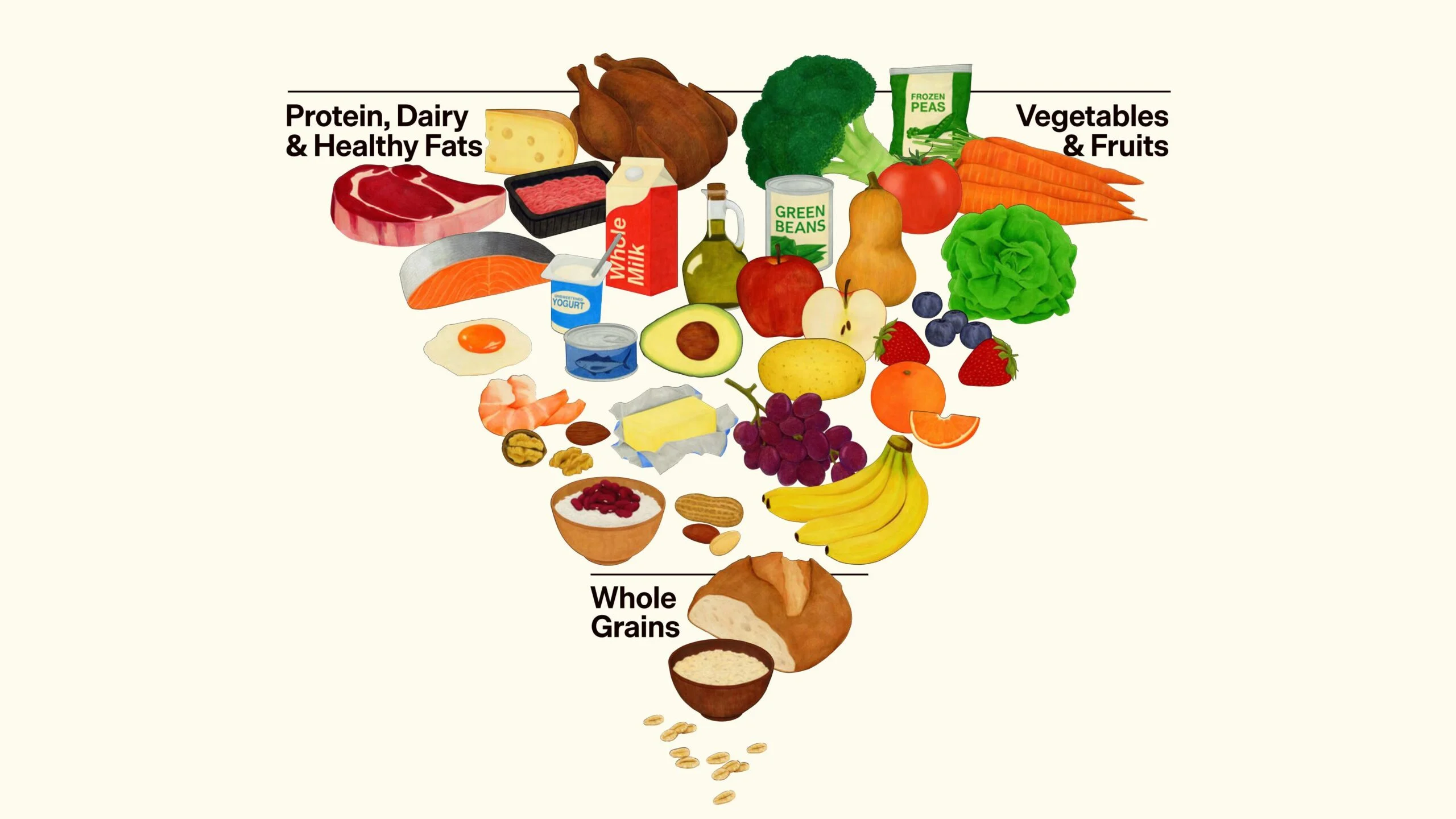
The Trump administration has introduced new dietary guidelines, revising the traditional model of the food pyramid by placing protein, healthy fats, and vegetables at the top of an inverted triangle.
Read More
These guidelines, known as the Dietary Guidelines for Americans, are updated every five years and aim to assist in making informed dietary choices to meet nutritional needs and promote health. They influence various programs, including school lunches and the Supplemental Nutrition Assistance Program (SNAP).
The Wisconsin Academy of Nutrition and Dietetics has commended the guidelines for discouraging highly processed foods and refined carbohydrates. However, concerns have been raised regarding the promotion of foods high in saturated fats, such as red meat and butter.
Michelle King Rimer, a clinical assistant professor at the Zilber College of Public Health at the University of Wisconsin-Milwaukee and a registered dietitian, notes that the new recommendations on protein intake may be misleading. According to her, while the guidelines suggest consuming 1.2 to 1.6 grams of protein per kilogram of body weight daily—a doubling of earlier recommendations—most Americans already consume sufficient protein. She emphasizes the need for clearer communication regarding the quality of protein sources, highlighting that plant-based proteins and fish are linked to better health outcomes.
For instance, a 4-ounce sirloin steak provides about 33 grams of protein with roughly 5 grams of saturated fat, while one cup of cooked lentils offers approximately 18 grams of protein but includes 15 grams of fiber and minimal saturated fat.
The guidelines also advocate for the consumption of “real foods” and advise against highly processed options like chips, cookies, and candy that are high in added sugars and sodium. While King Rimer aligns with this message, she believes there should be more precise definitions of what constitutes “highly processed” foods. For example, a baby carrot, though processed, remains nutritious.
In her classes, King Rimer utilizes the Nova classification system to categorize foods based on their processing level, which aids in discussing their nutritional value and health implications. She suggests treating ultra-processed foods with caution regarding their frequency and portion sizes.
Despite the guidelines' brief format, King Rimer criticizes the inconsistency in messaging. She points out that while red meat is ranked atop the pyramid, the text advises limiting saturated fat intake to 10 percent, despite red meat’s high saturated fat content. Additionally, though whole grains are positioned at the bottom of the new pyramid, the guidelines encourage prioritizing fiber-rich whole grains, aligning with prevalent research linking them to reduced risks of heart disease, diabetes, and certain cancers.
Overall, King Rimer advocates for a focus on real foods and adopting a “food-is-medicine” philosophy. She advises people to concentrate less on specific graphics and more on enduring recommendations: consuming ample fruits and vegetables, choosing whole grains, incorporating diverse protein sources, limiting sugars, and being mindful of saturated fats.