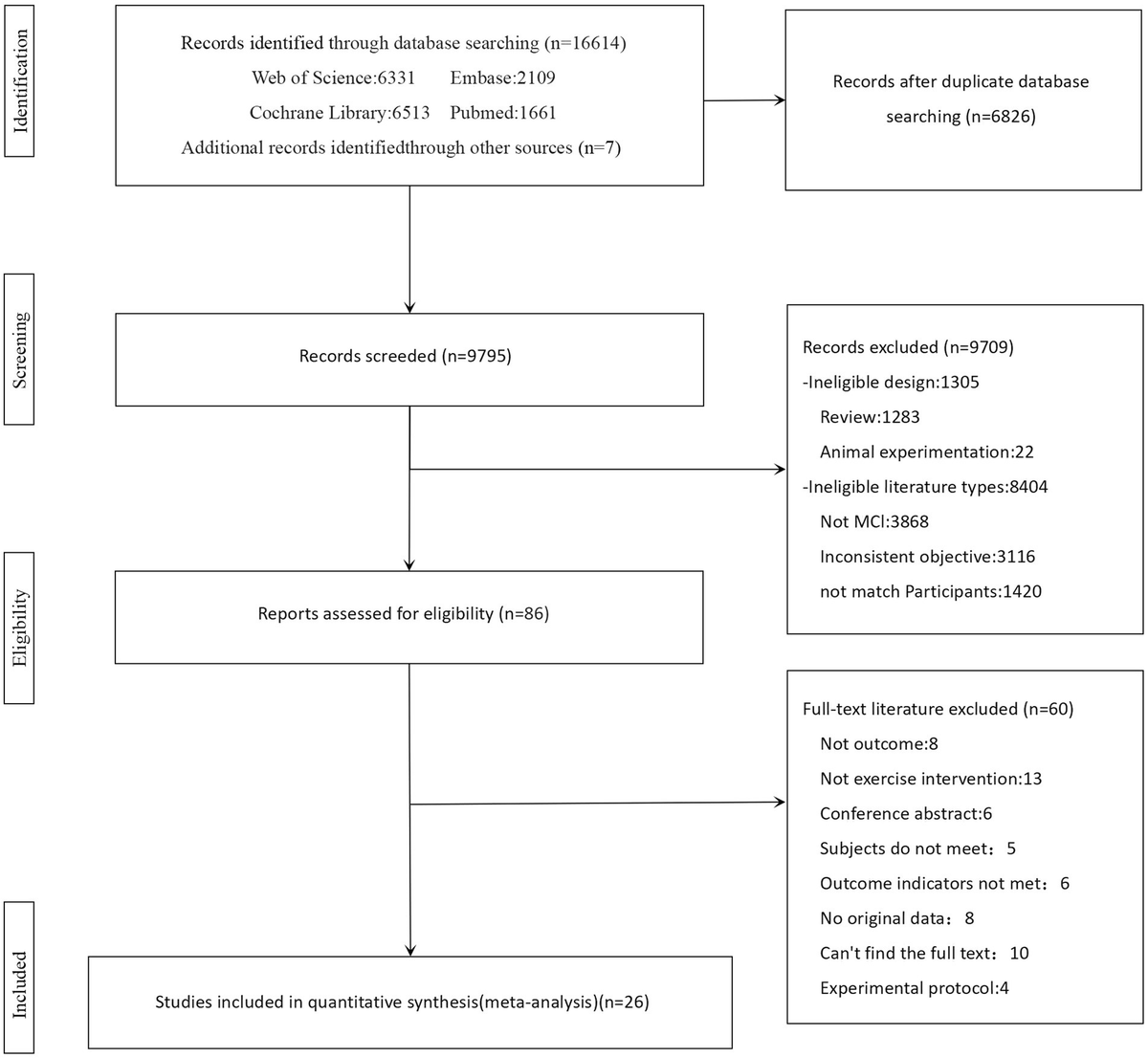
Aerobic exercise is increasingly acknowledged for its potential cognitive benefits in older adults experiencing mild cognitive impairment (MCI). This systematic review and meta-analysis aimed to evaluate its effects on cognitive function, sleep quality, and quality of life in this population while identifying optimal exercise parameters based on the FITT principle (frequency, intensity, time, and type).
Read More
The analysis included 26 randomized controlled trials involving 2,085 MCI participants. Results indicated significant improvements associated with aerobic exercise in global cognitive function (SMD = 0.81, 95% CI: 0.58–1.05, p < 0.00001) and quality of life (SMD = 1.26, 95% CI: 0.70–1.82, p < 0.00001). However, no notable enhancement in sleep quality was observed (SMD = 0.07, 95% CI: −1.79 to 1.93, p = 0.94). Subgroup analyses showed that interventions conducted four times per week for over 50 minutes at moderate intensity were most effective, particularly those involving walking.
The study's background highlights that around 50 million people worldwide are afflicted by dementia, with projections suggesting a tripling of this number by 2050. MCI serves as a critical transition stage between normal cognitive aging and dementia, necessitating effective management strategies to delay cognitive decline.
Prior interventions for MCI primarily encompassed pharmacological treatments, but these have shown limited long-term efficacy. In contrast, non-pharmacological strategies, particularly physical activity, have garnered attention as safer alternatives. Aerobic exercise can enhance aerobic fitness—critical for older adults—contributing to better cognitive outcomes through increased cerebral blood flow and stimulation of neurotrophic factors.
The review indicates a substantial correlation between sleep disturbances and cognitive decline, emphasizing the importance of sleep quality in cognitive health. Despite the strong association of poor sleep with MCI, further research is needed to distinguish the interplay between exercise and sleep quality effectively.
The findings advocate for tailored aerobic exercise interventions to improve cognitive function and overall quality of life among older adults with MCI. Although results for sleep quality are inconclusive, the evidence supports the importance of aerobic exercises as a viable strategy for cognitive health management. The researchers recognized the need for larger, high-quality trials to refine these intervention strategies further.