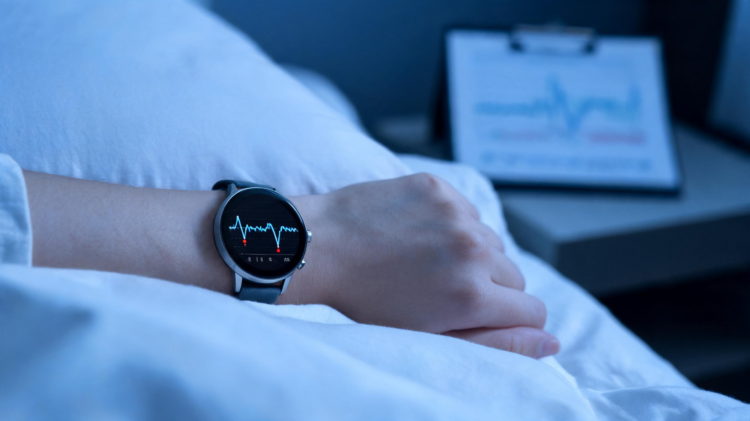
A recent study published in the Journal of Clinical Sleep Medicine indicates that a consumer smartwatch, specifically the Samsung Galaxy Watch, demonstrates significant efficacy in detecting moderate-to-severe obstructive sleep apnea and assessing patients' nighttime oxygen loss. The research compared the watch's capabilities with traditional overnight polysomnography, the clinical standard for diagnosing sleep-disordered breathing.
Read More
The study involved 152 adults, aged 22 and older, who either had been previously diagnosed with moderate-to-severe sleep apnea or were assessed to have a high likelihood of the disorder, measured by a STOP-Bang questionnaire score of at least three. Participants wore the Galaxy Watch during two nights of polysomnography, followed by several nights of at-home monitoring, before returning for a second lab evaluation. Out of these, 147 participants completed the assessments, contributing a total of 1,850 hours of sleep data.
Obstructive sleep apnea occurs when the upper airway partially or completely obstructs during sleep, leading to disruptions in airflow and reduced blood oxygen levels. The apnea-hypopnea index (AHI)—the average number of breathing interruptions per hour—typically assesses the severity of this condition. In the study, moderate-to-severe apnea was classified as an AHI of 15 or greater events per hour. Researchers also considered hypoxic burden, a more comprehensive measure that evaluates the cumulative effects of drops in oxygen levels throughout the night, as it can provide deeper insights into the physiological consequences of sleep apnea.
The Galaxy Watch achieved an impressive area under the receiver operating characteristic curve of 0.94 for detecting moderate-to-severe sleep apnea. At the default eAHI threshold of 15, it exhibited a sensitivity of 94.1% and a specificity of 66.7%. However, when the researchers adjusted the threshold to an eAHI of 25.95, sensitivity decreased to 82.4%, but specificity rose significantly to 94.9%. This adjustment illustrates the balancing act between capturing more individuals with the disorder and minimizing false positives.
Remarkably, for participants classified as high-risk due to hypoxic burden, the Galaxy Watch achieved both 100% sensitivity and specificity at the default threshold of eAHI. However, researchers caution that these results stemmed from a select group and may not generalize to the broader population.
This study suggests consumer-grade wearables may effectively help with early detection and triage for sleep testing, especially in areas lacking access to traditional polysomnography services. While the smartwatch cannot replace clinical evaluations and diagnostics, it may serve as a valuable screening tool, allowing for earlier referrals and broader monitoring capabilities.
The study was registered under ClinicalTrials.gov as NCT06603441, and while the data remains confidential due to ethical considerations, Samsung Electronics supported the research. The prospective nature of the study provides a more accurate evaluation of the Galaxy Watch's capabilities, as it included continuous assessments rather than relying solely on retrospective analyses.
Overall, the findings indicate a promising role for smartwatches in identifying sleep apnea, paving the way for future research into their use in broader healthcare settings.