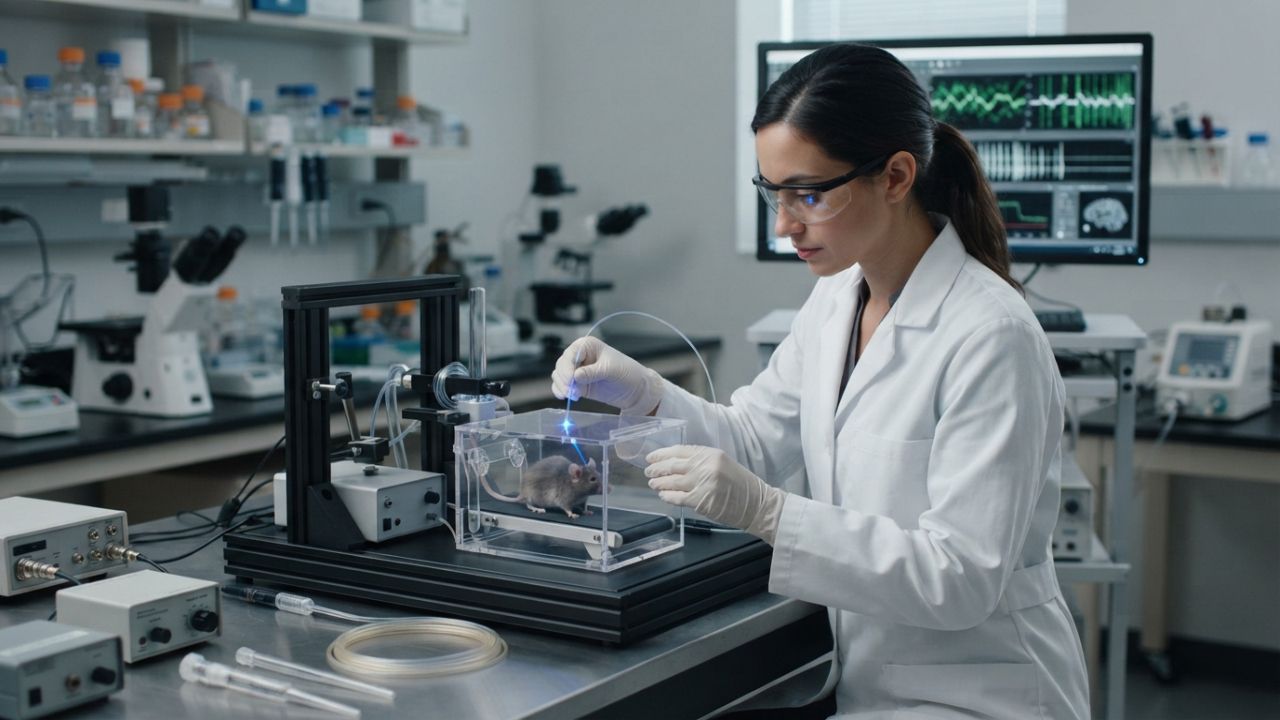
On October 5, 2026, the Nobel Prize in Physiology or Medicine was awarded to Karl Deisseroth of Stanford University, Peter Hegemann of Humboldt University of Berlin, and Georg Nagel of the University of Würzburg for their contributions to optogenetics and the discovery of light-gated ion channels. They will share a prize of 12 million Swedish kronor, equivalent to approximately $1.2 million.
Read More
While this recognition highlights important advancements in brain research, it does not signify the availability of new treatments for depression or Parkinson’s disease in humans. The landmark findings associated with this research have been primarily demonstrated in mice, and no optogenetic therapies for these conditions have received approval from the U.S. Food and Drug Administration (FDA).
The inception of this work dates back to the early 1990s at the Max Planck Institute when Hegemann began investigating how the single-celled alga Chlamydomonas orients itself toward light. Subsequent discoveries in the early 2000s led Hegemann and Nagel to identify channelrhodopsins, proteins that respond to light, while Deisseroth’s laboratory later demonstrated the ability to control rat nerve cells using light.
Through optogenetics, scientists can genetically modify specific brain cells to respond to light, enabling the control of these cells within milliseconds. Per Svenningsson, the chair of the Nobel Committee for Physiology or Medicine, noted that this technique transforms the way researchers can map brain activity.
Deisseroth has successfully used optogenetic techniques to both induce and alleviate symptoms of depression in mice and to reverse symptoms of Parkinson's in separate studies. However, translating these findings into human applications remains a challenge. As stated in the Stanford Report, the method carries inherent safety considerations, requiring gene delivery and light penetration into deep brain tissues, and as such, there are currently no approved optogenetic treatments available for human use.
The closest real-world application of optogenetics has been noted in vision restoration for those blinded by conditions like retinitis pigmentosa. A 2021 report in Nature Medicine documented partial recovery of sight in one patient utilizing an optogenetic therapy, although the treatment requires special equipment and is specific to ocular conditions.
For families and patients coping with depression or Parkinson's disease, the importance of existing treatment options cannot be overstated. Patients are advised to continue with established therapies, including talk therapy, medications, and brain stimulation techniques for depression and various treatments for Parkinson's. They should be cautious of misleading claims about light therapies tied to the Nobel news.
The Nobel laureates will formally receive their awards in December in Stockholm. Any potential human therapies derived from optogenetics would still require extensive safety testing and regulatory approval, likely taking years before becoming available.