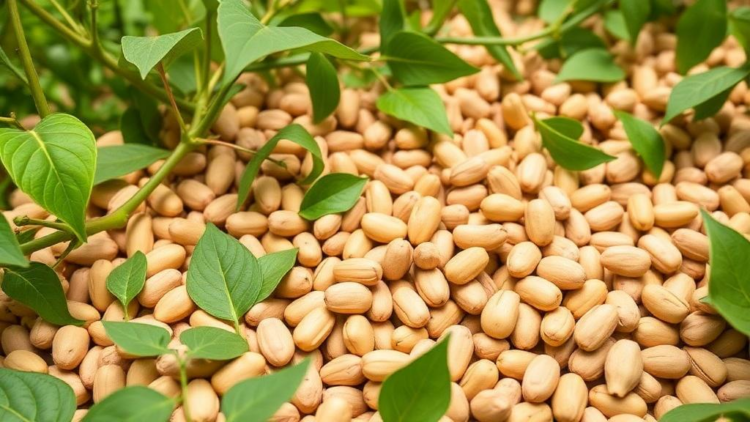
Researchers in Northern Cameroon have conducted a comprehensive study on the performance of fifteen exotic groundnut varieties, revealing key insights into yield and nutrition trade-offs in a region where groundnuts are a staple food and vital cash crop. Published in the Indian Journal of Genetics and Plant Breeding, the research assessed these varieties across three agro-ecological sites, combining field yield measurements with laboratory analyses of seed chemistry.
Read More
Led by Dounia Désiré from the University of Garoua alongside colleagues from other local universities, the study was conducted at Gazawa, Bocklé, and Dang. These sites represent a variety of environmental conditions within Northern Cameroon, where groundnut cultivation is challenged by erratic rainfall, pest issues, and a lack of genetic diversity in local cultivars. To address these limitations, the researchers explored exotic germplasm supplied by the International Crops Research Institute for the Semi-Arid Tropics (ICRISAT).
The primary aim was to determine if significant differences exist among the new varieties in important traits and which traits breeders should prioritize. The researchers measured various agronomic parameters, such as pod weight and yield, as well as biochemical traits like lipid and protein content. Their findings indicated that not all varieties are interchangeable; substantial differences in every trait suggest a rich genetic variability that can be leveraged for crop improvement.
One notable finding highlighted a strong correlation between pod weight and overall yield, with a correlation coefficient of 0.97. This indicates that selecting for heavier pods can effectively enhance yields, simplifying the breeding process. On the biochemical side, a significant trade-off was observed: higher lipid content often resulted in lower protein content, underscoring the need for breeders to choose specific quality targets based on market needs.
Conversely, a positive association between total polyphenol content and antioxidant activity was also identified, suggesting that varieties high in polyphenols could offer health benefits in regions with limited dietary diversity.
Through multivariate clustering, the researchers divided the fifteen varieties into three categories based on their traits: high-protein, high-polyphenol, and high-lipid. This classification can aid breeders in selecting varieties that align with specific market demands, whether for cooking oil or nutritional products.
The study also emphasizes the importance of groundnut in enhancing food security across the Sahel, particularly in Northern Cameroon, where average yields remain low amid climate challenges. However, the researchers noted that the work represents only the initial phase of investigation. Further testing across additional locations and seasons would be essential to confirm the reliability of the trait patterns observed, especially given the impact of environmental conditions on groundnut performance. Nevertheless, the study provides a valuable dataset that could pave the way for improved groundnut varieties that meet both agricultural and nutritional needs in the region.