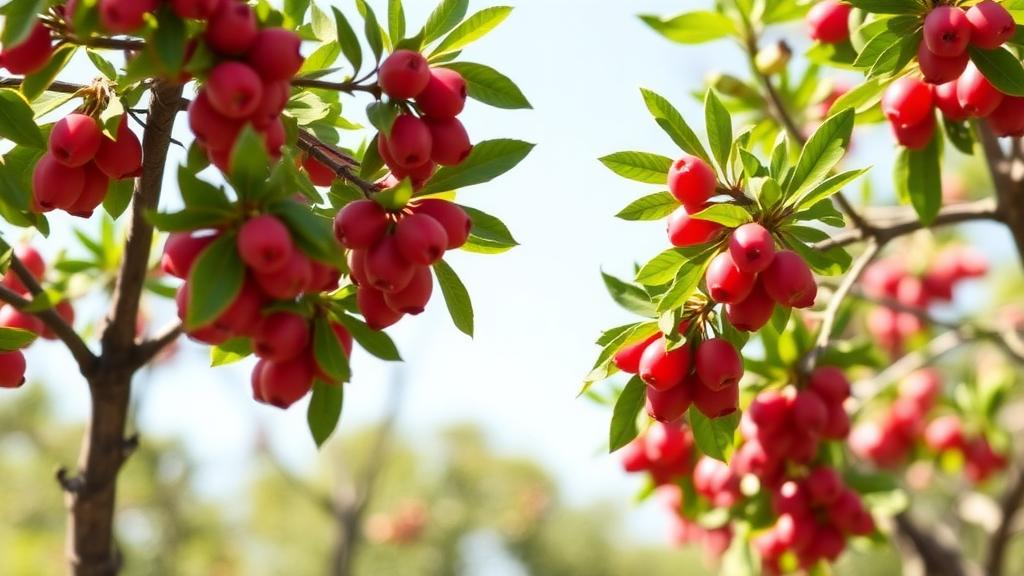
A recent study published in the journal Plant and Soil by researchers from Hebei Agricultural University in China has examined the mineral nutrition of jujube trees, challenging established concepts in plant nutrition science. Traditionally, plant mineral nutrition has primarily been derived from annual crops such as wheat and maize, but this new research focuses on the long-lived perennial jujube tree (Ziziphus jujuba), noted for its drought resistance and nutrient-rich fruit.
Read More
The study's authors, led by Kun Feng, Jiaqing Cai, and Xinyue Liu, investigated two key jujube cultivars, Jinsixiaozao and Dongzao, both six years old and actively producing fruit. The researchers conducted an extensive chemical analysis, measuring the concentrations of 32 different mineral elements in three parts of the trees: the mature fruits, the leaves, and the branches that were pruned during winter.
One significant finding was the lack of correlation between mineral concentrations in the soil and those in the trees, indicating that jujube trees possess a high degree of control over their mineral uptake. This suggests that orchard management strategies based solely on soil nutrient levels may be ineffective.
The study also revealed that jujube trees exhibited lower phosphorus uptake compared to what is typically expected based on herbaceous plants. This finding raises questions about current fertilization practices, as excessive phosphorus application could be unnecessary and harmful to the environment.
Additionally, the research uncovered a hierarchy in mineral storage, with leaves containing the highest concentrations of minerals, branches in the middle, and fruits holding the least. This has implications for orchard management, as it suggests that returning pruned branches and leaves to the soil could enhance nutrient recycling and improve soil health.
Furthermore, the two cultivars showed notable differences in macroelement contents, indicating that specific fertilization strategies may be required for different varieties, while managing microelements could remain uniform across cultivars.
The research adds to emerging evidence that current plant mineral nutrition theories, primarily based on annual crops, fail to account for the complexities of woody plants like jujubes. This suggests the need for a revised theoretical framework for understanding the nutrition of perennial fruit trees.
Overall, the study proposes that jujube fertilization practices should adapt to reflect the trees' unique nutritional patterns, emphasizing the importance of mineral storage in leaves and branches for sustainable orchard management.