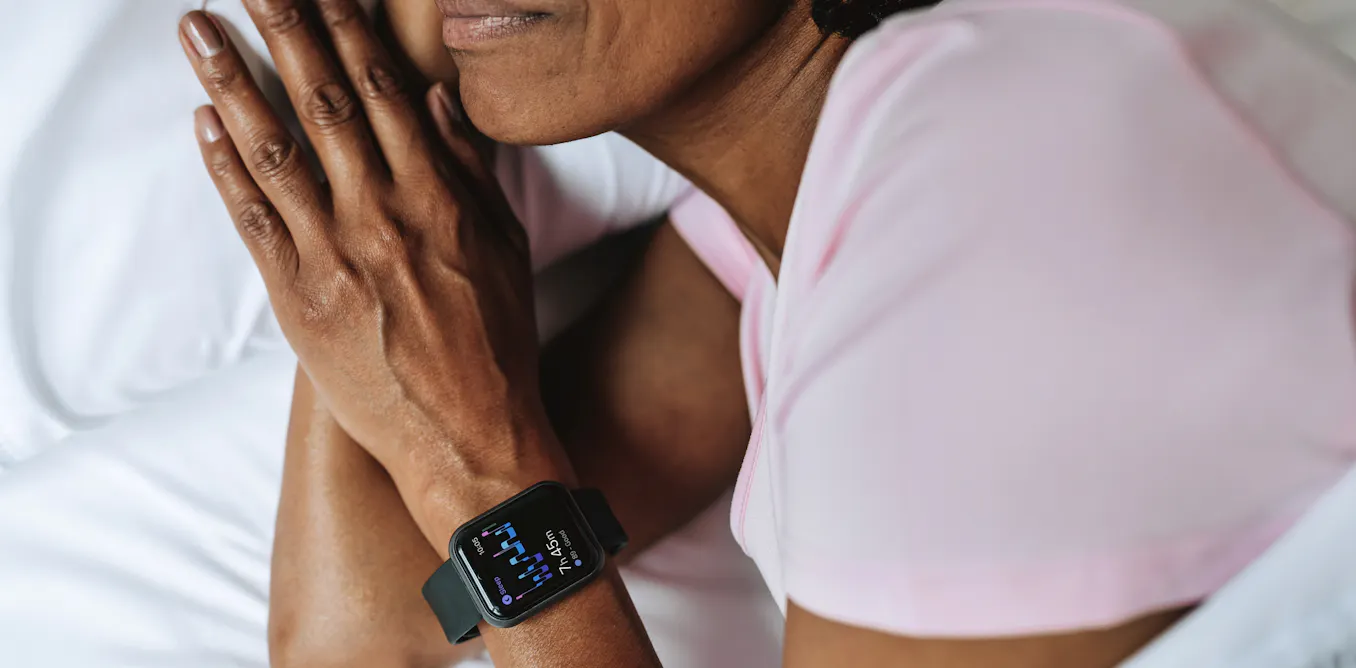
I often go to bed wearing two different sleep trackers: one on each wrist. In the morning, I compare their findings while enjoying my coffee.
Read More
As the director of the Center for Modern Digital Health at Carnegie Mellon University in Pittsburgh, my team studies how wearables can enhance health and performance. My research utilizes consumer devices extensively, leading me to question their accuracy in delivering sleep data.
Apple recently launched its latest watch on September 9, 2026, featuring a “readiness” number that partly reflects estimated sleep quality. While Apple claims that its new sensors provide the most precise heart-rate tracking available, independent verification is still pending.
With sleep trackers gaining popularity, it’s crucial to examine the reliability of these devices when assessing sleep patterns.
When it comes to determining whether a person is asleep or awake, modern wearables perform fairly well. A 2025 meta-analysis encompassing 24 studies and nearly 800 participants revealed that wearables typically overestimate total sleep time by approximately 17 minutes when compared to polysomnography, a standard sleep measurement technique. This translates to an error of under 4% for an eight-hour night.
Wearables can often gauge total sleep time accurately, but tracking sleep stages remains more challenging. A common issue is that devices may misinterpret prolonged periods of stillness in the dark as sleep. For many users, especially those who sleep well, this discrepancy may not be significant. However, individuals with insomnia might find that these inaccuracies lead to an exaggerated perception of their sleep duration.
Wearables do not directly measure brain activity; they track metrics such as heart rate, movement, and skin temperature. Device manufacturers assume that different sleep stages produce distinct physiological signatures detectable by their algorithms. A 2025 study involving six wrist devices and 62 adults found limited alignment with polysomnography regarding sleep stages and other metrics, indicating that while these devices can identify notable changes in sleep patterns, their estimates should be approached cautiously.
In my lab's research published in 2023, we utilized Fitbits to track the sleep of over 600 first-year university students. The study demonstrated that students averaging six or fewer hours of sleep early in the semester garnered lower end-of-term GPAs compared to previous terms. Thus, the ability to monitor nightly sleep duration effectively allows these devices to provide actionable insights.
In a randomized trial in 2023, 113 adults experiencing insomnia were divided into two groups: one received feedback from a wearable sensor along with guidance on interpreting that data, while the other received standard sleep hygiene education. Although the feedback group reported a decrease in insomnia symptoms, their actual sleep duration remained unchanged. This suggests that wearables may help improve subjective perceptions of sleep quality rather than the quantity of sleep itself.
The importance of perceived sleep quality is underscored by the longstanding work of Pittsburgh researchers who developed the Pittsburgh Sleep Quality Index in 1989, emphasizing self-reported sleep quality.
A similar trial in 2026 involving older adults in Japan also indicated that subjective sleep ratings improved with additional guidance on sleep habits, although self-reported sleep scores alone did not yield significant changes.
While wearables can accurately track sleep duration, improving actual sleep quantity relies more on individual actions. For some users, the pressure to track sleep can lead to anxiety, a condition known as orthosomnia.
I interpret sleep data as I would a weather forecast: indicative of trends but not definitive for specific nights. Additionally, new device evaluations often become outdated as newer models are released.