January 23, 2026
Read More
A research study published in the *Annals of the American Thoracic Society* has found that middle-aged adults with comorbid insomnia and sleep apnea have significantly increased odds for uncontrolled hypertension compared to those without these conditions. The study highlights the importance of recognizing the interplay between sleep disorders and cardiovascular health.
Dr. Mio Kobayashi Frisk from the University of Gothenburg and colleagues analyzed data from 3,832 adults aged 50 to 64 years as part of the Swedish CArdioPulmonary BioImage Study Gothenburg cohort. Participants with an apnea-hypopnea index (AHI) over 10 events per hour and an Insomnia Severity Index score of at least 15 were classified as having comorbid insomnia and sleep apnea (COMISA).
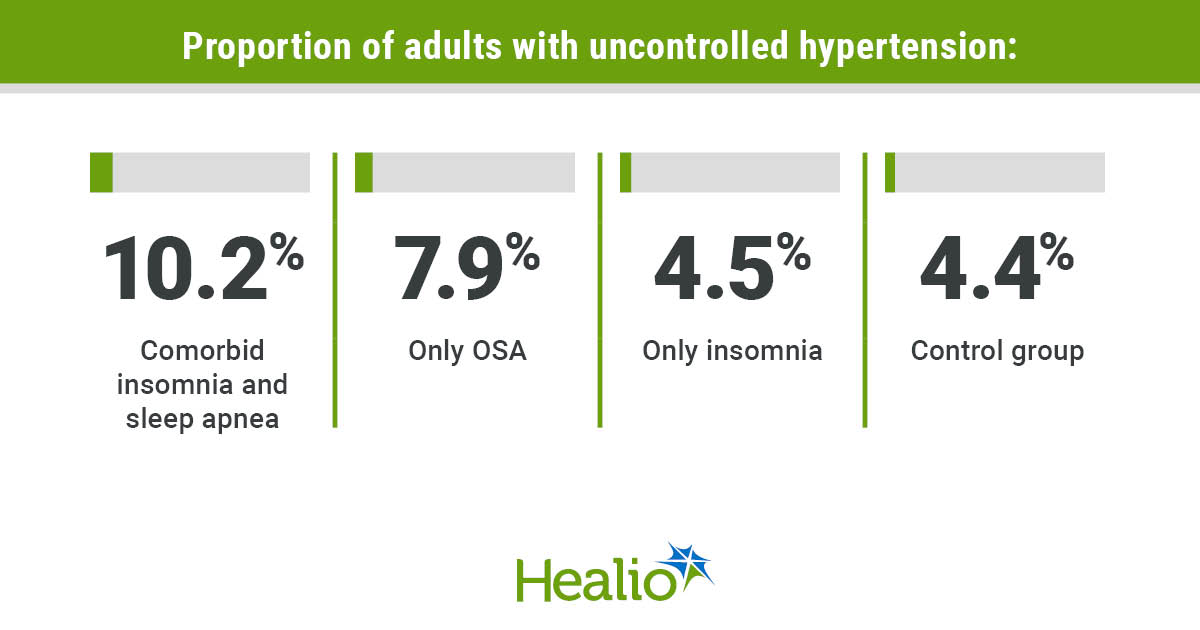
Among the sample, 118 adults (3.1%) had COMISA, while 694 (18.1%) had only obstructive sleep apnea (OSA), and 404 (10.5%) had only insomnia. The group with COMISA exhibited the highest rate of uncontrolled hypertension at 10.2%, compared to 7.9% for the OSA group, 4.5% for those with only insomnia, and 4.4% for the control group.
The researchers found that the odds for uncontrolled hypertension were significantly higher in those with COMISA (OR = 1.88) and those with only OSA (OR = 1.31) when adjusted for factors such as anthropometrics and lifestyle. Importantly, the analysis indicated that the time spent with oxygen saturation at 90% or less was notably higher in the COMISA group compared to those with only OSA.
The study concluded that the findings emphasize the need for personalized treatment strategies addressing sleep health as a multi-faceted issue. Further longitudinal studies are needed to determine causality and the impact of effective treatments for both conditions on blood pressure outcomes.
Dr. Alexandre Rocha Abreu, a spokesperson for the American Academy of Sleep Medicine, highlighted that this research could enhance patient awareness regarding the risks associated with combined insomnia and sleep apnea, which may lead to improved overall health outcomes.
The study underscores the importance of integrating sleep assessments into routine clinical practice and promoting better sleep hygiene, suggesting that both medical treatments and cognitive behavioral therapies may be beneficial for patients suffering from these conditions.