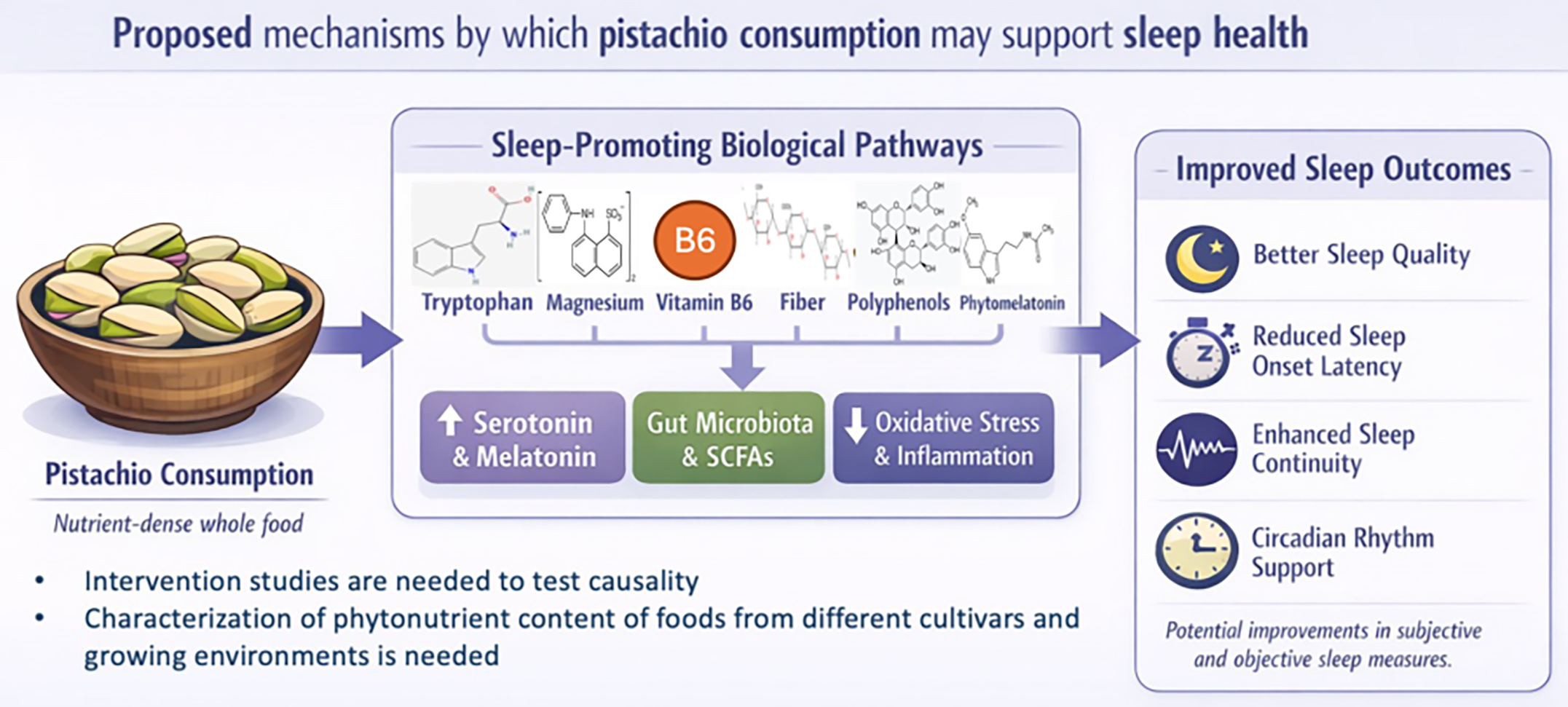
Diet plays a significant role in modulating sleep health. Observational and experimental studies have established correlations between sleep quality and dietary patterns, notably the Mediterranean Diet and the Dietary Approaches to Stop Hypertension (DASH). These diets emphasize the intake of nuts and legumes, with epidemiological studies indicating that adherence to such dietary patterns leads to better sleep quality, higher sleep efficiency, and fewer disturbances.
Read More
Recent longitudinal analyses have shown that increased consumption of nuts and legumes correlates with a reduced risk of insomnia. Building on existing research, this review focuses specifically on pistachios, which are particularly suited for promoting sleep health due to their rich nutrient profile.
Pistachios provide magnesium, vitamin B6, tryptophan, fiber, and various phytonutrients. A single serving contains a significant amount of vitamin B6 and is a good source of fiber and magnesium. Furthermore, pistachios are valuable for their polyphenol content, which could influence sleep-wake cycles possibly through their effects on the neurotransmitter GABA or by impacting gut microbiota.
Recent studies have highlighted the potential contributions of specific components in pistachios to sleep physiology. For instance, vitamin B6 plays a crucial role in synthesizing GABA and serotonin, the latter of which is converted into melatonin, a hormone that regulates sleep. Despite the associations between vitamin B6 intake and sleep quality, research has not specifically linked pistachios or their vitamin B6 content directly to sleep outcomes.
Dietary fiber in pistachios may also enhance sleep quality by modulating gut microbiota and promoting the production of short-chain fatty acids like butyrate, which is known to regulate sleep and could alleviate sleep disturbances. Observational studies correlate higher dietary fiber intake with better sleep quality, yet there is a need for clinical trials specifically examining pistachio-derived fiber's effects on sleep.
Pistachios are also a source of phytomelatonin, a plant-derived form of melatonin that could influence sleep. Studies indicate that other melatonin-rich foods can enhance sleep quality, suggesting potential benefits from pistachios as well. They contain notable levels of phytomelatonin, which may be bioavailable following digestion, although clinical data on this aspect remain limited.
The polyphenol content in pistachios, which ranks high among tree nuts, may also play a role in sleep health. Research suggests that polyphenolic compounds may modulate sleep parameters through interactions with gut microbiota, although further studies are needed to determine the impact of consuming whole nuts compared to isolated extracts.
Tryptophan, an essential amino acid present in pistachios, is a precursor to melatonin and has been associated with improved sleep duration and quality in observational studies. Magnesium, another component of pistachios, is essential for melatonin production and sleep regulation, linking lower magnesium intake to poorer sleep outcomes.
Considering the fatty acid profile of pistachios, which includes low saturated fat and higher unsaturated fats, it is suggested that unsaturated fats can benefit sleep quality, while high saturated fat intake may detract from it.
In conclusion, while various studies highlight the potential role of pistachios in enhancing sleep quality through their unique nutrient profile, more research is required. Future studies should focus on direct interventions using pistachios to explore their impact on sleep outcomes, investigate the interplay of their diverse nutrients, and clarify their bioavailability.