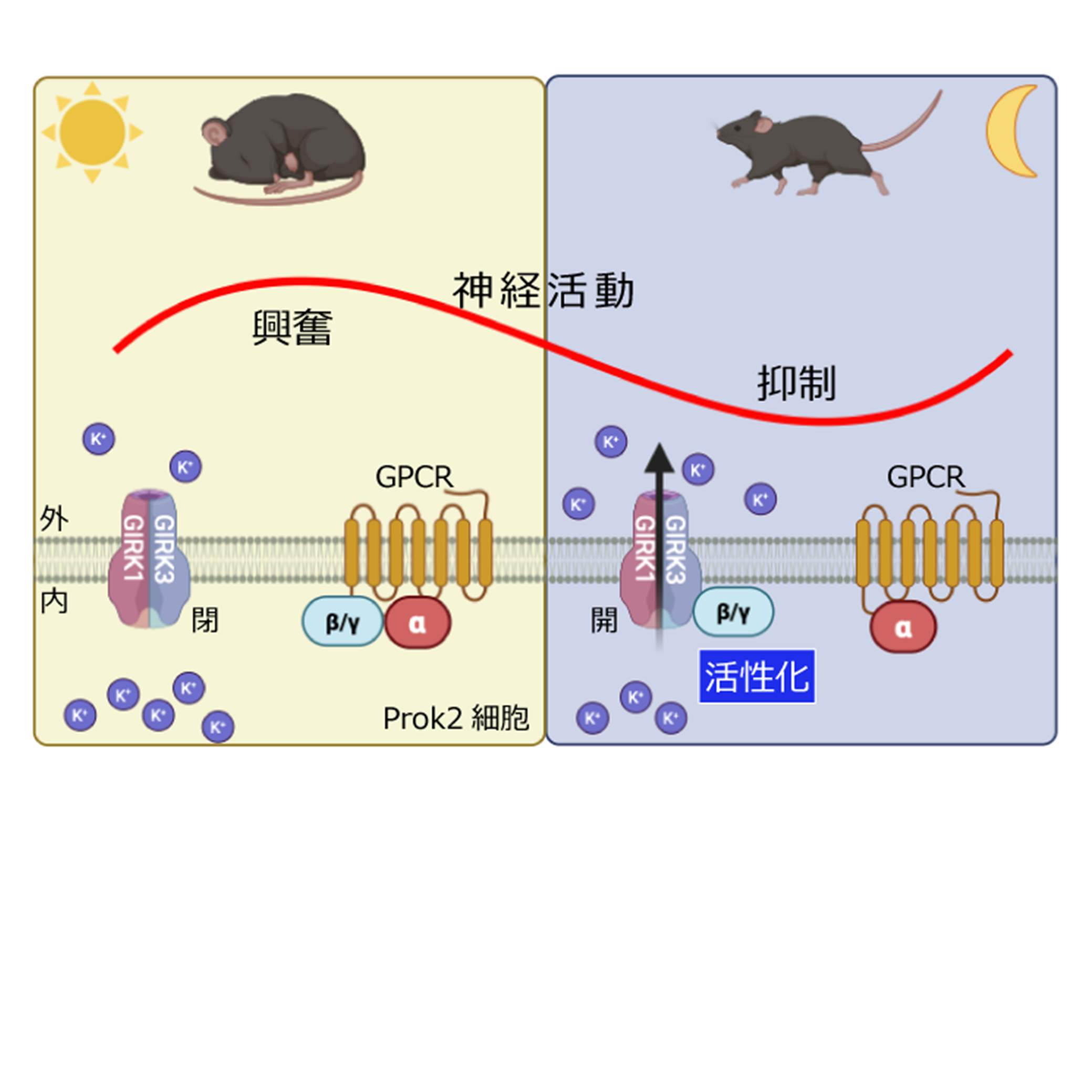
A research team from Kanazawa University, including doctoral student Jeahun Jun, Associate Professor Takashi Maejima, Lecturer Yusuke Tsuno, and Professor Toshihiro Saigusa, along with collaborators from Hokkaido University and the University of Tokyo, has identified a specific ion channel that plays a central role in suppressing neuronal activity at night in the brain’s circadian clock.
Read More
The identified ion channel, known as the GIRK channel, facilitates the outflow of potassium ions from inside to outside the cell when activated, thereby inhibiting neuronal activity. This study revealed that the GIRK channel is crucial for creating different patterns of neuronal activity between day and night within the suprachiasmatic nucleus, which serves as the body’s central circadian clock.
Focusing on a specific group of neurons in the suprachiasmatic nucleus that release the signaling molecule Prokineticin 2 (Prok2), the research team found that neurons producing Prok2 exhibit a daily rhythm, being highly active during the day and less so at night. They determined that the GIRK channel functions as the molecular mechanism that suppresses this nighttime activity.
Additionally, using genetic engineering techniques, the removal of the GIRK channel from Prok2-producing neurons in mice resulted not only in the loss of daily neuronal activity rhythms but also disrupted the overall daily activity cycle of the mice. This was particularly evident in nocturnal mice, which showed a significant delay in the onset of activity during the night, resembling symptoms of delayed sleep phase disorder in humans.
This research marks a significant advance in understanding the molecular mechanisms that allow the body’s internal clock to regulate activity between day and night. It is expected to lead to new preventive and therapeutic approaches for disorders related to circadian rhythm disruptions, such as sleep-wake disorders and autonomic dysfunctions.
The study was published online on July 31, 2026, in the journal 'The Journal of Neuroscience.'
**Glossary**
1. **GIRK Channel**: An acronym for G protein-coupled inwardly rectifying potassium channel, a type of ion channel present in neuronal membranes that, when activated by G proteins, allows potassium ions to flow out of the cell, making it harder for the neuron to become active.
2. **Prokineticin 2 (Prok2)**: A peptide composed of 81 amino acids that acts as a signaling molecule in various cells. It is found in the suprachiasmatic nucleus, facilitating information transfer between neurons and conveying temporal information produced within the nucleus to other brain regions.
3. **Circadian Rhythm Sleep Disorders**: A collective term for sleep-wake disorders arising from dysfunctions of the body’s internal clock, leading to misalignment of sleep-wake cycles with socially acceptable times. Examples include jet lag, shift-work disorder, and various types of delayed or advanced sleep phase disorders.