This study investigates the predictors of insomnia severity among shift workers using a machine learning (ML) model. Insomnia in this population is often exacerbated by circadian rhythm disruptions associated with irregular work schedules. Previous research has primarily focused on a limited range of factors influencing insomnia severity, underscoring the need for a more comprehensive analysis.
Read More
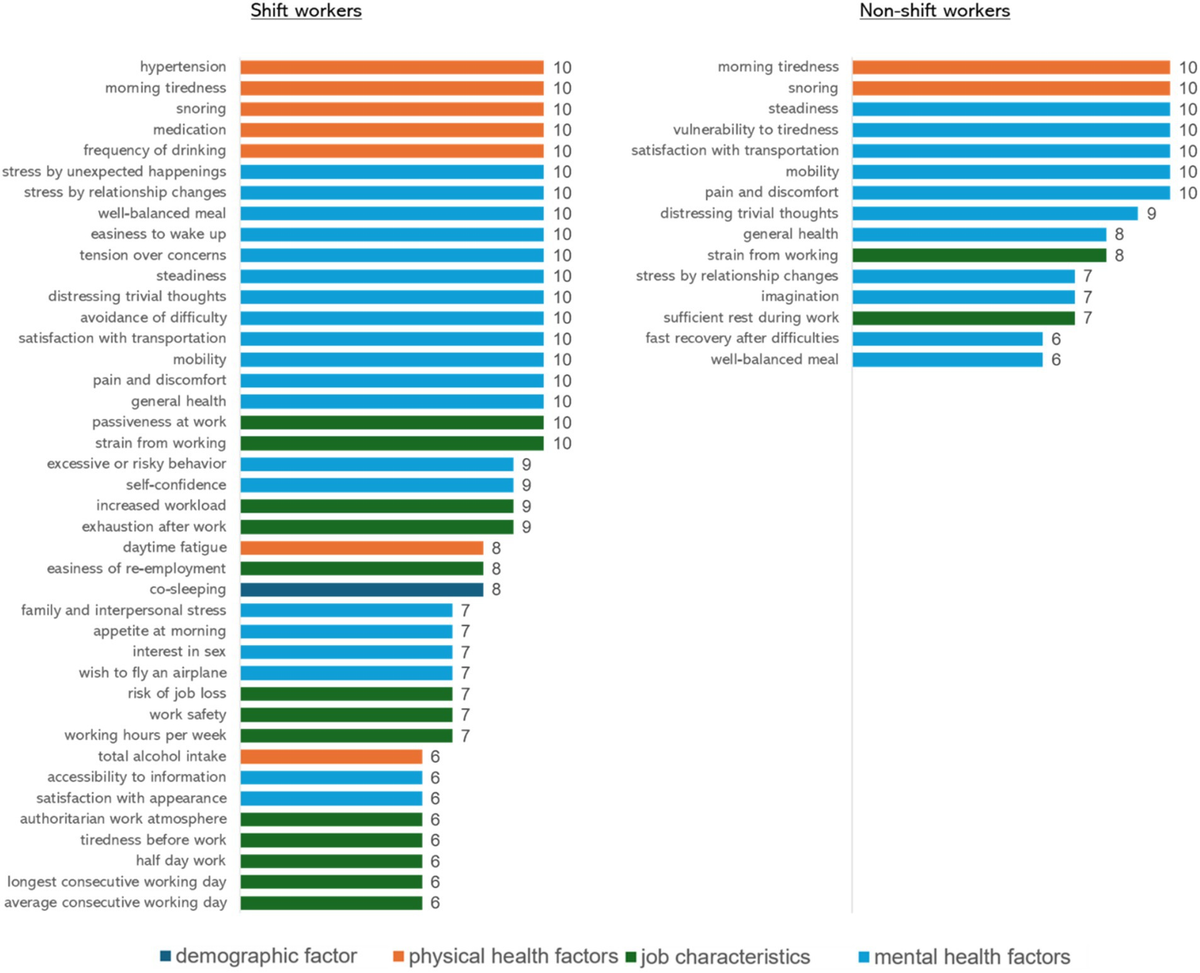
The study included 4,572 shift workers and 2,093 non-shift workers, employing a general linear model with the least absolute shrinkage and selection operator (LASSO) to determine the predictive factors. The ML algorithms identified 41 key predictors from a total of 281 variables, categorizing them into demographic, physical health, job characteristics, and mental health factors.
Compared to their non-shift working counterparts, the study found that shift workers had a stronger relationship between insomnia severity and five specific predictors: workplace passiveness, authoritarian atmosphere, ease of waking, family and interpersonal stress, and medication use. The resulting prediction model exhibited strong overall performance, particularly in terms of accuracy and specificity, although it showed limitations in recall and F1 score, indicating a need for improvement.
Specific predictors highlighted in the analysis included anxiety-related factors and job characteristics that uniquely affect shift workers. The model revealed that occupational aspects, such as work environment and interpersonal dynamics, are significant contributors to insomnia severity, suggesting that improving workplace conditions could alleviate insomnia symptoms.
Prominent variables were identified in both shift and non-shift workers, revealing differences in predictors related to insomnia. For shift workers, greater emphasis on work culture and stressors was evident. The need for a supportive work environment that allows flexibility was underscored as crucial in mitigating insomnia's impacts.
This exploratory study provides foundational insights for future research and emphasizes the potential for using ML techniques in developing effective prediction models for sleep disorders among various occupational groups. Follow-up studies are warranted to refine these models and better understand the complex interplay of factors contributing to insomnia severity in shift workers.