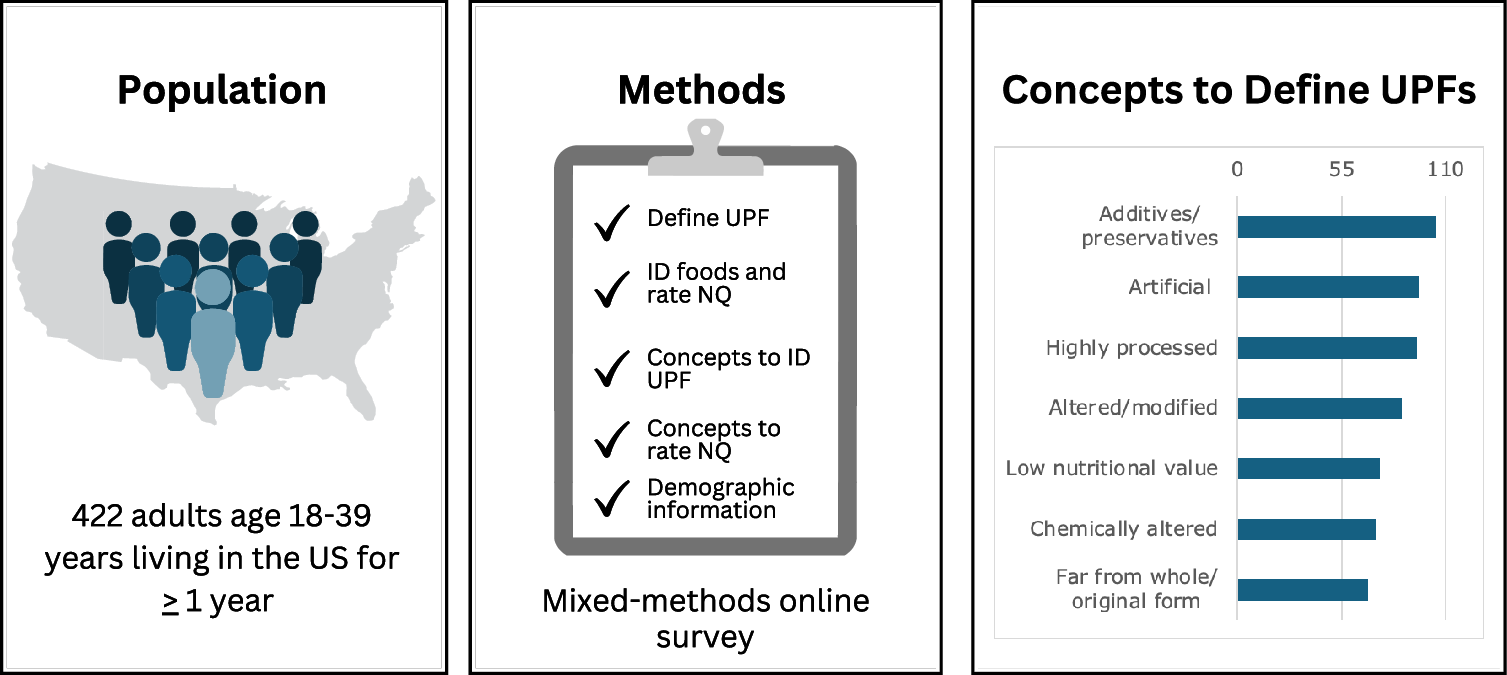
A study published in the Journal of Nutritional Science highlights the poor understanding among young adults in the United States regarding ultra-processed foods (UPFs) and the lack of a consensus definition. The research focuses on the definitions young adults use to identify UPFs and their ability to distinguish between UPFs and non-UPFs of varying nutritional qualities.
Read More
Conducted through a mixed-methods survey of 422 participants aged 18 to 39, primarily white and female, the study involved respondents defining UPFs and identifying 24 food items as UPF or non-UPF using product images and packaging information. Foods were categorized using the NOVA classification system, which defines UPFs based on processing levels. Key findings included the identification of thirty concepts used by participants to define UPFs, with common themes such as the presence of additives, low nutritional value, and multiple processing steps.
Results indicated that participants scored an average of 16 out of 24 (67%) on distinguishing UPFs from non-UPFs, demonstrating a lack of clear understanding. Significant differences in identification scores were found based on demographic factors such as gender, age, and education, with females performing better than males and older participants achieving higher scores than younger ones.
While issues relating to UPF consumption have been studied predominantly abroad, this study underscores the confusion surrounding food processing classification among U.S. consumers. The authors suggest that a clear, consumer-friendly definition of UPFs could enhance understanding and aid in dietary decision-making, highlighting the need for further research in more diverse populations.