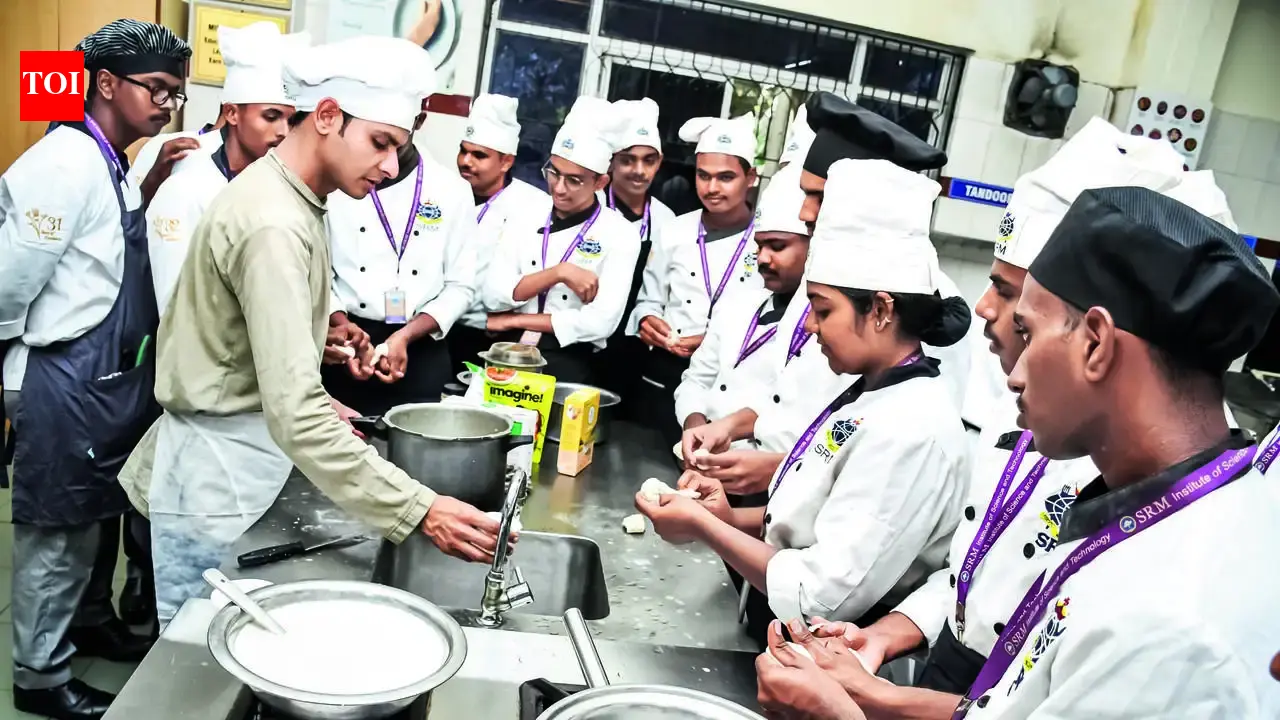
Many colleges in India are increasingly incorporating plant-based menus, with institutions like the SRM Institute of Hotel Management in Kattankulathur announcing that starting in 2027, students will dedicate a fifth of their coursework to cooking without meat, fish, eggs, or dairy. The institute has already reduced animal products in its dining halls and hostels by 30% as part of a broader trend toward plant-based food on campuses.
Read More
SRM Institute has partnered with Humane World for Animals India to provide training for faculty in plant-based food preparation. Vice Principal Lalitha Shri noted that training covered essential aspects of plant-based cooking, including ingredient substitution and menu planning to align campus dining with classroom lessons.
Other institutions have also embraced this trend. Pondicherry University and Bharath Institute of Higher Education and Research (BIHER) in Chennai serve plant-based meals in their canteens on specific days. The German International School in Chennai has offered 100% plant-based meals since 2017.
At BITS Pilani in Hyderabad, nearly half the menu is plant-based, facilitated by student advocates like Parth Gupta. He mentioned that vendors were eventually willing to provide vegan alternatives for traditional dishes. Naman Dedhia from the Plant Based Treaty organization remarked on the difficulties faced by government-run institutions due to political considerations but highlighted the growing movement in private colleges.
The director of Vision International School of Excellence in Gujarat, Sheetal Ahuja, shared insights on their transition to a vegan canteen three years ago, noting the importance of creating appealing and nutritious meals. To maintain familiar tastes, they adapted traditional dishes, such as marinating tofu for a paneer-like texture and introducing soy-based products.
At SRM, practical training includes working with a variety of plant-based ingredients and emphasizes culinary techniques over just recipes. Lalitha Shri explained that the aim is to inspire creativity while focusing on nutrition and sustainability. The initiative aims to transform perceptions of vegan cuisine, promoting it as innovative rather than merely a substitute.
Experts highlighted the health benefits associated with plant-based diets, such as being rich in fiber, while also addressing possible Vitamin B12 deficiency. Environmental researcher Sridhar A noted that increasing plant-based meals in educational institutions could significantly reduce the environmental impact of food systems, which contribute to greenhouse gas emissions. Finally, ethical considerations were emphasized by Sai Vignesh, advocating for a plant-based diet as a humane choice that aligns with human health.