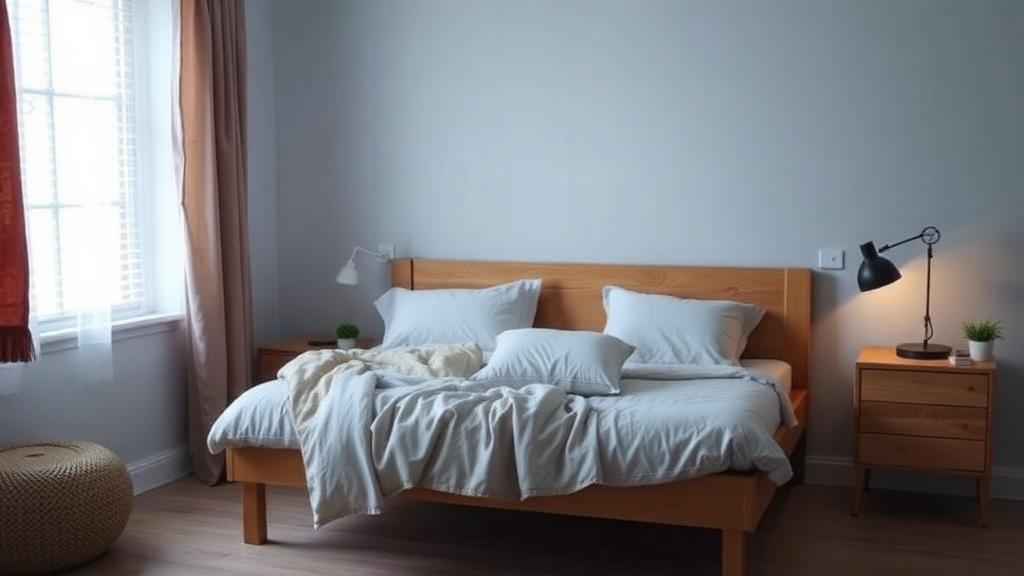
A recent study from Penn State researchers published in the journal Sleep Health reveals that the brightness, noise, and temperature of bedrooms significantly affect sleep quality among young adults. The research indicates that although total sleep time remains consistent, the perceived environmental conditions can degrade the quality of sleep. This challenges the belief that young people can sleep through various disturbances.
Read More
Led by doctoral candidate Adwoa Dadzie, the study assessed 372 participants with an average age of 22, using a daily diary method for 14 days. Each individual reported their sleep experiences and wore a wrist sensor to objectively record sleep patterns, allowing researchers to evaluate both subjective and physiological aspects of sleep.
Findings showed that poor environmental conditions correlate with longer times to fall asleep and lower quality ratings of sleep. Excess light, noise, and heat negatively impacted the participants’ self-reported sleep quality and sensor-recorded data. Notably, too cold of a room did not have measurable effects on sleep quality.
Interestingly, despite the degradation in sleep quality, participants did not experience a significant change in the total duration of sleep. Researchers speculate that young adults may adapt by compensating for disrupted sleep through later wake times or naps, which may not fully counteract the harmful effects of chronic sleep disruption.
Understanding the difference between sleep duration and quality is crucial. Researchers point out that how long it takes to fall asleep, the number of awakenings, and the consolidation of sleep all contribute to how rested an individual feels. Poor sleep quality during young adulthood could lead to long-term health issues, as this period is important for brain development and habit formation.
The study also emphasizes the impact of noise. Co-author Orfeu Buxton noted that sounds can cause micro-arousals and disrupt sleep stages even without fully waking an individual. Environmental perceptions were prioritized over objective measurements to reflect personal experiences of sleep disruption accurately.
The research team highlighted the long-term implications of their findings, suggesting that chronic environmental disturbances during young adulthood could lead to health problems later in life. They advocated for simple, low-cost solutions, such as earplugs, noise-cancelling devices, blackout curtains, and cooler sleeping conditions, to improve sleep quality without requiring significant financial resources or landlord permissions.
The study underscores the importance of the sleep environment, particularly for young adults, as it can influence health trajectories in the years to come.