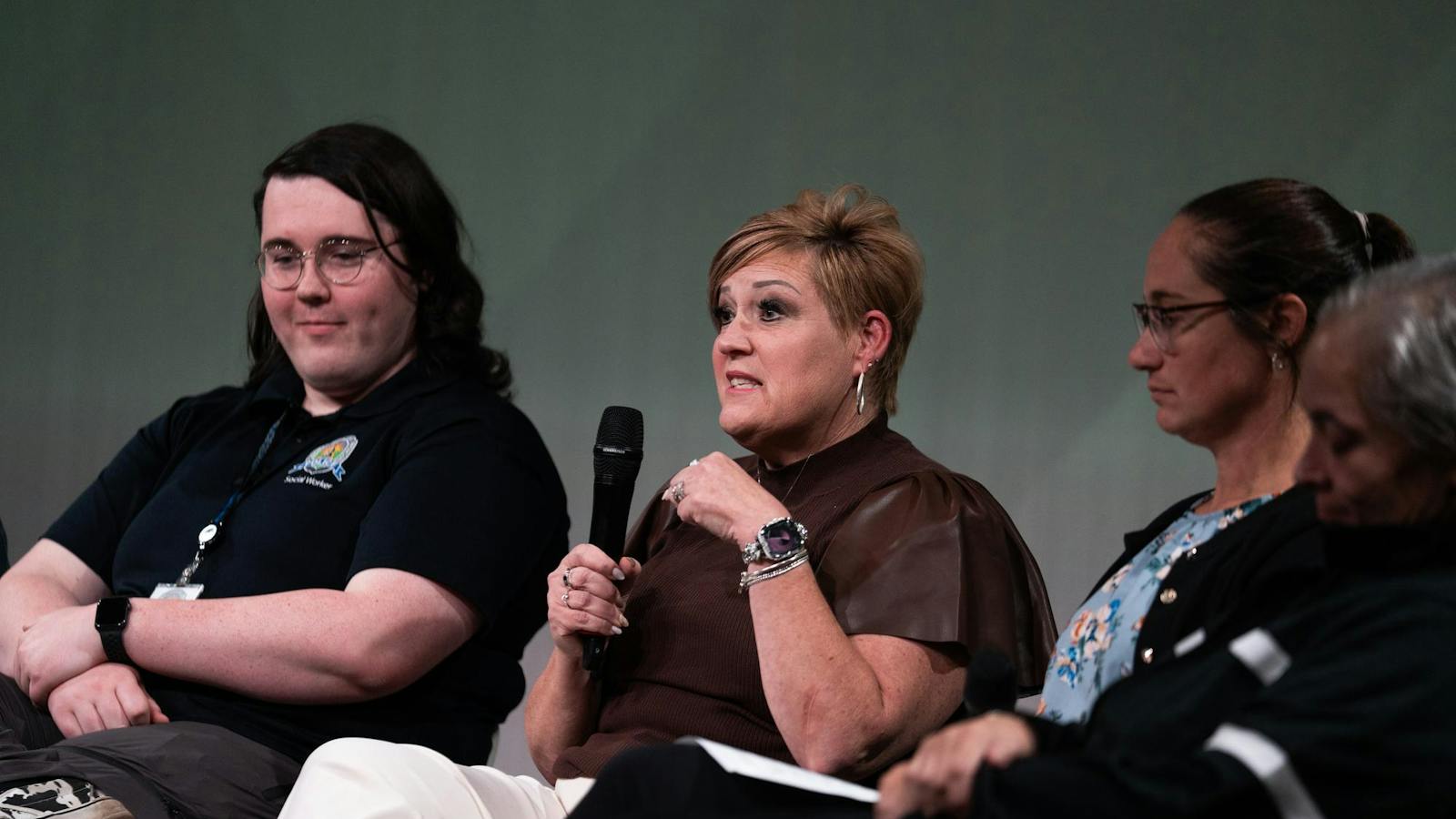
The Advocates and Leaders for Police and Community Trust (ALPACT) Metro Lansing hosted a panel discussion on mental health crisis response in Greater Lansing on Wednesday. The panel included representatives from local law enforcement and mental health agencies, such as the Michigan State University Department of Police and Public Safety (MSU DPPS).
Read More
Community members attended the event at WKAR's Studio A, which featured a screening of the documentary “Ernie & Joe: Crisis Cops.” The film highlights the efforts of two officers from the San Antonio Police Department who help individuals in mental health crises find appropriate care instead of being incarcerated.
Following the screening, panelists answered questions regarding mental health policy, emphasizing the importance of collaboration within the community. Christy Granger, community/court liaison coordinator for the Community Mental Health Authority of Clinton, Eaton and Ingham Counties (CMHA-CEI), stressed that building relationships among different organizations enhances service delivery. "When we come together and work as a team, the needs of the individuals in the community are being addressed appropriately,” Granger said.
Maria Valayil, a social worker with MSU DPPS, noted the importance of recognizing both individual and community safety during mental health crises. She emphasized that individuals facing crises should receive compassionate care, which fosters a sense of security in the community. Valayil acknowledged a stigma around seeking mental health assistance among students and announced plans to collaborate with the Spartan Wellbeing Collective to host “coffee cart conversations” — informal, judgment-free discussions about mental health.
Granger reported that approximately 75% of mental health crisis cases also involve substance abuse, presenting barriers to effective care. She highlighted the need for understanding the varied effects of substances on mental health and suggested incorporating peer recovery coaches into treatment strategies.
Darin Southworth, chief deputy of the Ingham County Sheriff’s Office, expressed concern over the lack of integrated programs to address both mental health and substance abuse issues. He stated that individuals often face the frustrating choice of addressing one issue at a time, which complicates their care.
Panel members agreed on the necessity of expanding resources, noting the establishment of a Crisis Care Center in Lansing and the upcoming crisis stabilization unit from CMHA-CEI. They also stressed the importance of promoting existing free programs, especially due to high turnover rates among students. Valayil pointed out that each new academic year brings challenges in educating incoming students, particularly freshmen who often struggle with mental health issues.