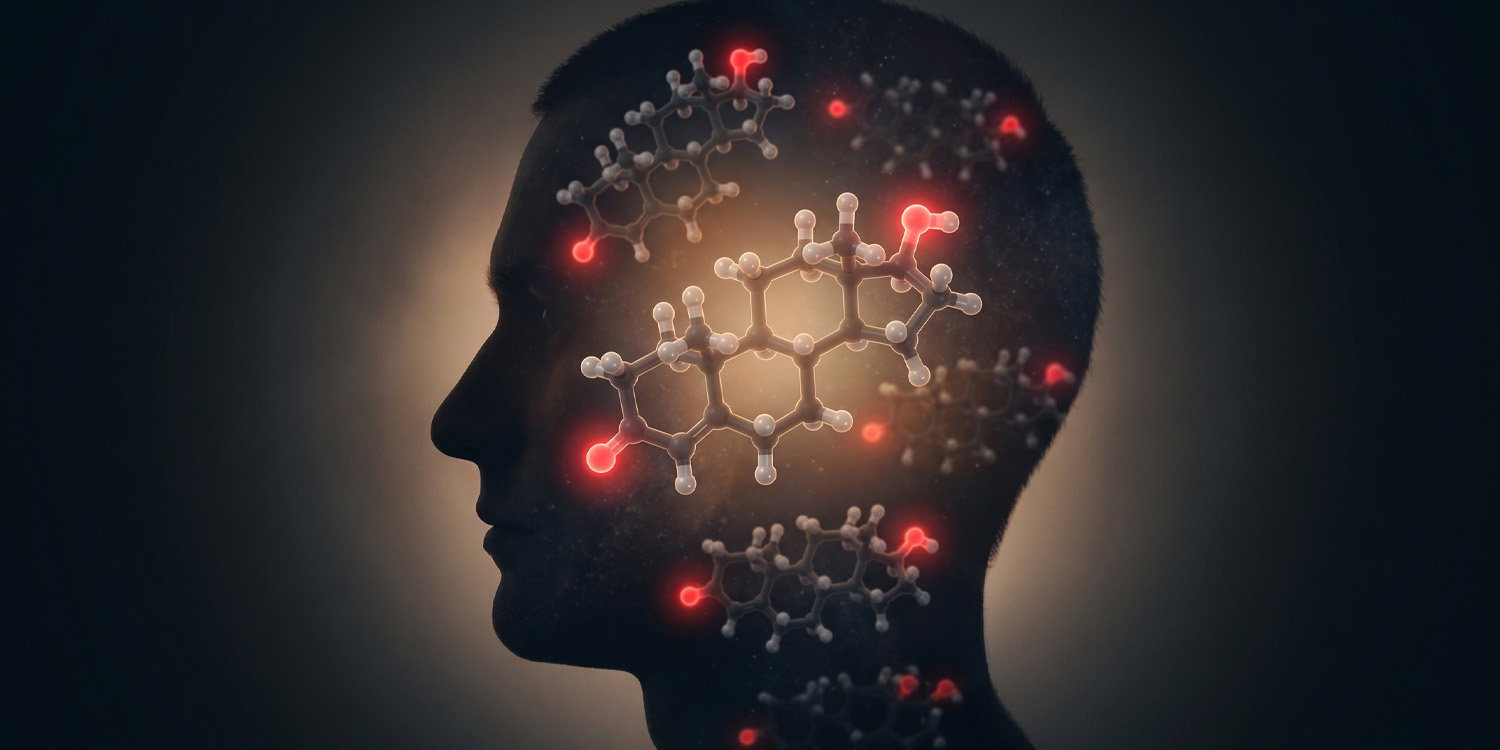
A study published in the Journal of Affective Disorders indicates that testosterone levels have contrasting effects on suicide risk among older men and women experiencing severe depression. Researchers found that higher testosterone levels may protect older men from suicidal thoughts and behaviors, while in older women, increased testosterone levels are linked to a greater risk of suicidality.
Read More
Depression among older adults represents a significant public health issue worldwide. Individuals over 60 who undergo major depressive episodes typically have sustained suicidal thoughts and exhibit higher suicide rates compared to younger populations. Factors such as social isolation, chronic health issues, and cognitive decline contribute to this risk. However, medical professionals currently lack reliable biological indicators to identify older patients most at risk for self-harm.
Biological markers like hormone levels can provide objective insights into a patient's health. Testosterone, a steroid hormone influencing mood and behavior, is produced by both men and women, although men typically generate much higher amounts. As people age, their hormone production declines; older men often face reduced testosterone levels, while older women experience hormonal changes during and after menopause that can lead to relatively higher testosterone levels.
Previous research suggests that unusual variations in testosterone may affect mood disorders and impulsivity throughout a person's life. The study's authors, Han Wang and Qian Zhao from Beijing Anding Hospital and Capital Medical University, explored how these hormonal differences could account for varying suicide risks in older adults with depression.
The analysis involved medical records from 805 inpatients with severe depression treated between 2013 and 2020, including 382 patients who exhibited suicidal ideation or behaviors upon admission. The team collected data on patients' ages, medical histories, and lifestyle factors, along with blood tests conducted shortly after hospital admission to meet daily hormonal rhythms.
Due to men possessing much higher natural testosterone levels, researchers standardized hormone levels within each sex group. This method allowed for a fair comparison of hormone changes and their effects on suicide risk among men and women.
Results showed a significant difference based on sex. In older men, higher relative testosterone levels correlated with decreased suicidality. Each standard increase in testosterone was linked to an approximate 7.6 percent reduction in suicide risk for men without major competing factors.
Conversely, in older women, higher testosterone levels corresponded to an increased risk of suicidality, with every standard increase raising the absolute risk by around 4.5 percent.
The study also identified specific lifestyle factors differentially influencing suicide risk for men and women. In men, alcohol consumption was strongly associated with increased suicide risk, potentially interacting with hormonal imbalances to heighten impulsivity. For women, physical health issues like diabetes and heart disease showed a stronger correlation to suicide risk, while stressful life events were similarly linked to both sexes.
While the study provides valuable insights, it relies on observational data from a single point in time and cannot definitively establish that testosterone changes directly cause suicidal thoughts. Moreover, the sample focused only on inpatients with severe depression, limiting broader applicability to other older adults.
Future research should track hormone levels and depressive symptoms over longer periods to ascertain reliable predictive associations with suicide risk. Experts caution against adjusting hormone levels based solely on these findings, as such interventions could provoke negative side effects. Clinical trials are necessary to determine whether monitoring biological markers can enhance suicide prevention strategies in older populations.
The study, titled “Sex-divergent association of testosterone with suicidal risk in late-life depression,” was authored by Han Wang, Nan Lyu, Juan Huang, Bingbing Fu, and Qian Zhao.