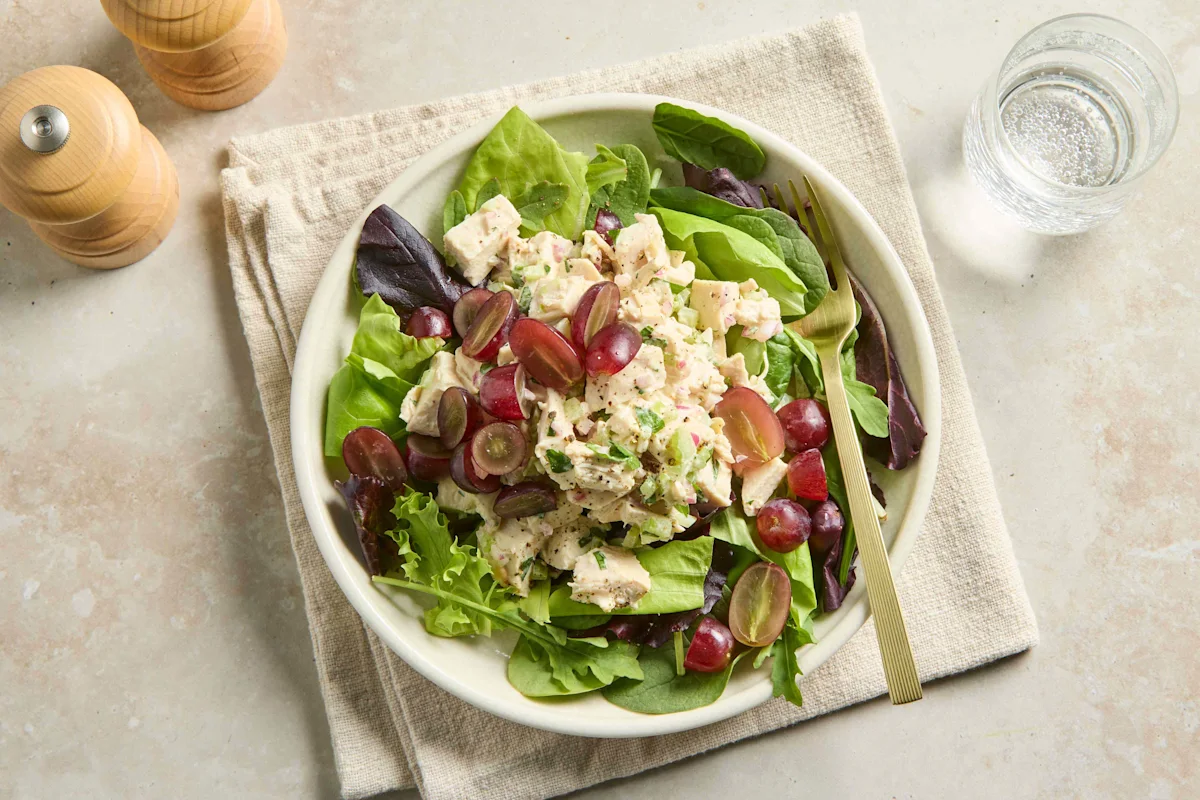
Chicken salad is a versatile meal option that can fit various dietary needs while remaining satisfying. Registered dietitians have shared tips on how to enhance its nutritional value and flavor.
Read More
Many people find mayonnaise to be the most contentious ingredient in chicken salad. Lauren Slayton, MS, RD, notes that her clients often dislike it and highlights that it can quickly add fat and calories in large amounts. She recommends using avocado oil mayonnaise, while Sylvia Klinger, DBA, MS, RD, suggests mixing one tablespoon of mayonnaise with one cup of Greek yogurt to reduce fat and increase protein.
For the chicken, Klinger prefers roasting, grilling, or air-frying boneless and skinless breasts. Slayton typically poaches her chicken in water and bone broth, adding herbs and celery for flavor. She emphasizes the importance of using a meat thermometer to avoid dry chicken, which is rich in B vitamins and selenium.
Chicken salad is also a great option for meal prep, with about 16 grams of protein per half-cup serving. Slayton advises consuming at least 4–6 ounces of chicken for adequate satiety, cautioning that it’s easy to underdo the chicken proportion when adding mayo and vegetables. The USDA recommends consuming chicken within 3–4 days if stored in the refrigerator.
Klinger highlights that her chicken salad is perfect for family brunches when served in a croissant or on whole-grain bread alongside fruit. She uses skinless rotisserie chicken, plenty of vegetables like celery, carrots, and red onion, and often includes fruits such as apples and grapes, topped with roasted pecans and her dressing. "Chopped nuts boost the protein content while adding healthy fats," she notes.
Slayton, on the other hand, typically combines poached chicken with celery, red onion, and avocado oil mayonnaise, adding fresh herbs like tarragon or dill. She sometimes includes Dijon mustard for flavor and experiments with spices like curry powder. Her approach often incorporates serving chicken salad over leafy greens, showcasing its adaptability to various dietary preferences.