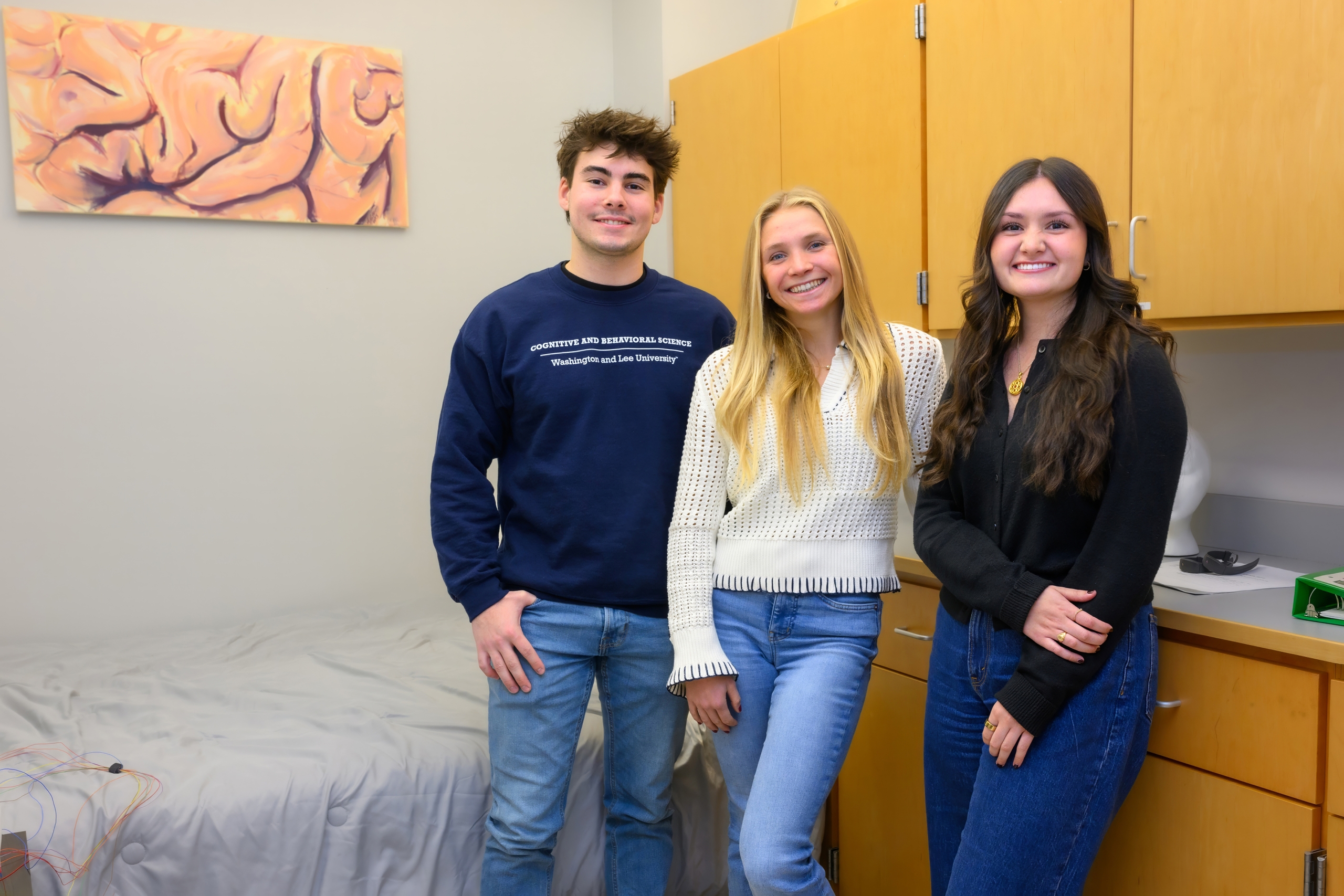
Ryan Brindle, an associate professor of cognitive and behavioral science at Washington and Lee University, leads a sleep lab that offers unique research opportunities for undergraduate students. Established in 2018, the lab investigates the connections between sleep, stress, and health. Brindle's research is focused on how mental stress affects sleep and whether quality sleep can mitigate the adverse effects of stress on health.
Read More
Brindle stated, "There’s no part of our cognition, behavior, health or functioning in general that sleep doesn’t touch. Everything comes back to sleep." His lab is one of the few undergraduate sleep labs in the country, granting students valuable experiences in research.
He emphasizes a liberal arts approach to research, believing it fosters transferable skills applicable across various fields. "The research couldn’t be done without the undergraduates, and it creates rich experiences for the students," Brindle added.
The lab is integrated into several courses, where students have the chance to examine data, conduct self-studies using Actiwatches, and engage in independent projects. More intensive research is often conducted by Summer Research Scholars or research assistants.
Undergraduate assistants like Ryan Chin, Lily George, and Sophia Breschi participate in various aspects of lab operations. Chin, majoring in cognitive and behavioral science, appreciates the opportunity to use specialized technology and contribute to original research. George, pursuing dual majors in CBSC and German, values the collaborative research aspect, which enhances the educational experience.
Breschi is currently working with the team on a study examining sleep and interoception—the body’s ability to monitor its internal state. "It is important for interoception to function properly to maintain homeostasis," she noted, highlighting its links to mental health. After participating in sleep studies herself, Breschi was eager to explore how personal factors influence sleep.
The lab's current project commenced in the fall of 2023, addressing gaps in the research on interoception by developing a new measurement method. The team plans to test participants with an updated methodology in Fall Term 2024. Throughout this process, Brindle ensures that students are fully engaged and learn about the detailed procedures involved in research.
Brindle remarked, "Watching their confidence and their enthusiasm grow as they go through that process is just amazing." His mentorship fosters independent critical thinking among the students, and they perceive their work as a symbiotic relationship that enhances both their skills and understanding of collaborative research.