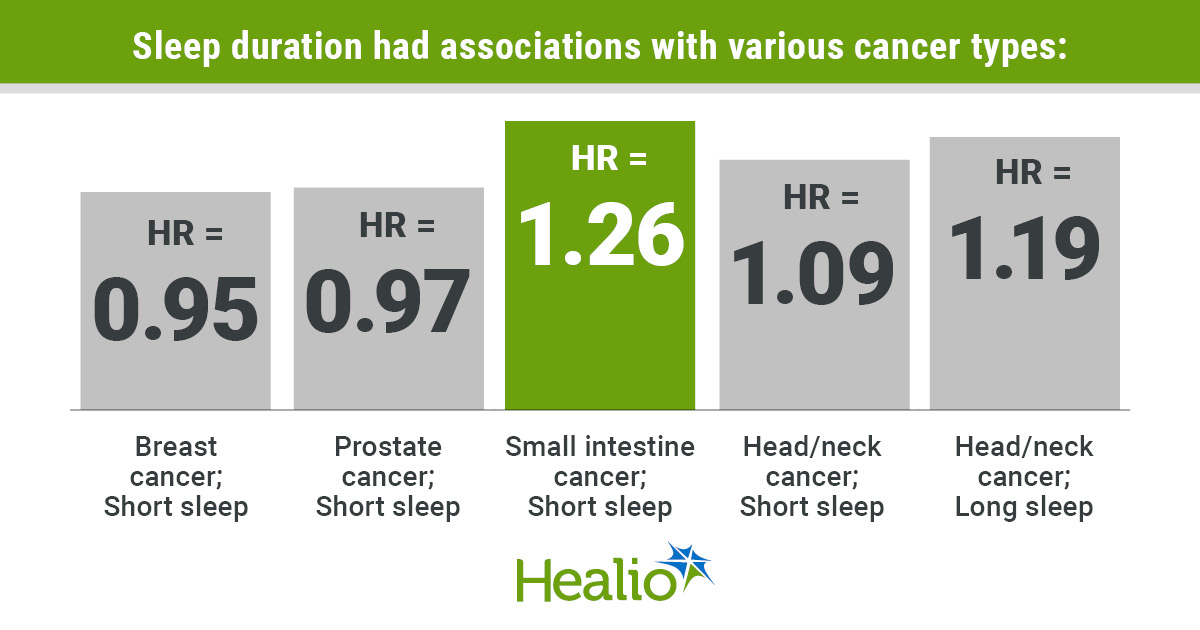
Data presented at the American Association for Cancer Research Annual Meeting in San Diego from April 17-22, 2026, indicates a multifaceted relationship between sleep habits and cancer risk. The findings suggest that short sleep duration may correlate with a lower risk for certain cancers, including breast and lung cancers, but could also increase the risk for others like small intestine cancer and acute myeloid leukemia.
Read More
Research led by Charlie Zhong, PhD, MPH, with a meta-analysis involving 918,100 individuals, found that those who slept less than seven hours per night had a slightly decreased risk for overall cancer development. Notably, a 22% increase in risk was noted for small intestine cancer and a 14% increase for acute myeloid leukemia among individuals with short sleep.
Despite previous assumptions that insufficient sleep is generally detrimental to health, this study highlights that short sleep might provide protective associations against certain hormone-driven cancers. Conversely, individuals experiencing short sleep were at an increased risk for head and neck cancers, as well as small intestine cancers.
Approximately one-third of U.S. adults report poor sleep health, often characterized by insufficient duration or low quality, which the National Sleep Foundation advises should ideally range from seven to nine hours per night for adults. The complex association between sleep and cancer is underscored by Zhong's statement pointing out that sleep-related behaviors may protect against some cancers while increasing the risk for others.
The research categorized sleep duration as short (less than 7 hours), long (more than 9 hours), and restless sleep. The analysis revealed a significant protective effect against breast cancer among those with short sleep (HR = 0.97), but also established that restless sleep correlated with increased risks for some cancers, such as hepatocellular carcinoma (HR = 1.31) and decreased risk for breast cancer (HR = 0.95).
Zhong acknowledged the study's limitations, particularly the reliance on self-reported sleep habits. Future studies will include eight additional cohorts to refine these insights. The objective is to better understand how sleep timing and consistency impact cancer risk, as modern technology may provide more accurate data on sleep quality through wearables.
Zhong and colleagues emphasize the necessity of a nuanced approach in assessing sleep's role in cancer risk, advocating for larger studies that consider specific cancer types, as effects vary significantly based on the cancer in question.