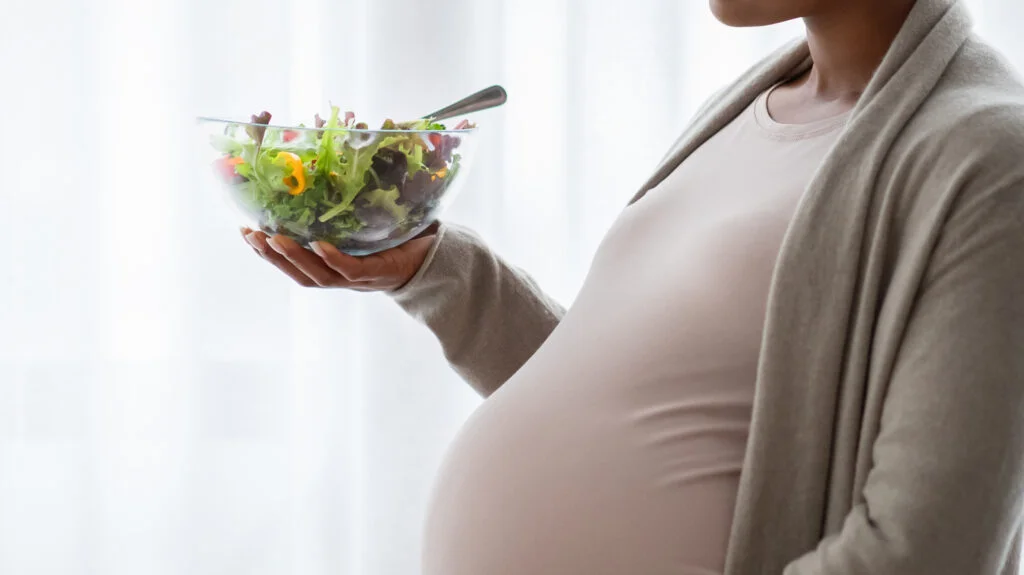
A recent study from Harvard T.H. Chan School of Public Health, Boston Children's Hospital, and Harvard Pilgrim Health Care Institute indicates that infants born to mothers following a Mediterranean-style diet during pregnancy had a reduced risk of developing colic and eczema. The study also found that regular seafood consumption during pregnancy was associated with decreased risks for these conditions.
Read More
Jenifer Lightdale, the lead author and an associate chief in the Division of Gastroenterology, Hepatology, and Nutrition at Boston Children's Hospital, noted that prior research revealed a correlation between colic in infants and increased rates of atopic conditions, like asthma and allergies, later in life. This study, published on October 12 in JAMA Network Open, specifically examines the impact of prenatal diet on infant colic and eczema.
Researchers evaluated the dietary habits of over 1,300 pregnant women enrolled in the Project Viva study, conducted from April 1999 to November 2002 in Eastern Massachusetts. Participants completed regular food questionnaires that were assessed using the Mediterranean Diet Score (MDS) and the Dietary Inflammation Index (DII). A higher MDS score indicated a healthier diet rich in fruits, vegetables, whole grains, legumes, and healthy fats, while a higher DII score indicated a less healthful diet characterized by higher intakes of processed foods and sugars.
Findings revealed that 26% of infants had colic, and 5% had both colic and eczema. Mothers who closely followed a Mediterranean diet had a significantly lower risk of their infants developing both conditions—each additional point on the MDS corresponded to a 15% reduction in risk, whereas each point increase on the DII correlated with a 34% higher risk.
The study highlighted that for each weekly serving of seafood consumed by pregnant women, there was a 25% reduction in the likelihood of infants developing colic and eczema. In contrast, other common allergenic foods such as dairy, eggs, and nuts did not show a significant association with these conditions. These associations were notably stronger among infants whose mothers had a history of allergies.
Emily Oken, the first author and president of the Harvard Pilgrim Health Care Institute, emphasized the importance of enabling pregnant women to maintain a balanced diet and specifically recommended seafood. Oken pointed out that barriers exist that might prevent access to healthy nutrition, such as financial constraints. She hopes the study's results will benefit not only families but also health initiatives and federal programs like WIC and SNAP.
The study was supported by the National Institutes of Health and an anonymous donor to Harvard Chan School. Oken and other researchers disclosed various grants and affiliations related to the study.
For further details, contact Maya Brownstein at [email protected].