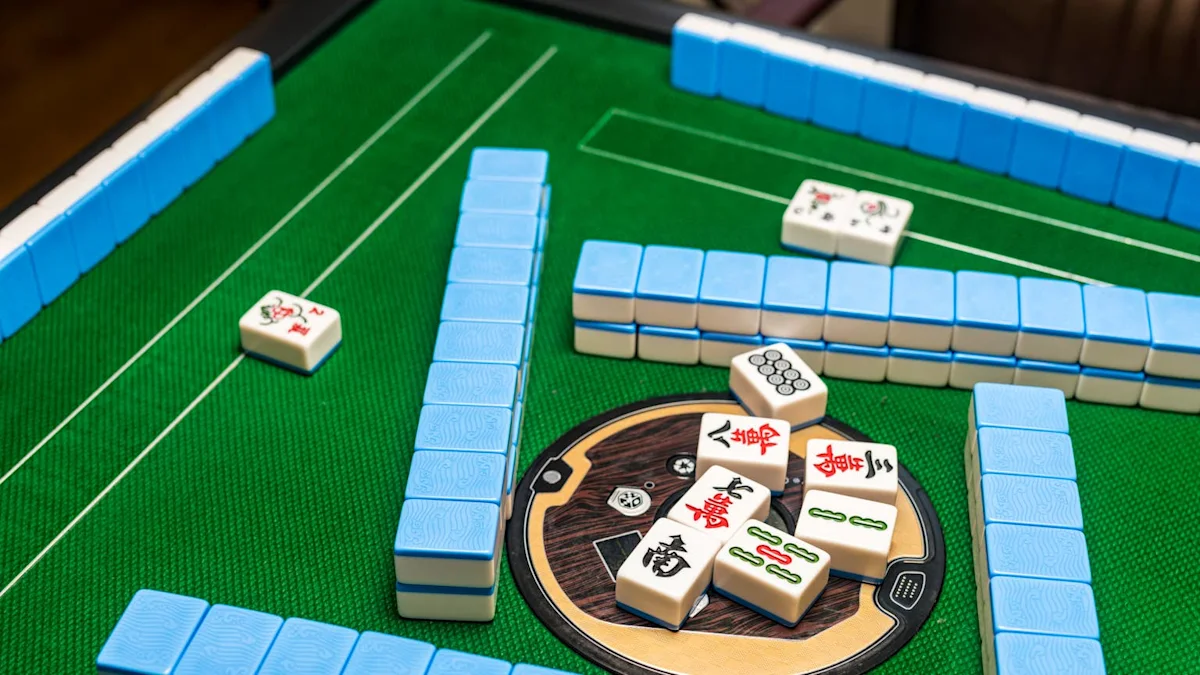
Mental health experts suggest that mahjong, a popular game among older adults, may play a significant role in enhancing brain health and reducing loneliness as people age. This 19th-century tile game, rooted in China, has historically evolved from earlier games and saw a surge in popularity in the United States during the 1920s.
Read More
Mahjong involves players using tiles with various symbols and suits to create winning combinations while tracking their opponents' moves. Its mentally stimulating gameplay and social nature contribute to its appeal among seniors, making it an effective brain game.
Dr. Lori Bohn, a Board-Certified Psychiatric-Mental Health Nurse Practitioner and Medical Director at Voyager Recovery Center, emphasizes the mental engagement required in mahjong. She notes that playing the game stimulates attention, memory, pattern recognition, strategic decision-making, and social interaction. While research indicates that regular participation in games like mahjong may correlate with improved cognitive function and emotional well-being, Bohn points out that the evidence remains largely correlational rather than causal.
A recent study in 2024 highlighted that adults aged 60 and above who played mahjong reported enhanced social connections and self-esteem. Rachel Lambert, founder of Braincode Centers, asserts that social engagement is crucial for protecting brain health, reinforcing the idea that the interactive nature of mahjong contributes to its positive effects.
Experts like Katie Grigg, a dementia specialist, note that activities fostering both mental challenge and social interaction can mitigate risks associated with social isolation. Although mahjong does not guarantee protection against dementia or cognitive decline, it offers a unique blend of mental challenge and social bonding, which may be beneficial for healthy aging.