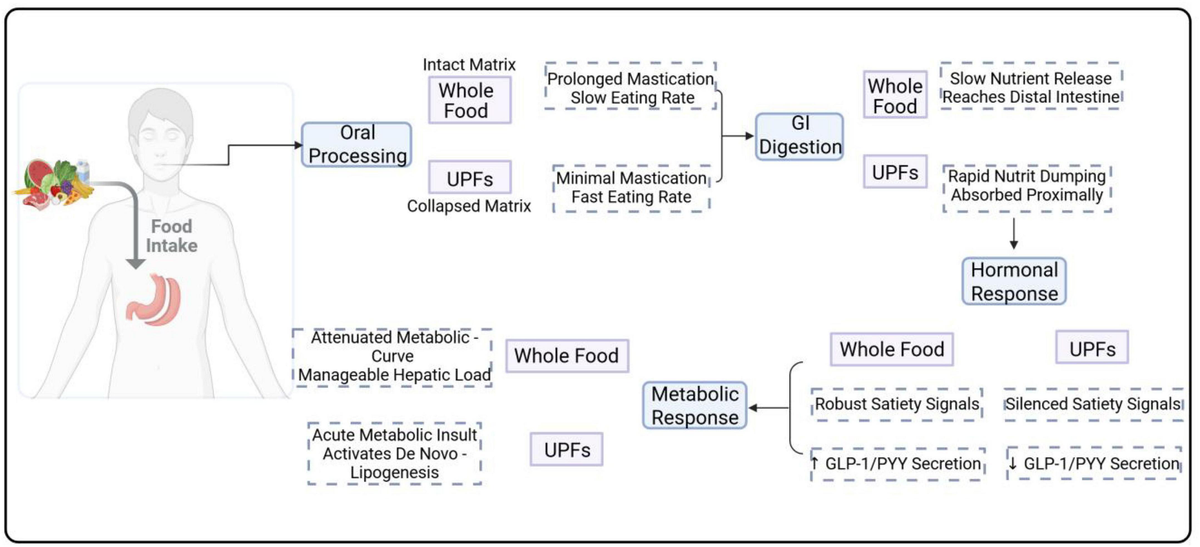
The global rise in ultra-processed foods (UPFs) is closely linked to the increased prevalence of non-communicable diseases (NCDs). While traditionally attributed to poor nutritional profiles, new evidence indicates that even when nutrients are comparable, UPFs lead to increased energy intake and weight gain, hinting at deeper, structural issues within their physical composition. This review proposes that the primary health risks associated with UPFs stem from the disintegration of their physical food matrix, a concept requiring further investigation.
Read More
The review initiates by describing the major shift in dietary patterns over the last fifty years, as societies transition from traditional diets to those high in energy density, primarily dominated by UPFs. This transformation corresponds with a noted increase in NCDs, supported by extensive epidemiological studies that reveal a consistent relationship between higher UPF consumption and numerous adverse health outcomes. Recent analyses indicate that the highest consumers of UPFs may face a 15% greater risk of all-cause mortality and an 11% increase in cardiovascular disease risk.
UPFs are designed to be easy to consume, possessing a soft texture and high palatability, which facilitate higher energy intake by altering eating behaviors. Higher consumption rates of these foods lead to insufficient early satiety signals, affecting metabolic processes such as hormone secretion for hunger regulation, particularly impacting gut hormones like GLP-1 and PYY. This, combined with rapid nutrient absorption, creates stress on metabolic organs, contributing to increased insulin resistance and fat accumulation.
Interestingly, traditional approaches to food intake and its health implications have emphasized nutrient content alone. However, landmark studies have challenged this perspective by demonstrating that participants consuming ultra-processed diets reported significantly higher caloric intake, even with matched nutrients.
The key argument made is that the food matrix—its structural organization—affects nutrient absorption and physiological response. Natural foods provide a complex matrix that prompts slower digestion and absorption. In contrast, ultra-processing techniques intentionally strip away this structure to promote convenience, enhancing the potential for overeating.
Following digestion, the emptied matrix does not maintain the same regulatory functions in the gut. Whole foods experience slower transit times, allowing for effective hormonal signaling that helps control appetite. However, UPFs disrupt these mechanisms leading to increased energy intake and disrupted metabolic homeostasis.
Moreover, the alteration of the gut microbiota due to recovered foods and chemical additives in UPFs can result in systemic chronic inflammation. This disruption paves way for further health risks, associated with conditions like obesity, diabetes, and various types of cancer.
In conclusion, a shift in nutrition science and public health policy is warranted, suggesting that evaluation of food should address both its nutrient composition and the degree of industrial processing. Future research is encouraged to explore the food matrix concept further, integrating mechanical and molecular analyses to effectively identify pathways linking food processing with health outcomes.