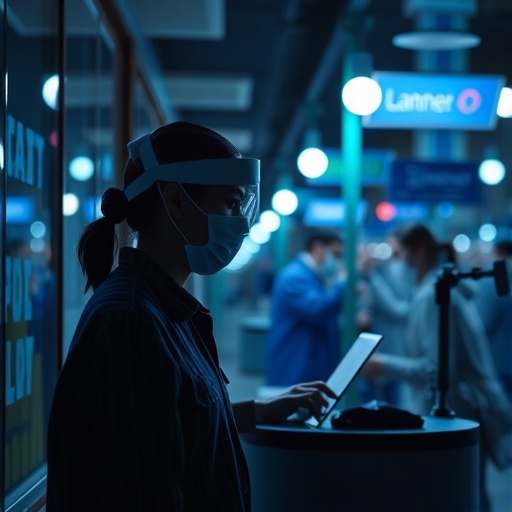
A study from the Barcelona Institute for Global Health (ISGlobal), in collaboration with the Germans Trias i Pujol Research Institute, has identified a connection between night-shift work and chronic insomnia as potential risk factors for long COVID. This research, which analyzed participants in Catalonia’s COVICAT cohort, is the first to provide evidence that disruptions to the body’s circadian system may affect recovery from SARS-CoV-2 infection.
Read More
The study tracked 2,941 adults from 2021 to 2023, finding that 1,899 contracted SARS-CoV-2 during the follow-up period, with 284 subsequently developing long COVID—a term used to describe symptoms persisting more than three months after infection. Participants, aged between 40 and 65, provided detailed information on their work schedules, sleep patterns, vaccination history, chronic illnesses, and other health factors.
After adjusting for various confounding factors, it was found that night-shift workers faced an 88 percent higher risk of developing long COVID compared to daytime workers. This association persisted even when taking into account vaccination status and pre-existing health issues. Notably, the risk was more pronounced among night workers who were also obese, indicating that metabolic health may interact with circadian disruption to influence recovery.
Crucially, night work did not correlate with a higher likelihood of SARS-CoV-2 infection, suggesting that circadian disruption may not increase exposure to the virus but rather impact post-infection biological processes, such as immune response and inflammation. The increased risk was observed in both current and former night workers, implying that long-term circadian changes might be a factor.
The circadian system, which regulates sleep, hormone release, metabolism, and immune function over a 24-hour cycle, can be disrupted by night work, leading to poor sleep quality. Research has shown that this misalignment may alter immune-cell activity and inflammatory responses.
Furthermore, the study found that chronic insomnia independently raised the risk of long COVID by 42 percent. Night-shift workers suffering from chronic insomnia were 2.7 times more likely to develop long COVID compared to their daytime counterparts without insomnia. This indicates a combined effect of poor sleep and circadian misalignment on immune recovery post-infection.
While the findings suggest several mechanisms underlying this association, such as the timing of viral exposure affecting immune response rhythms and chronic insomnia impacting immune signaling, the study does not establish direct biological causation. The research's observational nature also leaves room for potential unmeasured confounding factors.
Despite this, the results highlight sleep as a modifiable risk factor for long COVID. Enhancing sleep quality and reducing circadian disruption, particularly for night-shift workers, could be integral in managing the long-term effects of viral infections. The researchers stress that these strategies should complement existing measures for preventing COVID-19 and managing long COVID symptoms. Future research is necessary to explore targeted sleep interventions and their potential to mitigate persistent symptoms while further elucidating the relationship between circadian biology, viral infection, and recovery.