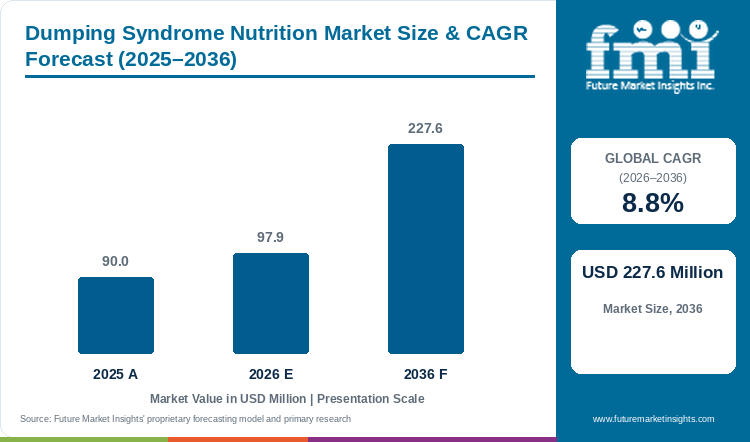
The dumping syndrome nutrition market is projected to grow from USD 97.9 million in 2026 to USD 227.6 million by 2036, representing a compound annual growth rate (CAGR) of 8.8%. Demand is anticipated to rise from USD 90.0 million in 2025.
Read More
Effective dietary management following gastric surgery involves smaller meals, sufficient protein, and reduced rapid-sugar intake. Consequently, the use of compact protein and controlled-carbohydrate products is increasing within clinical nutrition practices. A clinical review published in September 2025 emphasized the importance of meal distribution and lower-glycemic selections during patient care.
Regional growth varies; South Korea is expected to expand at a 9.3% CAGR from 2026 to 2036, while the USA is forecasted to grow at 8.6%. The Korean Society for the Study of Obesity reported an adult obesity rate close to 38% in 2025. Nutrition follow-up is likely to enhance product utilization in South Korea, which has a strong focus on dietary management post-surgery.
In 2026, key metrics include that slow-release carbohydrate products are expected to represent 41.9% of the market share, with early dumping syndrome accounting for 49.3%. Additionally, post-bariatric surgery is poised to dominate, anticipating a 52.1% share of the market.
The homecare sector is anticipated to lead end-user revenue with a 50.6% market share in 2026, driven by daily usage for symptom management. Hospital pharmacies are forecasted to hold a 40.4% revenue share, serving to initiate nutrition programming and ensure appropriate product use after surgery.
Key players in the market include Danone Nutricia, Nestlé Health Science, Abbott, Fresenius Kabi, Celebrate Vitamins, Bariatric Advantage, Medtrition, and Victus, indicating a competitive environment focused on specialized nutrition solutions.
Future Market Insights' analysis emphasizes that dietary management is a critical aspect of dumping syndrome care, and repeated use of nutrition products tailored for smaller meal sizes and protein intake is increasingly important. However, high-sugar formulations may limit product selection for symptomatic patients.
In conclusion, the dumping syndrome nutrition market is set to expand significantly, supported by advancements in dietary management practices and the need for structured nutrition following bariatric and gastric surgeries.