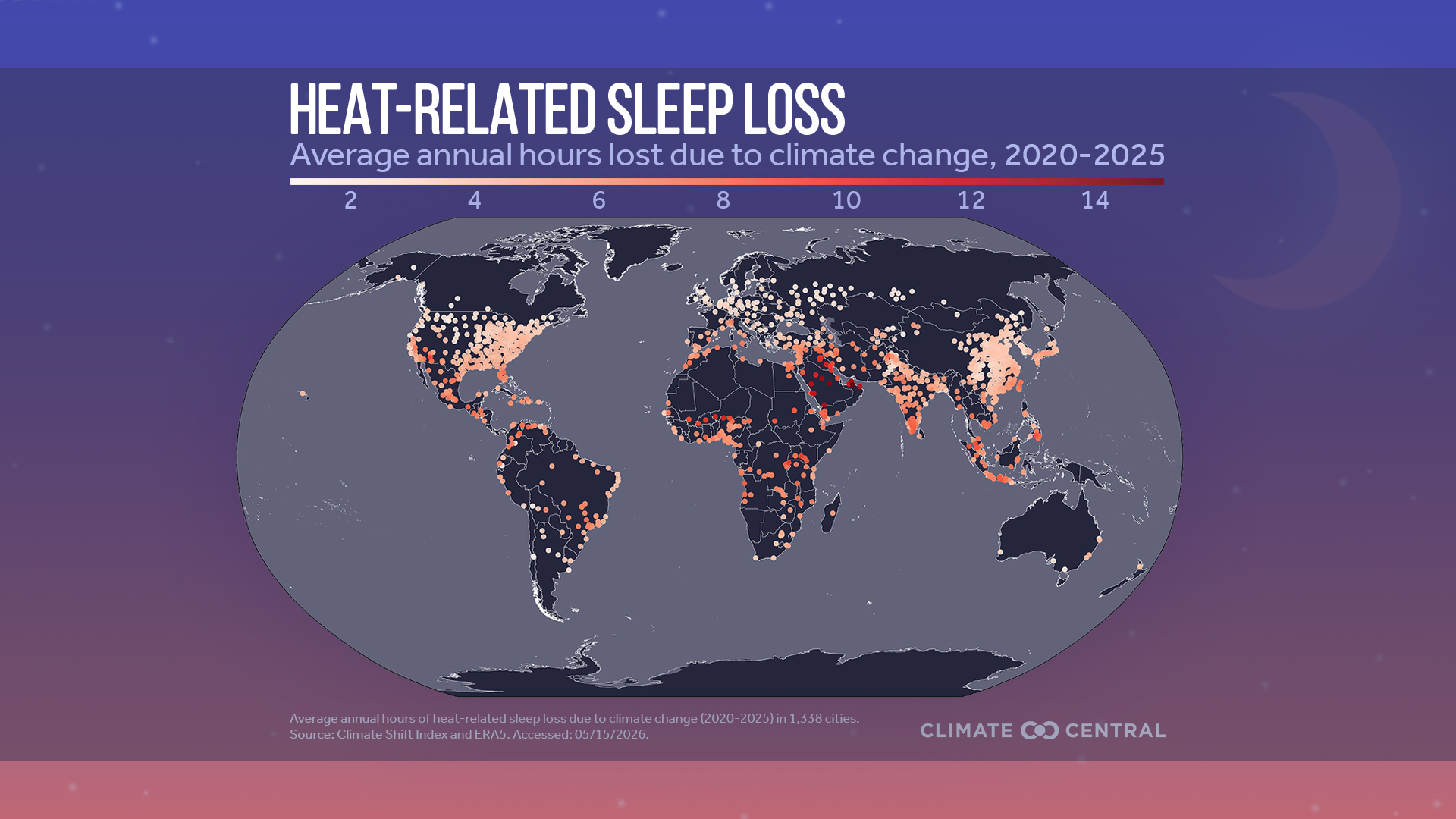
A recent analysis by Climate Central reveals that rising nighttime temperatures are significantly impacting sleep quality and duration globally. Between 2020 and 2025, individuals worldwide lost nearly 56 hours of sleep annually due to high nighttime temperatures, with over 10% of that loss—approximately six hours—attributed to climate change.
Read More
The report highlights that cities in the Middle East experienced the most substantial sleep losses related to climate change. In Saudi Arabia, Oman, and the United Arab Emirates, individuals lost between 55 and 87 hours of sleep annually due to higher nighttime temperatures, with about 12 to 16 of those hours linked directly to climate change.
Similar trends were observed in southern India and Southeast Asia, where people lost between 78 to 91 hours of sleep each year, with about eight to nine hours attributable to climate change. In certain West African cities and 253 U.S. cities, the average sleep loss was 65 hours and 36 hours annually, respectively, with a small portion connected to climate effects.
The report notes that night heat disrupts the body’s natural cooling processes, leading to poorer sleep quality and shorter sleep duration, which can adversely affect mood, cognitive performance, and overall health. Furthermore, the influence of climate change on sleep loss has doubled since the early 1970s, from about two hours per year to five hours per year globally.
As nighttime temperatures rise, the potential health impacts are especially concerning for vulnerable populations, including older adults and those in lower-middle-income countries. While air conditioning can mitigate heat-related sleep loss, access remains inequitable and is often tied to income. In 2021, global household air conditioning ownership was only about 35%, and it varies significantly across regions.
The correlation between heat and sleep loss emphasizes the growing environmental risks posed by climate change, particularly in urban areas where heat retention is exacerbated. This analysis underscores the need for increased awareness and action to address the relationship between climate change and public health outcomes regarding sleep.