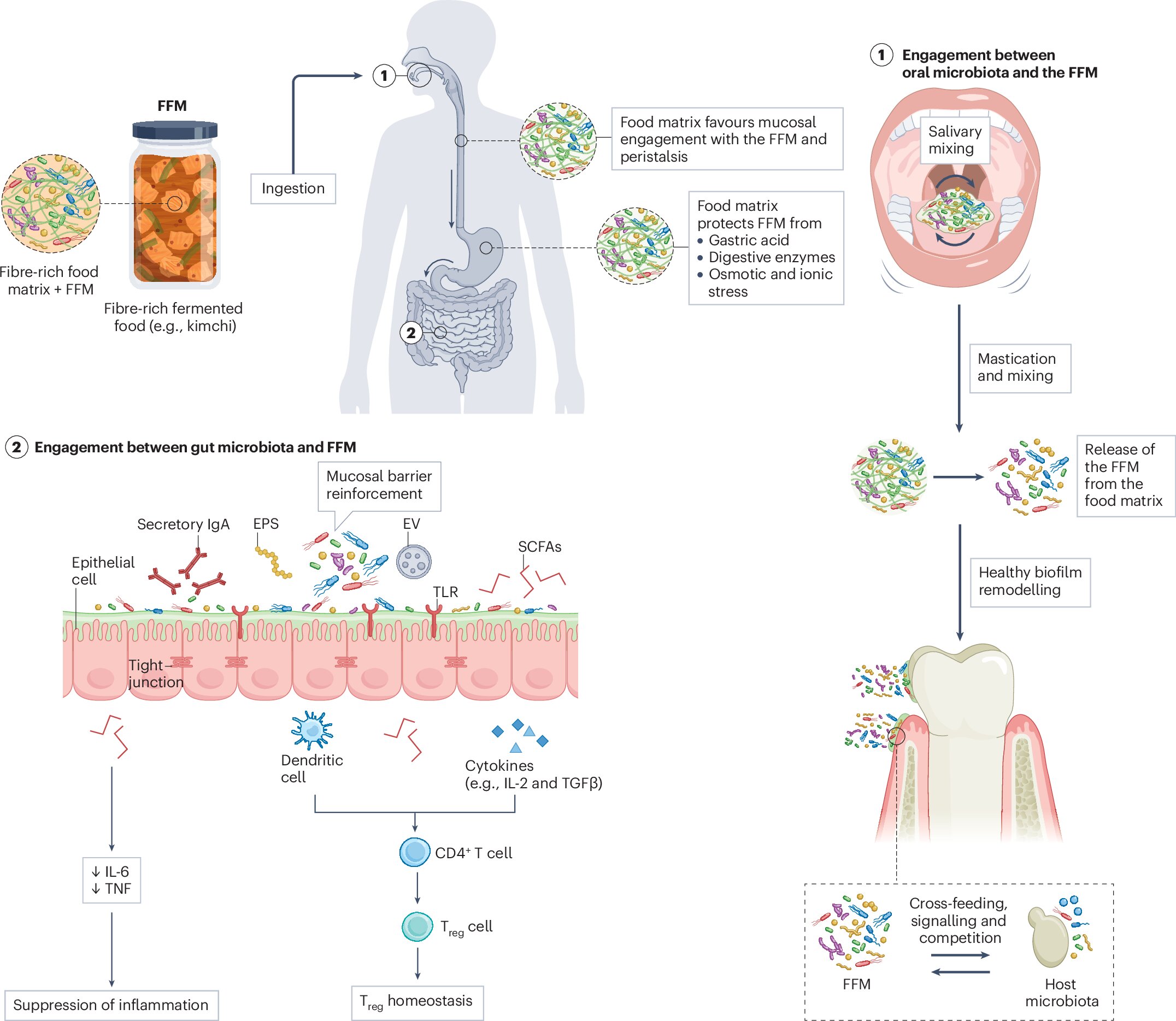
A review published in Nature Reviews Microbiology examines the potential of fermented plant-based foods, such as kimchi and sauerkraut, in supporting oral and gut health. Researchers from the University of Pennsylvania's School of Dental Medicine, collaborating with Penn Medicine, Penn Nursing, and Jeonbuk National University in South Korea, focus on how these foods interact with microbial communities in the mouth and gut.
Read More
The study highlights the unique properties of plant-based fermented foods, which include diverse live microorganisms, microbial metabolites, fiber-rich structures, and bioactive compounds derived from plants. The authors propose a roadmap for developing these foods into microbiome-based precision nutrition strategies aimed at enhancing health.
Hyun Koo, co-corresponding author of the study and professor at Penn Dental Medicine, states that these foods could be specifically designed to support oral and gastrointestinal health due to their microbial diversity. While yogurt and liquid probiotics are well-known for their role in promoting gut health, researchers emphasize that solid, plant-based fermented foods offer unique advantages over dairy products.
Gary Wu, a professor in Gastroenterology at the Perelman School of Medicine, notes that these foods not only efficiently deliver beneficial microbes but also contain bioactive phytochemicals that may further promote human health. Charlene Compher, a professor of nutrition science at Penn Nursing, also contributed to the research.
The authors recommend key steps to advance the field, including developing comprehensive databases of food microbiomes, utilizing advanced technology to profile microbial strains and metabolites, and creating plant-based fermented products with specific microbial and chemical characteristics.
The article, titled "Fermented food microbiome: influence on oral and gut microbiota, and human health," is authored by Dongyeop Kim and others and will be published in 2026.