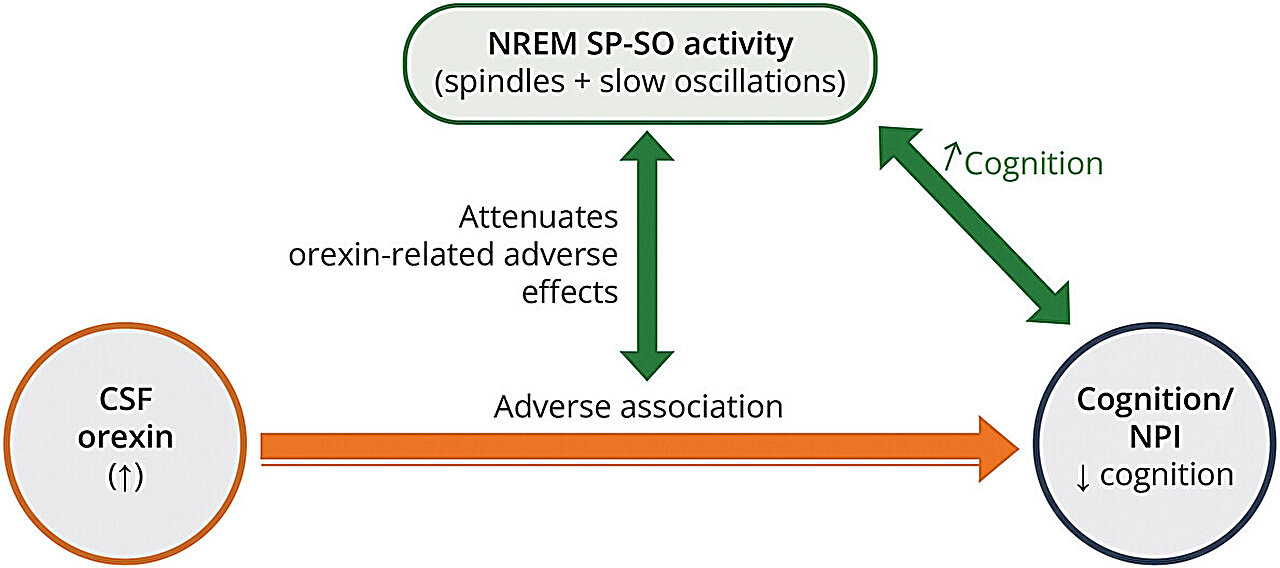
A recent study published in the journal Neurology highlights the link between deep sleep brain waves and protection against cognitive decline related to Alzheimer's disease. Conducted by researchers from Concordia University, the study examined the levels of the neurotransmitter orexin in the cerebrospinal fluid of 60 adults diagnosed with mild to moderate Alzheimer's over a three-year period.
Read More
The research found that participants with higher levels of orexin, which is crucial for regulating sleep and appetite, were more prone to cognitive decline, including diminished memory and increased behavioral symptoms, alongside elevated biological markers for neurodegenerative disease and inflammation. However, those exhibiting stronger sleep spindles and oscillations—brain wave patterns linked to memory retention—during nonrapid eye movement (NREM) sleep showed less cognitive deterioration over time. This suggests that robust sleep activity can confer resilience against the detrimental impacts of high orexin levels on cognitive function.
Co-author Thanh Dang-vu, a neurologist and professor at Concordia, remarked on the significance of the direct association between orexin levels and Alzheimer's biomarkers. "Just as too little orexin is associated with diseases like narcolepsy, too much orexin can lead to a higher vulnerability to Alzheimer's," he noted.
Data for the study was gathered by the Universitat de Lleida in Spain, where participants underwent overnight polysomnography to monitor brain activity and subsequently provided cerebrospinal fluid samples for orexin and Alzheimer's biomarker analysis. Regular cognitive and neuropsychiatric assessments were conducted over the three years to correlate sleep patterns, brain chemistry, and cognitive decline.
Co-first author Arsenio Paez emphasized the importance of the longitudinal data, stating, "Alzheimer's disease is a moving target. With this data, we can observe how the disease progresses over time and identify potential intervention points."
The study also discusses the potential of orexin-blocking medications, already used for insomnia, to be repurposed as treatments for Alzheimer's. Monitoring sleep spindles, slow oscillations, and orexin levels could play a key role in understanding disease progression and tailoring specialized treatments for patients.
Dang-vu concluded that the research opens new avenues for interventions aimed at slowing Alzheimer's disease progression through improved sleep patterns.