The National Sleep Foundation (NSF) has released findings from its 2026 Sleep in America® Poll, indicating that nearly half of children in the U.S. are not achieving the recommended amount of sleep, which is affecting family well-being. The report was published during Sleep Awareness Week® (March 8-14), as part of NSF's ongoing initiative to promote better sleep practices.
Read More
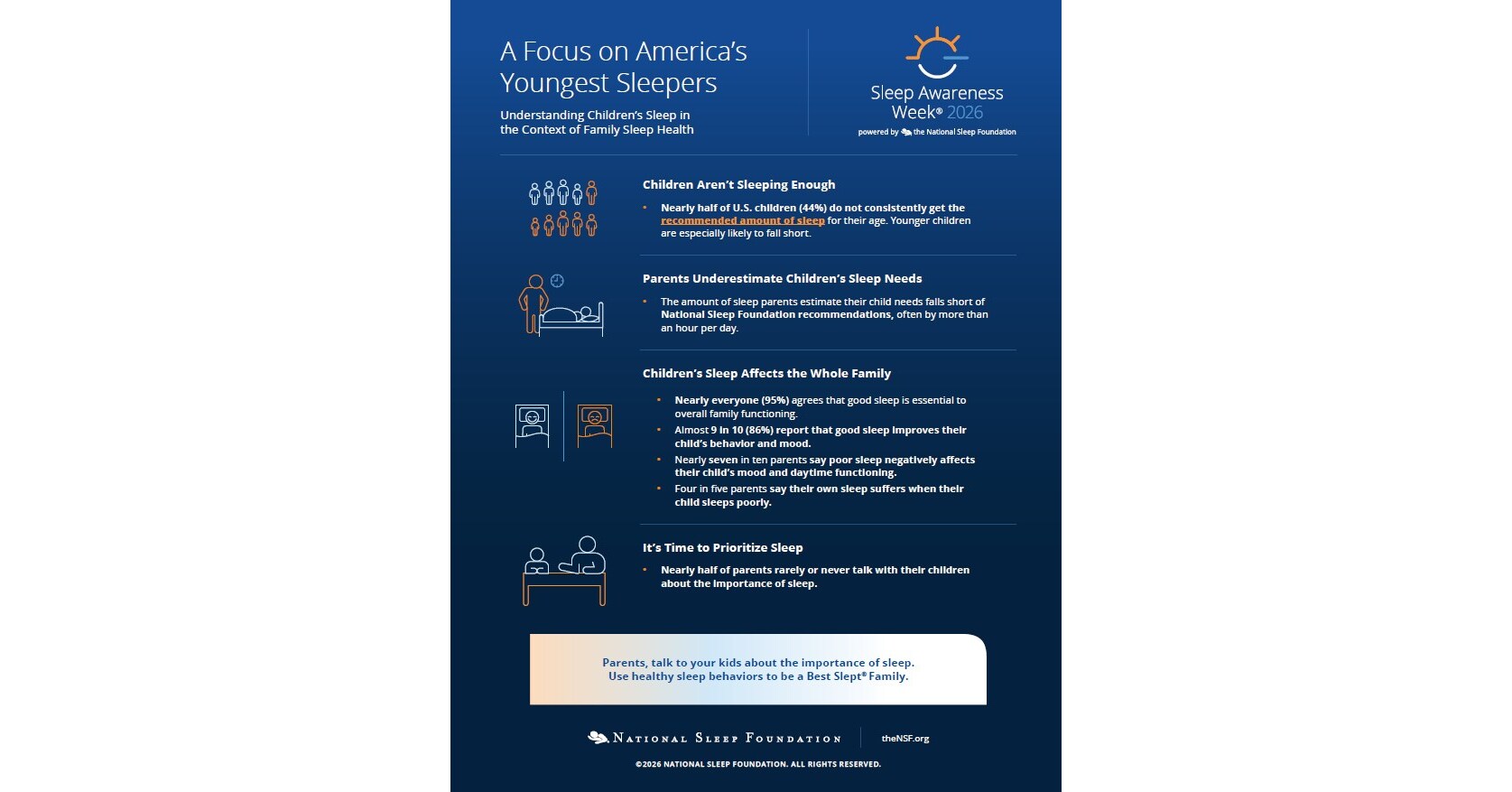
The poll highlights critical insights into children's sleep within the context of family health. Results show that 44% of U.S. children do not consistently get sufficient sleep for their age, with younger children particularly at risk. Additionally, parents often underestimate their children's sleep needs by more than an hour compared to NSF's guidelines.
The impact of children's sleep extends beyond the individual, as 95% of respondents agree that quality sleep is vital for overall family functioning. Approximately 86% of parents noted that adequate sleep improves children's behavior and mood, while 70% indicated that lack of sleep negatively affects their child's daily performance. Furthermore, 80% of parents reported that their own sleep suffers when their child sleeps poorly.
Despite these findings, nearly half of parents rarely discuss the importance of sleep with their children. Joseph Dzierzewski, PhD, Senior Vice President of Research and Scientific Affairs at NSF, emphasized the gap between the sleep children require and their actual sleep patterns, which presents a significant public health challenge. He pointed out the long-term consequences of poor sleep in childhood, including impaired learning and emotional difficulties.
To improve family sleep health, NSF urges parents to encourage a culture of healthy sleep practices. John Lopos, CEO of NSF, noted the importance of setting a positive example for children and communicating about sleep habits. NSF recommends families adopt the following evidence-based practices to enhance their collective sleep quality:
- Spend time in natural light in the morning to regulate the body clock.
- Engage in regular physical activity, aiming for 30 minutes a day.
- Avoid caffeine after noon for all family members.
- Have dinner at least two hours before bedtime.
- Establish and share a calming bedtime ritual.
- Maintain a consistent sleep schedule, even on weekends.
- Create a device-free hour before bed to minimize distractions.
- Ensure the bedroom environment is conducive to sleep, ideally between 65–68°F.
Sleep Awareness Week 2026 is supported by various sponsors and collaborative organizations. For additional resources and tips on supporting children's sleep health, visit www.theNSF.org.
Founded in 1990, the National Sleep Foundation is a non-profit organization dedicated to enhancing health through sleep education and advocacy.