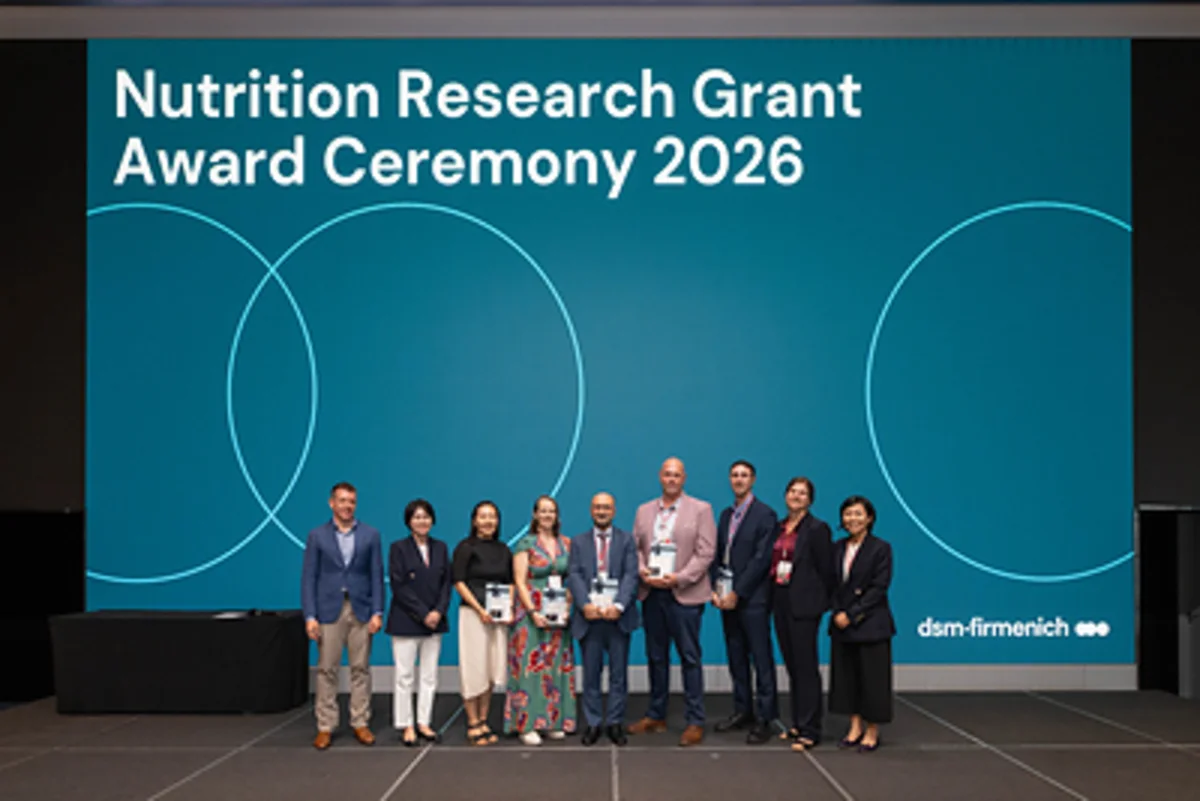
On July 8, 2026, dsm-firmenich announced the recipients of the 2026 Nutrition Research Grant during the ‘Age Slower, Age Better: Advancing Healthy Longevity Across Asia Pacific’ scientific symposium. This year, five projects each received EUR 50,000 to support research on the role of nutrients and bioactives in promoting healthy aging. The increased number of grant applications reflects a growing concern about healthy aging in the Asia Pacific, where it is projected that one in four individuals will be over the age of 60 by 2050.
Read More
Tina Low, Senior Vice President for Health, Nutrition & Care in the Asia Pacific region at dsm-firmenich, emphasized the significance of studying healthy longevity amid a rapidly aging population. She noted the concerning trend of an increasing gap between lifespan and health span, with many individuals expected to spend the last decade of their lives in poor health. Low highlighted the importance of public-private partnerships in advancing healthy longevity, a core principle of the Asia-for-Asia Nutrition Research Grant Program.
Anneleen Spooren, Senior Vice President for Innovation, R&D & Regulatory, pointed to the DO-HEALTH study, the largest clinical trial in Europe concerning healthy aging, which demonstrated that nutritional interventions, such as a combination of algal omega-3, vitamin D, and a simple exercise program, can potentially slow biological aging by up to 3.8 months over three years.
A record number of applications were received this year from 13 different countries in the Asia Pacific, reflecting the region's increasing interest in how nutrition influences aging. The five grant recipients for 2026 are:
- Dr. David Barry, National Ageing Research Institute, Australia: “Effect of Postbiotic Supplementation on Inflammation and Physical Function in Pre-Frail Community-Dwelling Older Adults: A Randomized Controlled Pilot Trial.”
- Prof. Hamid Sohrabi, Murdoch University, Australia: “Synergistic Effects of Polyphenol- and Omega-3–Rich Dietary Patterns on Mitochondrial Health and Biological Ageing: Translational Insights from the AU-ARROW Cohort.”