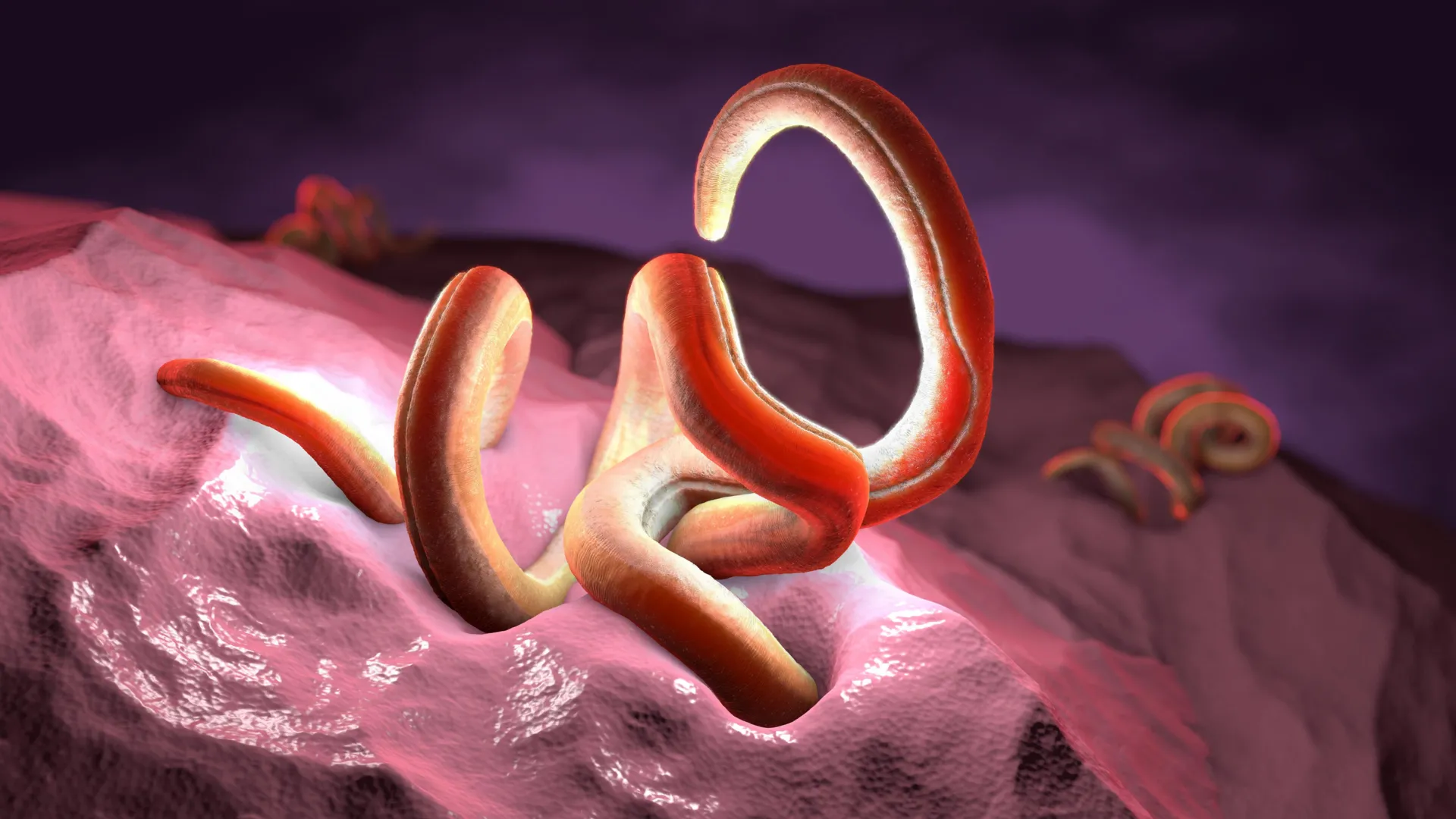
New research indicates that intestinal worms can effectively reduce inflammation only when they have access to sufficient dietary fiber. Without adequate fiber, these parasites enter a dormant state, losing their anti-inflammatory capabilities. The findings were published in *Nature Communications* by researchers from the Biology Centre of the Czech Academy of Sciences.
Read More
Historically, intestinal parasites were a typical element of human digestion, but their prevalence has declined in industrialized nations due to enhanced hygiene and medical treatments. Coinciding with this decline, there has been a rise in autoimmune disorders and inflammatory bowel diseases, prompting scientists to explore the potential of certain intestinal worms in treating these conditions through a method known as helminth therapy. However, the outcomes of this therapy have been inconsistent.
Kateřina Jirků, from the Institute of Parasitology, Biology Centre CAS, noted that previous therapeutic results varied, leading researchers to examine factors that might affect the worms' performance in the gut. Their study identified dietary fiber as a critical factor.
To investigate, the researchers used the rat tapeworm *Hymenolepis diminuta*, known for its non-pathogenic nature and anti-inflammatory properties. Their experiments revealed significant differences between diets high and low in fiber.
Jirků explained, "We found that when the diet contains a high proportion of structural fiber, the tapeworm is not only in excellent condition but is also able to induce an anti-inflammatory response in the host. When fiber is lacking, the worm enters an energy-saving hibernation-like state and its anti-inflammatory effect disappears."
The researchers observed that tapeworms fed a low-fiber diet were significantly smaller, never reached sexual maturity, and failed to produce eggs, with genetic analysis indicating widespread changes in expression affecting development, metabolism, and reproduction.
Additionally, the study showed that dietary fiber reshapes the gut microbiome. A fiber-rich diet fosters the growth of beneficial bacteria, while a Western-style diet diminishes microbial diversity and promotes bacteria linked to dysbiosis. These microbial shifts were associated with differing immune responses in the host.
Health organizations typically recommend a daily fiber intake of 25 to 30 grams for adults, yet many in Western countries consume less. In contrast, traditional populations are estimated to intake between 80 and 120 grams daily. Prior research has indicated that insufficient dietary fiber can compromise gut microbiome health, which is essential not only for digestion but also for immune and brain health. An imbalance in gut bacteria has been connected to increased risks of allergies, depression, anxiety, and neurodegenerative diseases, including Alzheimer’s.