Major depressive disorder (MDD) is characterized by persistent low mood and loss of interest in daily activities. While various medications exist for treating depression, determining the right one for each patient can be challenging.
Read More
Recent research led by Stanford University School of Medicine, along with collaborators from the University of Texas at Austin and other institutions, analyzed brain scans from 386 individuals diagnosed with MDD. This study aimed to understand the neural changes occurring in the brain during the first one to two weeks of treatment with either a placebo or one of two antidepressants, sertraline or escitalopram. The findings were published in Nature Mental Health.
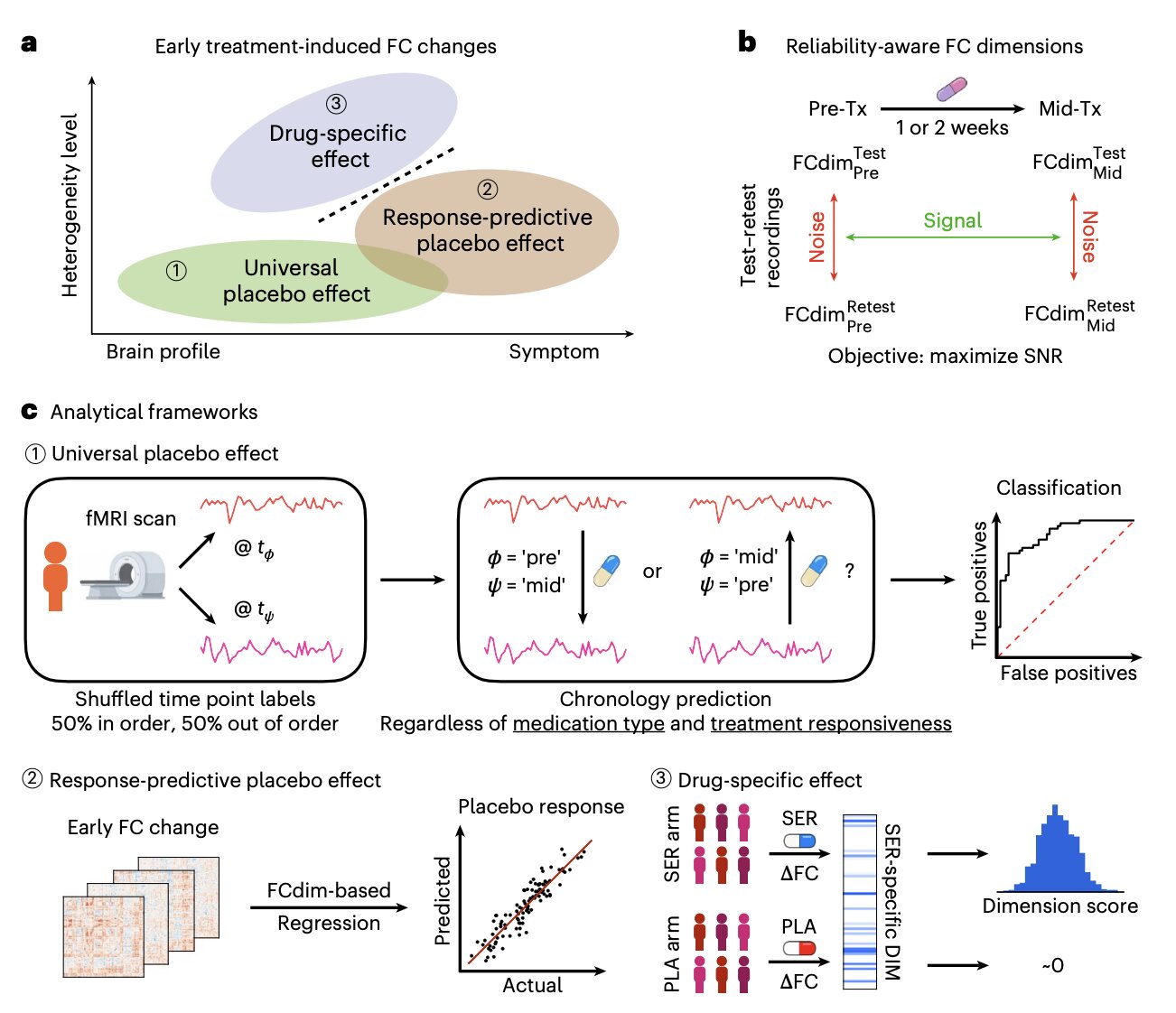
Xiaoyu Tong, Gregory A. Fonzo, and their colleagues noted that although earlier brain activity patterns have been linked to MDD and responses to treatment, the precise neural mechanisms behind these associations remained unclear. Their study focused on the early changes in functional connectivity (FC) following the initiation of treatment.
The team utilized resting-state functional magnetic resonance imaging (fMRI) scans to observe blood flow fluctuations associated with brain activity. Among the participants, 125 received a placebo, 123 were treated with sertraline, and 138 received escitalopram, both of which are selective serotonin reuptake inhibitors (SSRIs).
By comparing brain scans before treatment and one or two weeks after treatment commenced, the researchers sought to identify common and treatment-specific alterations in brain connectivity. They employed advanced machine learning techniques to analyze these patterns.
They found that there was an overall increase in functional connectivity in a system involving the visual, precuneus, and thalamus areas of the brain across all treatment groups. However, notable differences were observed in the antidepressant group, specifically in brain regions such as the amygdala, midcingulate cortex, orbitofrontal cortex, and cerebellum.
Interestingly, the study revealed that improvements in the placebo group correlated with changes in the striatum and attention networks. In contrast, drug-specific changed connectivity patterns occurred in a subset of patients taking antidepressants.
The researchers concluded that their findings highlight generalized early connectivity changes induced by antidepressants while distinguishing these from placebo effects. They suggest that these insights could eventually influence treatment optimization for MDD, although further research is necessary before applying these findings in clinical settings.