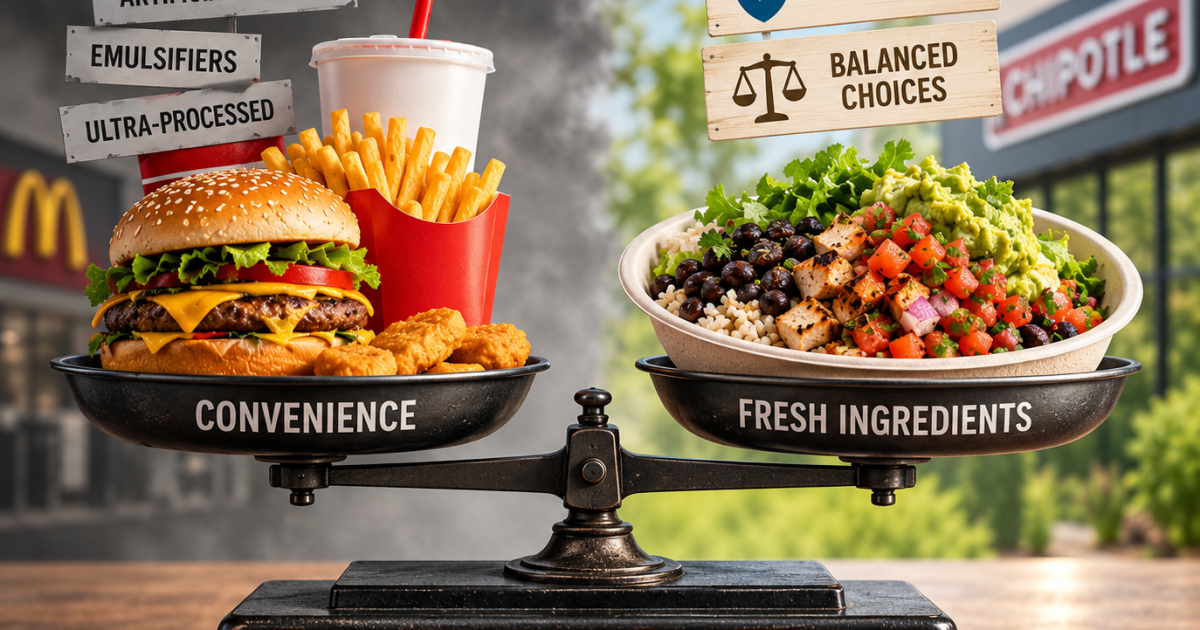
The Environmental Working Group (EWG) recently assessed ultra-processed foods from major fast-food chains, noting that Chipotle emerged as a notable exception.
Read More
The analysis began with the observation that about a third of American families source their calories from outside the home. EWG stated, "If you’re looking to eat less ultra-processed food, or UPF, eating out can be a challenge."
Their review covered ingredients in 12 top fast-food franchises in the U.S., highlighting that items like buns and pizza crusts are designed for texture and shelf life, while processed meats, sauces, and beverages often contain numerous additives. According to EWG, "There was one surprising standout: Chipotle’s food menu contains no ultra-processed ingredients."
Chipotle received praise for utilizing 53 real-food ingredients. However, EWG also cautioned that not all meals should be heavy in burrito bowls, noting that sodium and saturated fat levels could exceed recommended limits.
EWG ended on a positive note, suggesting that with careful choices, customers could still receive essential nutrients from whole food sources.
Yet, the commitment to fresh, minimally processed ingredients can also heighten food safety risks. For instance, the FDA reported a Salmonella outbreak linked to jalapeños served at Chipotle this year, affecting 431 individuals and resulting in 57 hospitalizations. A Cyclospora outbreak related to lettuce at Taco Bell sickened over 10,000 people, while a McDonald’s E. coli outbreak involved tainted onions, resulting in 104 cases and 34 hospitalizations in 2024.
Chipotle's history includes two E. coli outbreaks in 2015 and a significant incident in 2018 due to improper food handling. In contrast, none of the remaining fast-food restaurants had similar foodborne illnesses attributed to them during this timeframe.
Notably, fresh ingredients can be a source of foodborne illness since they may lack necessary safety processes like cooking or pasteurization. While EWG criticizes processed food for the risks associated with certain ingredients, it does emphasize that processing can also address genuine safety concerns.
The debate regarding fast food involves more than just health benefits; it also encompasses microbial safety. Minimally processed ingredients can be nutritious but also carry risks that processing can mitigate. Thus, the relevant consideration is not simply whether food is processed, but rather what functions that processing serves and what trade-offs it presents.