A study led by researchers at UT Southwestern Medical Center suggests that the CLOCK gene, which regulates circadian rhythms, may significantly impact human cognitive abilities and neuropsychiatric disorders. Published in Nature Neuroscience on July 31, 2025, the findings could have implications for treating conditions such as seasonal affective disorder, depression, and schizophrenia.
Read More
Joseph Takahashi, Ph.D., Chair and Professor of Neuroscience at UT Southwestern, noted that the human CLOCK gene has evolved unique expression patterns that contribute to advanced brain architecture and cognition. He co-led the study with Genevieve Konopka, Ph.D., and first author Yuxiang Liu, Ph.D.
Dr. Takahashi discovered the mouse version of the CLOCK gene in 1997 and identified the human version in 1999. The CLOCK gene produces a transcription factor that regulates various genes, some of which are tied to the body's circadian rhythms. In 2012, Dr. Konopka found that human CLOCK has heightened expression in the cerebral cortex, an area linked to higher cognitive functions and various neuropsychiatric issues.
Recognizing the limitations of traditional gene studies, the researchers created “humanized” mice by replacing their native Clock gene with the human CLOCK gene during embryonic development. When these mice matured, they were compared to those with extra copies of the mouse Clock gene and wild-type mice.
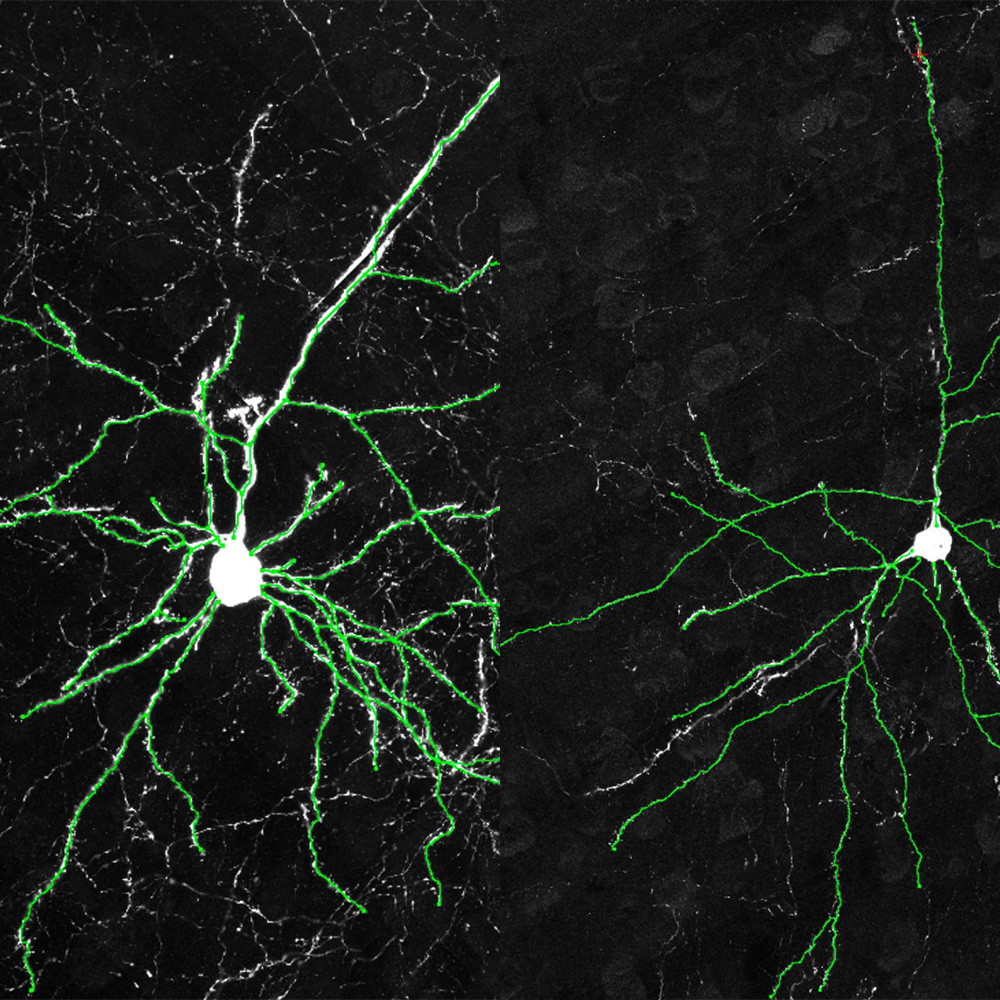
The study revealed that the brains of the humanized mice exhibited a pattern of CLOCK expression similar to that of humans, with increased production in the cerebral cortex. This area contained more cells, resulting in a denser structural formation. Notably, excitatory neurons in the humanized mice grew more dendrites and spines, enhancing connectivity with other neurons.
Behavioral tests showed that the humanized mice performed better in complex cognitive tasks requiring them to learn changing associations for food rewards, indicating improved cognitive abilities.
Further analysis identified genes affected uniquely by CLOCK in the humanized mice, many of which play a role in neuronal connectivity. This enhancement in connectivity might account for the observed behavioral differences and provide insights into CLOCK’s correlation with neuropsychiatric disorders.
The study was supported by various grants, including those from the National Institutes of Health and the James S. McDonnell Foundation. Other contributors included Jay Gibson, Ph.D., Ashwinikumar Kulkarni, Ph.D., and Matthew Harper, M.S.