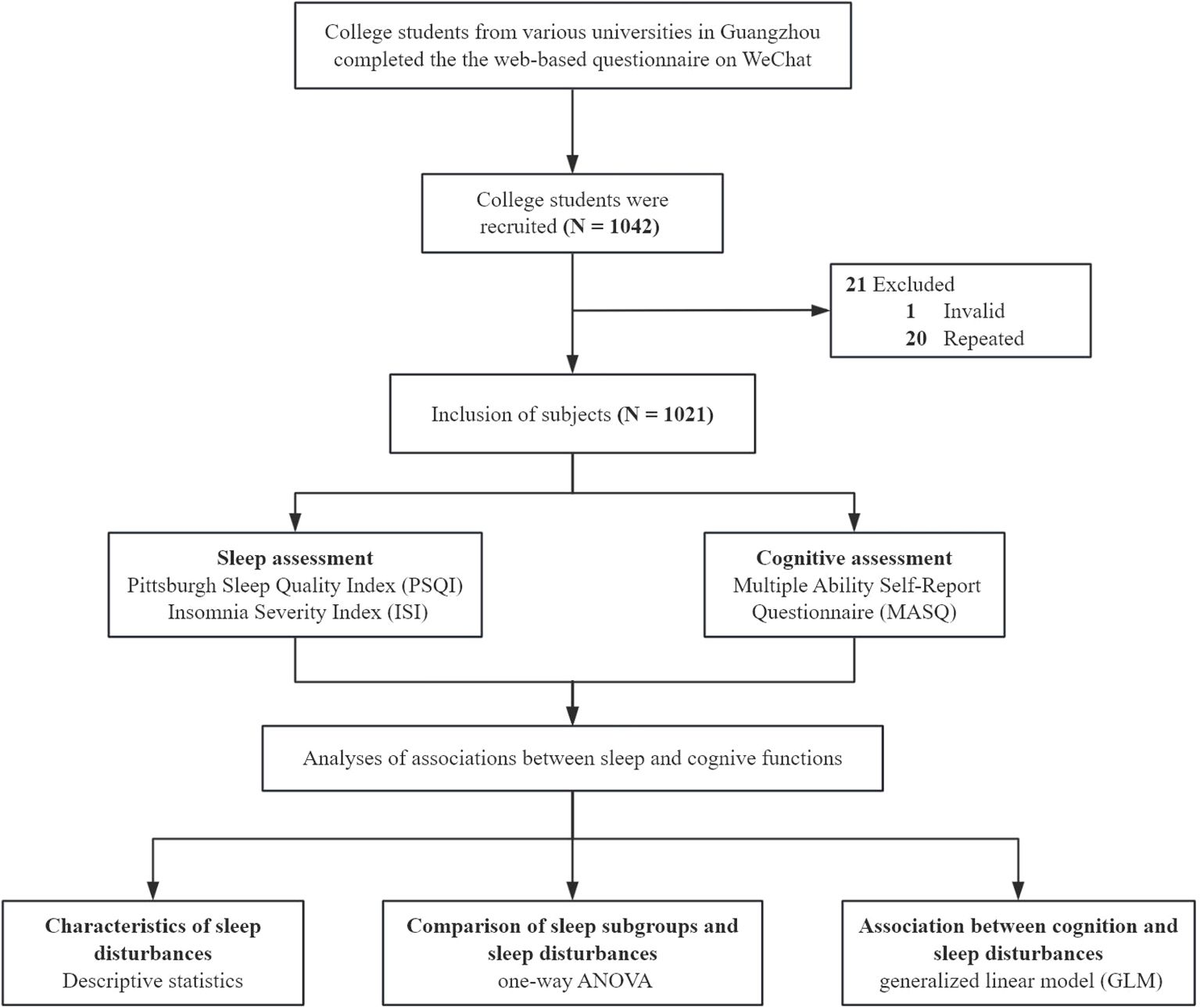
A recent study examined the impact of sleep duration and disturbances on cognitive function in a large sample of college students. Out of 1,021 participants surveyed, 54.1% reported experiencing insomnia and 58.9% indicated poor sleep quality, raising concerns over the effects these issues may have on academic performance and mental well-being.
Read More
The study utilized the Pittsburgh Sleep Quality Index (PSQI), Insomnia Severity Index (ISI), and the Multimodal Cognitive Ability Self-Assessment Scale (MASQ) to assess the participants. It found significant associations between shorter sleep duration and various sleep disturbances, including negative mental health impacts like daytime dysfunction and delayed sleep-wake phase disorder (DSWPD).
Results revealed that shorter sleep durations correlated with poorer cognitive performance across multiple domains, such as language, visual-perceptual abilities, and attention. Daytime dysfunction, difficulty falling asleep, and staying asleep were particularly noted as detrimental to overall cognitive abilities.
The findings emphasize the prevalence of sleep disturbances among college students, suggesting that a lack of adequate sleep not only exacerbates these disturbances but is also associated with declines in cognitive function. The study advocates for the investigation of effective interventions to improve sleep health and cognitive outcomes for college students.