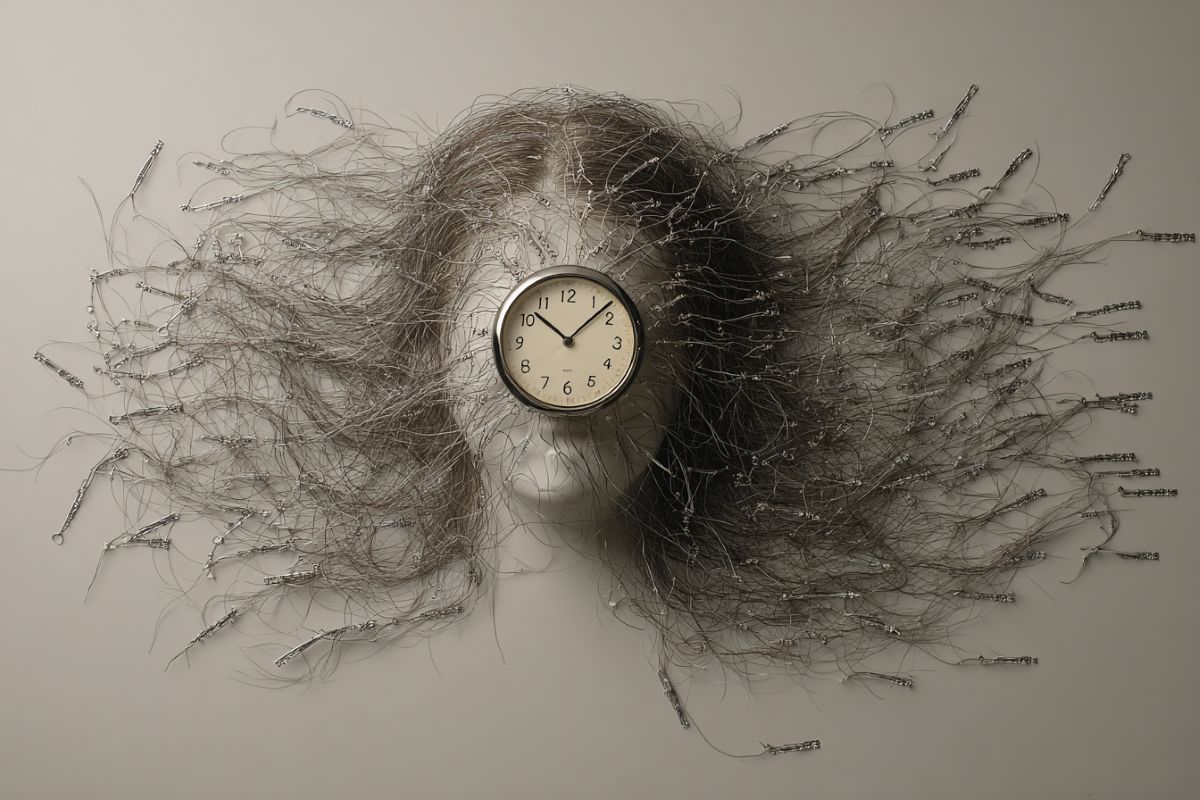
Researchers at Charité – Universitätsmedizin Berlin have introduced a new diagnostic test that can determine a person’s chronotype, or internal biological clock, using a simple hair sample. The test analyzes the activity of 17 specific genes in hair follicles, allowing for the mapping of an individual’s circadian rhythm without the need for prolonged lab-based saliva testing.
Read More
The study, which involved over 4,000 participants, indicates that while genetics and gender influence circadian patterns, lifestyle factors—such as employment status—play a significant role in shaping these internal clocks. The findings reveal that individuals who are employed have internal clocks that operate approximately 30 minutes earlier than those who are unemployed, highlighting the impact of social cues like work schedules on biological rhythms.
In terms of gender differences, the research found that women’s internal clocks signal the onset of “biological night” about six minutes earlier than men's, a difference smaller than previously estimated but still statistically significant. Additionally, the study confirmed that as people age, their biological rhythms shift, with those in their mid-20s staying alert roughly one hour longer than those over 50.
The new test has implications for circadian medicine, which aims to align medical treatments with an individual’s internal clock. For instance, the timing of certain medications such as cancer immunotherapies can significantly affect their effectiveness. Professor Achim Kramer, head of the Division of Chronobiology at Charité, emphasized that this alignment is critical because the immune system, like many organs, operates on a 24-hour rhythm that varies from person to person.
Traditionally, determining an individual’s circadian phase involved measuring melatonin levels in saliva, a cumbersome process requiring laboratory settings. The new hair analysis method offers a more convenient and non-invasive alternative.
The study's findings underscore the surprising extent to which lifestyle influences biological rhythms, particularly noting that working individuals display internal clocks that run more than half an hour earlier than their unemployed counterparts. This opens up potential avenues for personalized approaches to health and therapeutic interventions based on an individual’s unique chronotype.
To market the new test, BodyClock Technologies GmbH was established, with Prof. Kramer serving as a shareholder and patent holder. The study forms part of the Collaborative Research Center “Foundations of Circadian Medicine,” funded by the German Research Foundation.
The results have been published in the journal PNAS, validating the utility of hair analysis in circadian rhythm research and its potential to enhance personalized medical treatment strategies.