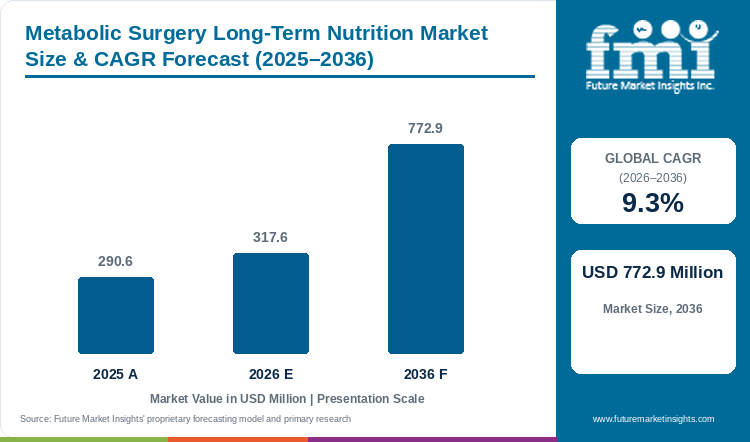
The metabolic surgery long-term nutrition market is expected to grow from USD 317.6 million in 2026 to USD 772.9 million by 2036, reflecting a compound annual growth rate (CAGR) of 9.3%. In 2025, the market size is estimated to be USD 290.6 million. This growth is driven by the ongoing need for vitamins, minerals, and protein among patients who have undergone metabolic and bariatric surgeries, with an estimated 270,089 such procedures performed in the U.S. alone in recent years.
Read More
Diverse operating conditions across countries have led to varied refill and specification patterns for nutrition products. For instance, South Korean insurance policy changes after 2019 significantly increased access to bariatric procedures. In the UK, guidelines mandate annual nutritional monitoring post-surgery. Japan recently expanded insurance coverage for certain procedures, enhancing patient access to essential nutritional products.
Recurring purchases of nutrition supplies are vital as patient cohorts grow and require long-term follow-up care. Bariatric Multivitamin Systems are projected to hold a 48.3% market share in 2026, as they consolidate multiple micronutrient needs, aiding patient adherence over time. Furthermore, Sleeve Gastrectomy is expected to command a 48.4% share in surgery types due to its popularity as a metabolic surgery choice.
Year-one follow-up post-surgery is critical, accounting for 49.4% of the market in that time frame. However, challenges remain as high pill counts and issues such as gastrointestinal intolerance can hinder long-term adherence to supplementation regimens.
The leading companies in this market include Bariatric Advantage, Celebrate Vitamins, ProCare Health, Bariatric Fusion, Unjury (ProSynthesis Labs), Abbott, Nestle Health Science, and Medtrition. Competition spans across bariatric-focused micronutrient specialists and broader clinical nutrition providers, with product types segmented by surgery type, timing since surgery, form, and sales channels.
Key factors influencing market dynamics include the long-term necessity of nutrient management post-surgery, adherence challenges related to pill burden and costs, and the opportunity for tailored formulations to ease consumption. Growth rates for the market are notably high in South Korea (9.4% CAGR), the UK (8.9%), and the USA (8.6%) across the forecast period.