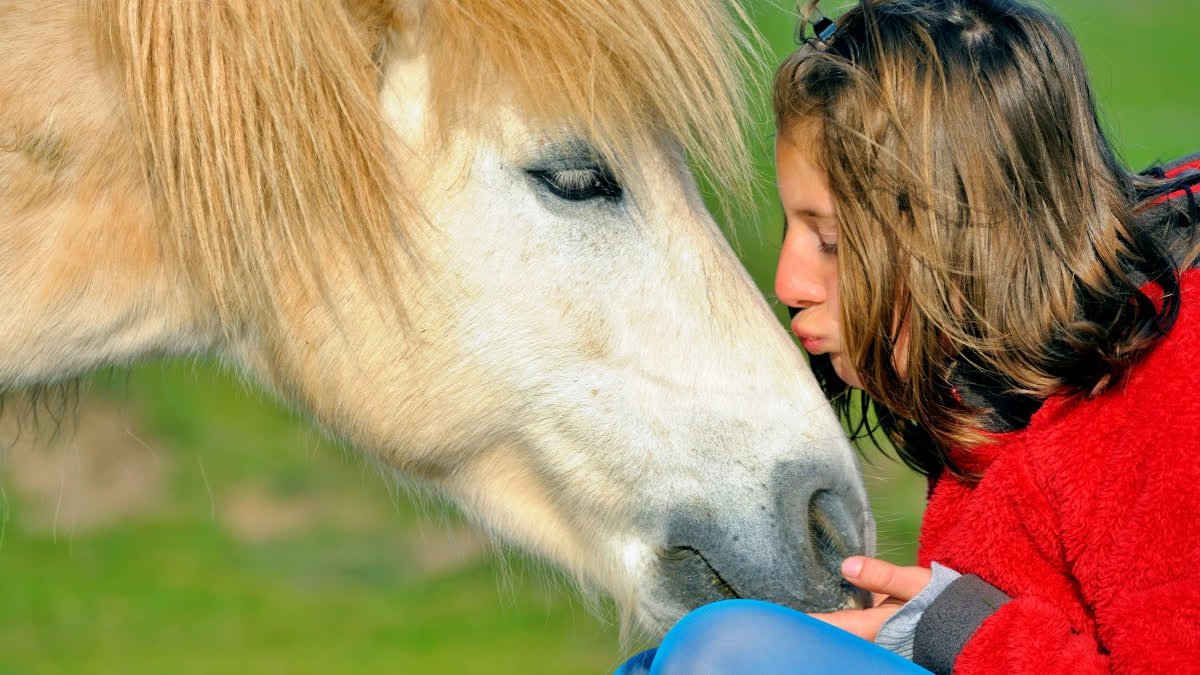
A study from the University of California, Davis, indicates that brief interactions with miniature horses and donkeys can significantly improve mental health in teenagers. The research, published in Scientific Reports, highlighted that adolescents who recognized the animals' body language cues experienced greater reductions in feelings of loneliness and sadness. This included responses even when the animals withdrew from interaction.
Read More
Rebecca Calisi Rodríguez, an associate professor of neurobiology, physiology, and behavior at UC Davis, emphasized the importance of enhancing the experiences for both animals and humans during these interactions. "Making the interaction better for the animal may be part of what makes it better for us," she stated, suggesting potential shifts in how animal-assisted interventions are designed across various settings.
The study moved beyond typical approaches that focus solely on human benefits. Co-author Claire Short noted that her observations of how different petting techniques affected the animals led her to investigate the nuances of human-animal interactions. This research analyzed exchanges between 61 teenagers and a herd of rescued miniature equines, which included two miniature horses, Olivia and Randy, and two donkeys, Mary and Memphis.
In the experiment, half of the participants were instructed to gently stroke the animals, while the other half vigorously scratched their necks, a behavior mimicking natural equine interactions. The teens learned to identify behavioral signals such as lip-wriggling, indicating pleasure, and walking away, a sign the animal needed space.
Results showed that during neck-scratching interactions, the horses and donkeys wriggled their lips 75% of the time, compared to 48% during petting. Conversely, the animals walked away in 89% of petting scenarios versus 42% during neck-scratching.
All participants reported feeling calmer and exhibiting lower levels of anxiety and sadness after the interactions. However, those who noticed the horses and donkeys exhibiting lip-wriggling experienced greater reductions in loneliness, while seeing an animal walk away led to greater decreases in sadness.
Calisi Rodríguez remarked on the study's implications, noting that an authentic interaction might not require prolonged engagement from animals, as seeing them exercise choice can enhance the experience. The research suggests that understanding the well-being of animals can be essential to improving animal-assisted therapy. This knowledge could inform how future interventions are structured, fostering mutual care between people and animals.