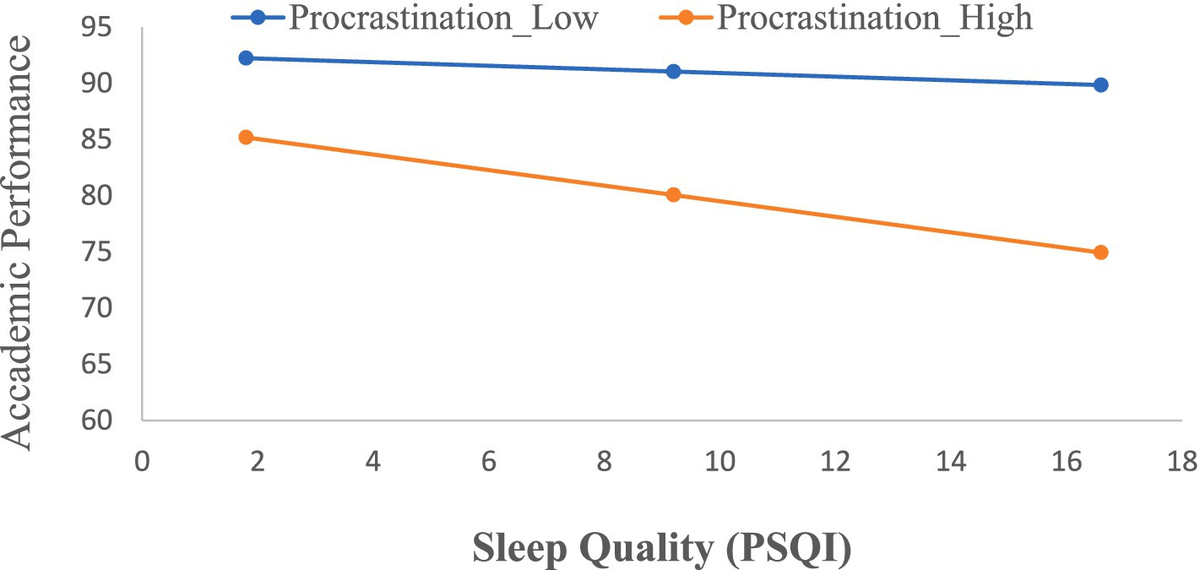
The rigorous demands of medical training often result in sleep disruption, negatively impacting academic performance. Procrastination, a common issue among students, has also been linked to poorer academic outcomes, but the relationship between sleep quality and procrastination has not been thoroughly explored. A recent cross-sectional study investigated whether procrastination moderates the correlation between sleep quality and academic performance among medical students.
Read More
Conducted with 125 medical students (average age 25.6 years, 54% female), participants completed self-report measures for sleep quality using the Pittsburgh Sleep Quality Index (PSQI), procrastination through the Behavioral and Emotional Academic Procrastination Scale (BEPS), and academic performance by composite exam grades. Statistical analyses revealed that lower sleep quality and higher procrastination were both significantly correlated with lower academic performance. Notably, the interaction of sleep quality and procrastination accounted for an additional 2.7% of the variance in academic performance.
The study found that the detrimental impact of poor sleep on performance was more pronounced in students with higher levels of procrastination. Instead, students exhibiting lower procrastination were less affected by sleep issues. Although the variance explained by procrastination was modest, the findings underscore potential strategies to enhance student well-being and academic success.
Medical education is notoriously stressful, with numerous surveys indicating that many medical students experience insufficient sleep and poor sleep quality. Given that effective cognitive functioning, essential for learning, depends heavily on sleep quality, these findings highlight the importance of addressing both procrastination and sleep issues in medical training environments.
This study fills a notable gap in existing literature by examining procrastination as a moderator in the relationship between sleep quality and academic performance among medical students—suggesting that interventions targeting procrastination may be particularly beneficial for students struggling with sleep issues.
Future research is needed to explore these relationships in broader contexts, possibly incorporating longitudinal designs to clarify the causal pathways between these factors.