Recent research highlights significant differences in sleep and sleep disorders between women and men, largely influenced by hormonal changes throughout women's lives such as during pregnancy and menopause. Women are more likely to report insomnia and symptoms of sleep-related breathing disorders, highlighting the need for clinicians and researchers to consider sex and gender differences in their approach to sleep disorders.
Read More
Historical perspectives on neuroscience often overlooked gender differences, attributing cognitive and behavioral distinctions to cultural factors rather than biological ones. Early studies focused mainly on the hypothalamus and its role in reproductive behaviors, typically neglecting female rodents due to perceived hormonal confounding in experiments. However, contemporary research acknowledges that male and female brains differ significantly, transforming our understanding of sleep disorders.
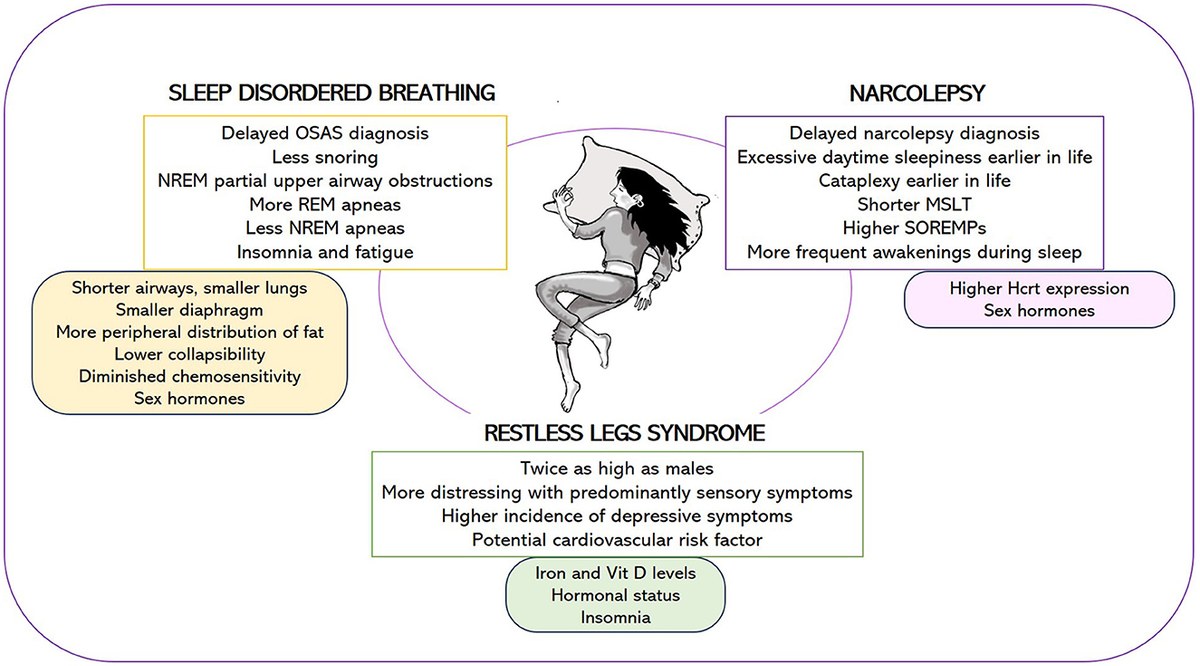
One critical observation is that women tend to experience more slow-wave sleep yet face more nighttime awakenings than men. They frequently report severe depression, insomnia, and fatigue, which can complicate sleep diagnoses. Research indicates that women often face delays in diagnosing conditions such as obstructive sleep apnea syndrome (OSAS) and restless legs syndrome, with gender biases contributing to this issue.
In-depth studies utilizing animal models, particularly rodents, have become valuable tools for understanding gender disparities in sleep disorders. These studies can clarify how conditions like sleep-disordered breathing manifest differently in males and females. For example, while sleep apnea is often more prevalent in men, it can be underdiagnosed in women, who may present with less typical symptoms such as mood disturbances.
Our narrative review aims to enhance understanding of sleep disorders by focusing on gender differences and examining both basic and clinical research. Investigations have shown that hormonal fluctuations influence sleep patterns and disorders more significantly in women. Furthermore, the distinct anatomical and physiological differences in upper airways between genders play a role in how sleep apnea presents and progresses.
Specific findings include the prevalence of narcolepsy and the onset of cataplexy symptoms; studies indicate that females may experience more severe symptoms at an earlier age compared to males. Additionally, females display unique polysomnographic features that necessitate tailored clinical approaches to diagnosis and treatment.
Restless legs syndrome (RLS) manifests more frequently in women, with significant emotional burdens associated with the condition. Women tend to report higher severity of RLS symptoms compared to men, particularly influenced by iron levels and hormonal changes in pregnancy and menopause.
In conclusion, understanding the complex interplay of gender in sleep disorders is integral to improving research, diagnosis, and treatment. Ongoing studies should prioritize gender-specific variables to better tailor interventions and improve patient outcomes in sleep medicine.