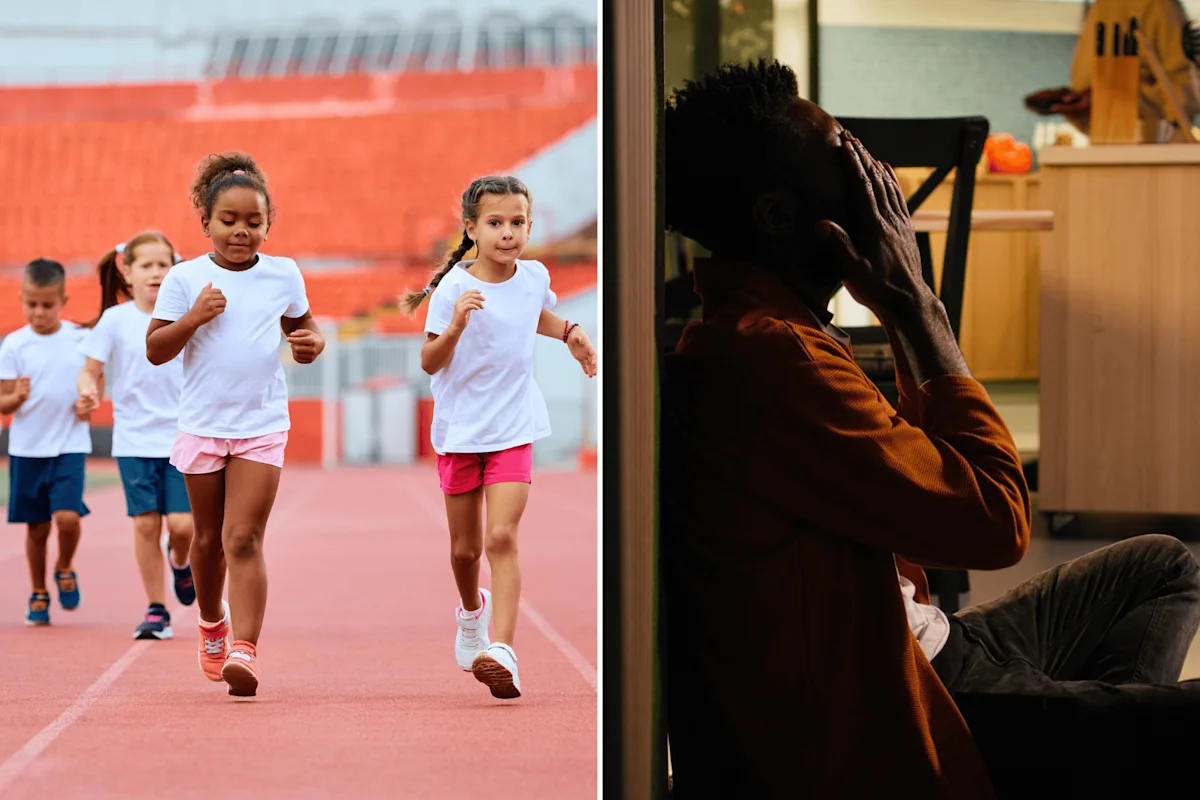
A recent study conducted by researchers at the University of Tasmania's Menzies Institute for Medical Research and Adelaide University suggests that improved cardiorespiratory fitness in childhood and adolescence may lead to a reduced risk of depression in adulthood. The study is set to be published in the Journal of Affective Disorders on December 1.
Read More
Evaluating data from over 1,000 Australian children aged 7 to 15 in 1985, the researchers assessed their fitness through various tests, including a 1.6-kilometer run for cardiorespiratory fitness and muscular power assessments. Follow-up interviews were conducted when participants reached ages 36 to 49, during which their mental health was evaluated.
Brooklyn Fraser, a postdoctoral research fellow at the University of Tasmania and one of the study's authors, reported that an increase of one standard deviation in childhood cardiorespiratory fitness, as measured by run speed, was associated with a 13 percent lower risk of experiencing depression in adulthood. The strongest correlation was observed for activities that promoted substantial physical exertion, and this association was notably stronger in females.
Nicole Avena, a professor of neuroscience at the Icahn School of Medicine, emphasized that while the study demonstrates an association, it does not prove that low fitness directly causes depression in adulthood. Instead, it showcases the long-term implications of physical fitness on mental health.
Potential factors contributing to this association may include how aerobic fitness helps manage chronic inflammation, regulate stress hormones, and increase levels of brain-derived neurotrophic factor, which is essential for neuron health. Avena noted that fit children are also more likely to maintain active lifestyles into adulthood.
Karmel Choi, a clinical psychologist and assistant professor at Harvard Medical School, suggested that cardiorespiratory fitness might reflect overall health, encompassing the heart, lungs, and muscles. This state of health could correlate with fewer health complications that are known to increase the risk of depression. Additionally, socioeconomic factors may play a role, as children from higher-income families may access more resources for physical activity and mental health support.
Fraser highlighted the importance of nurturing cardiorespiratory fitness in childhood as a modifiable element potentially associated with long-term mental health. Avena supported this notion, advocating for protecting daily physical activity and promoting accessible play opportunities for children, regardless of family income. Both researchers called for further studies to establish clearer causal relationships between childhood fitness and adult mental health outcomes.