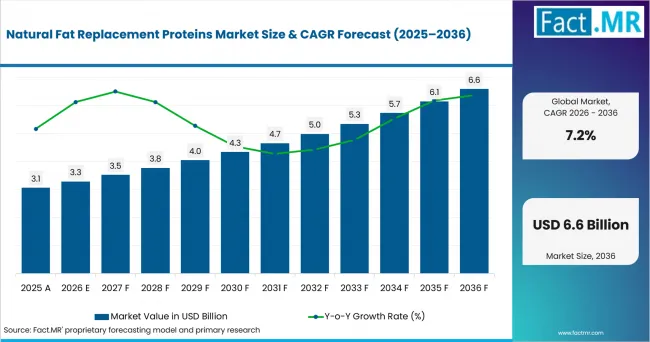
The Natural Fat Replacement Proteins Market reached a valuation of USD 3.1 billion in 2025 and is projected to grow to USD 3.3 billion in 2026, with a forecast value of USD 6.6 billion by 2036. This growth translates to a compound annual growth rate (CAGR) of 7.2% from 2026 to 2036.
Read More
Factors driving this demand include dairy companies utilizing proteins to achieve creamy and stable low-fat products. According to the U.S. Department of Agriculture Economic Research Service, inflation-adjusted food spending in the U.S. was USD 2.51 trillion in 2025. Additionally, prepared-food manufacturers rely on proteins to maintain the texture and stability of sauces and ready meals during heating and storage.
By 2026, several key segments are expected to take shape: dairy protein will likely hold a 37% market share, while microparticulation is anticipated to capture 36%. Calorie reduction is expected to account for 33% of the market by nutrition position, as dairy applications are projected to represent 29%.
Analysts at Fact.MR, including Principal Consultant Shambhu Nath Jha, emphasize the importance of testing proteins across various food products to ensure effectiveness and encourage repeat orders.
Regional growth projections indicate that the UK will see an 8.5% CAGR, attributed to advancements in food and dairy production. Japan is expected to experience a 7.3% growth rate, driven by processed-food production that aligns with dietary guidelines favoring lower-fat options. Meanwhile, the USA is projected to grow at 7.0%, with Germany at 6.7%, and France following at 6.4%.
The report highlights that while the adoption of natural fat replacement proteins is being accelerated by improved texture and nutritional benefits, challenges such as taste and production complexities may slow the rate of recipe adjustments.
Key providers in the market include Kerry Group, CP Kelco, Cargill, Glanbia Nutritionals, Roquette, and Arla Foods Ingredients.
The comprehensive analysis was built using a wide range of sources and detailed research into market trends, segment performance, and consumer preferences.